Related Blogs

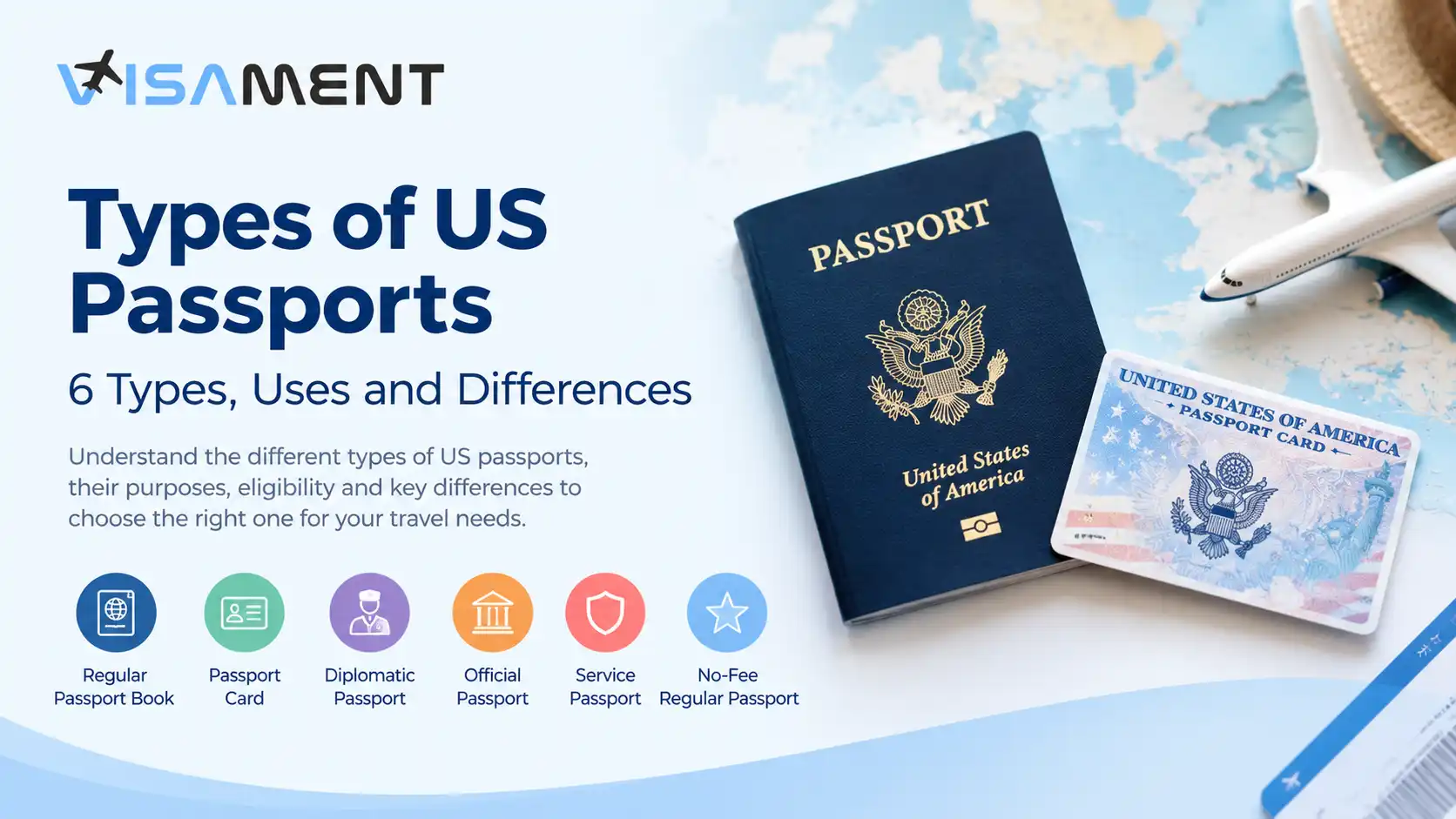
Choosing the right U.S. passport depends on where you plan to travel and whether your trip is personal or government-related. The United States offers two main regular passport formats—a passport book and a passport card—as well as special-issuance passports for eligible government-related travel.
If you are searching for the types of US passports, this guide explains how each option works, who can qualify, and which passport is suitable for your needs.
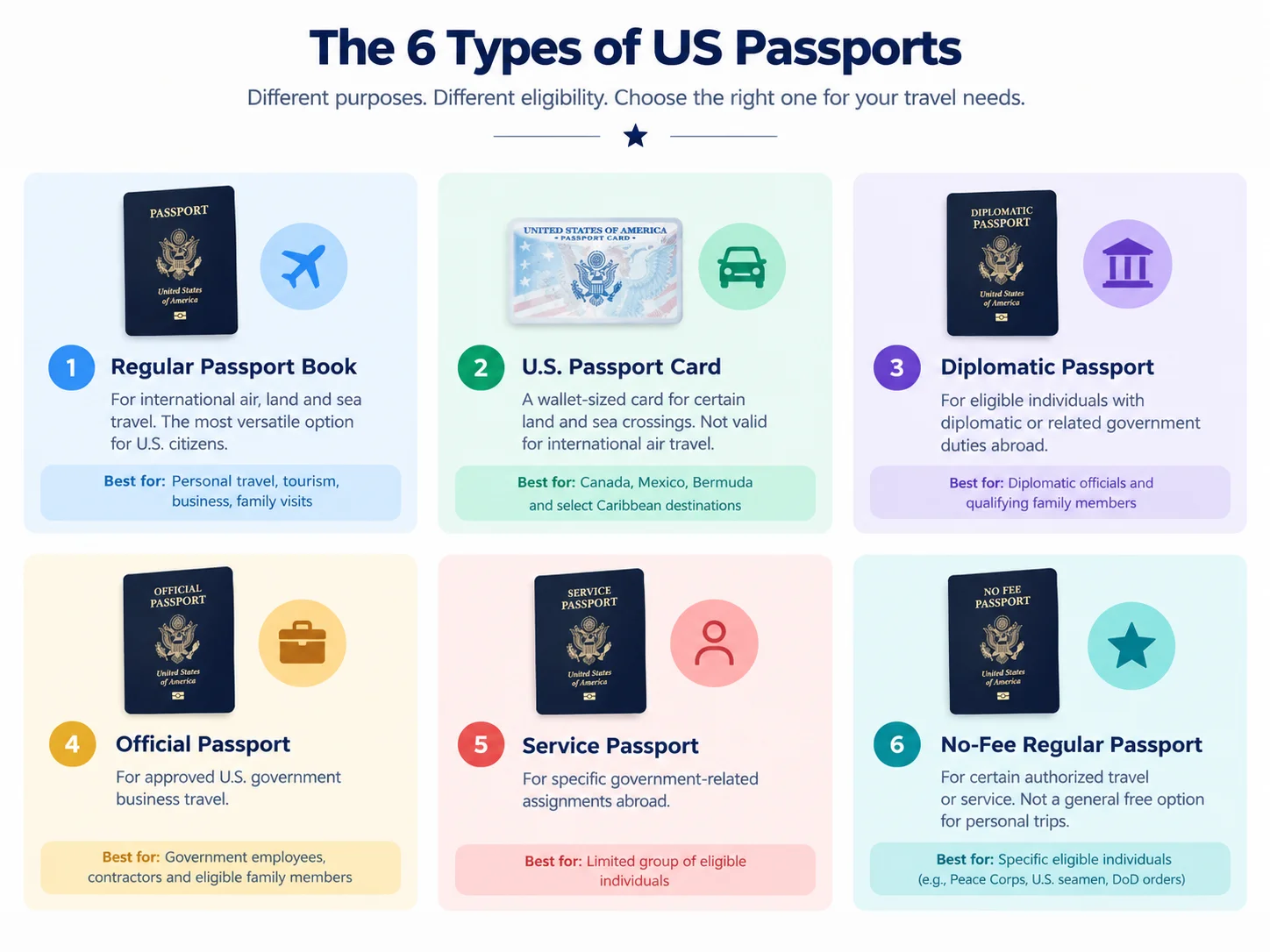
There are two main regular US passport formats and four special-issuance passport categories in the United States.
The two regular formats are:
The four special-issuance categories are:
The passport book and passport card are the main options for ordinary travelers. Special-issuance passports are restricted to qualifying circumstances and are not general alternatives for personal travel
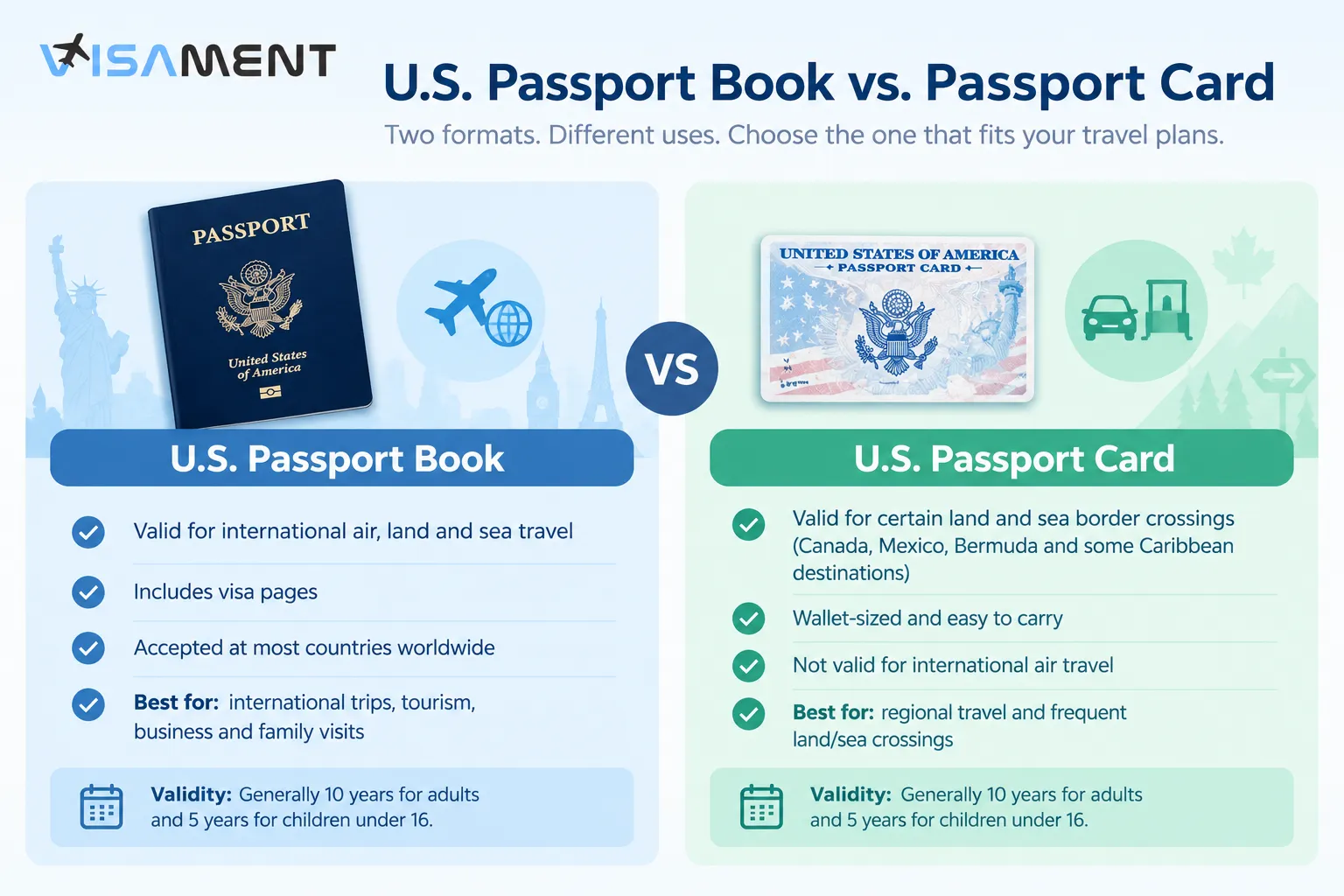
A regular U.S. passport book is the standard choice for U.S. citizens traveling internationally. It is suitable for tourism, business trips, family visits, and other eligible personal travel.
Main uses:
For example, a U.S. citizen flying to India or Europe would generally use a passport book, while also meeting the destination country's visa and entry requirements.
Validity: Generally 10 years for adults aged 16 or older and five years for children under 16.
Who should choose it? Travelers who want a versatile passport for international flights and trips to a range of destinations will generally find the passport book the most practical option.
A U.S. passport card is a wallet-sized travel document that serves as proof of U.S. citizenship and identity. It is convenient for certain regional trips but cannot replace a passport book for all travel.
Main uses:
Important limitation: A passport card is not valid for international air travel. If you are flying from the United States to another country, you generally need a passport book.
Who should choose it? The card may suit travelers who frequently cross eligible land borders or travel by sea to permitted destinations. Eligible U.S. citizens can hold both a passport card and a passport book.
Validity: Generally 10 years for adults aged 16 or older and five years for children under 16.
 Also Want to Know About US Passport Validity? Check Now!
Special-issuance passports are intended for eligible individuals traveling on official or diplomatic duties for the U.S. government. Eligibility depends on the person's role, status, travel purpose, and authorization; government employment alone does not guarantee eligibility.
A diplomatic passport is a special-issuance passport for individuals who qualify through diplomatic or related government duties.
It may be issued to certain eligible federal government employees, qualifying family members serving abroad, and individuals granted an appropriate diplomatic or consular title, subject to government rules.
Purpose: It supports qualifying official diplomatic travel rather than ordinary tourism or personal trips.
A diplomatic passport does not automatically grant diplomatic immunity. Any immunity depends on the person's recognized status and applicable legal arrangements.
An official passport is intended for eligible individuals traveling abroad on approved U.S. government business.
Potentially eligible travelers include certain government employees, qualifying personal-services contractors, and eligible family members traveling in connection with official duties.
Purpose: It is used for authorized government-related travel, not as a general substitute for a regular passport on personal holidays.
Eligibility and permitted use depend on the travel assignment and the relevant government authority.
A service passport is a special-issuance category for a limited group of individuals undertaking qualifying government-related work abroad.
It may be appropriate for certain eligible non-personal-services contractors when the applicable rules require or permit this passport category.
Purpose: It supports specific authorized assignments. It is not intended for ordinary tourism, family holidays, or general personal travel.
Because eligibility is limited, individuals should confirm their status and requirements with the responsible government agency.
A no-fee regular passport is a special-issuance category available to people who meet specific eligibility requirements for authorized travel or service.
Examples of potentially eligible circumstances include certain Peace Corps assignments, qualifying service by U.S. seamen on U.S.-flag vessels, and certain individuals traveling under Department of Defense orders.
Is it available to everyone? No. It is not a general free-passport option for people traveling privately. Eligibility depends on the purpose of travel and the applicable government rules.
Other Recommended Reads: Check Indian Passport Status in the USA
Use this table to compare the main passport categories at a glance.
|
Passport type |
Main purpose |
Typical eligibility |
Key limitation |
|---|---|---|---|
|
Regular passport book |
International travel |
Eligible U.S. citizens |
Destination entry and visa rules still apply |
|
Passport card |
Certain land and sea crossings |
Eligible U.S. citizens |
Cannot be used for international air travel |
|
Diplomatic passport |
Qualifying diplomatic duties |
Eligible diplomatic personnel and other qualifying individuals |
Does not automatically grant diplomatic immunity |
|
Official passport |
Approved government travel |
Eligible government employees, contractors, and family members |
Intended for qualifying official duties |
|
Service passport |
Specific authorized assignments |
Limited eligible individuals |
Not for ordinary personal travel |
|
No-fee regular passport |
Qualifying authorized travel or service |
Individuals meeting specific requirements |
Not a general free passport for private trips |
Special-issuance passports have specific eligibility and use restrictions. Confirm requirements with the relevant U.S. government agency.
Other Recommended Reads: Different Types of Indian Passport
For most travelers, the choice is straightforward:
If you are comparing the types of passport in USA, focus first on your travel method and purpose. A passport card may be convenient for specific trips, but the passport book is generally the better option for international air travel.
Stop worrying about delays. Apply now and get Indian Counsellor Services.
Chat NowThe different types of passports in the USA serve different travel needs. A regular passport book is generally the most versatile option for international travel, while a passport card is suitable for specific land and sea crossings. Diplomatic, official, service, and no-fee regular passports are reserved for qualifying official purposes.
Before applying, check your travel requirements and confirm the appropriate passport type using the official U.S. passport website.
The blue color passport denotes the regular or tourist passport. It is one of the issued passports in the US that people use for travel, study abroad, or family vacations.
The key difference between the tourist and no-fee passport is that the first one is issued to ordinary US citizens for general overseas travel. In addition, it needs an application fee. However, opposite to that, a no-fee passport is given without any application and it is generally for those who are government employees who represent the country abroad.
A passport card does not allow you to travel abroad by air. For domestic air travel, it is an ID. Apart from that, you are limited to traveling to 20 countries only by sea or land with it.`
A passport book can be used for international air travel and eligible land and sea travel. A passport card is limited to certain land and sea crossings and cannot be used for international air travel.
Yes. Eligible U.S. citizens can apply for both documents and use them for the types of travel each permits.
No. Diplomatic passports are reserved for individuals who meet the relevant government eligibility requirements. They are not available as an alternative to a regular passport for tourism.
Vipul Jain is the Co-Founder of Visament, a trusted platform dedicated to simplifying Indian immigration, consular, and NRI services for applicants across the globe. With extensive expertise in OCI cards, Indian passport services, visa assistance, apostille and document legalization,... See Full Bio

Talk to our documentation experts for free guidance on your application.

When you visit a website, it may store data about you using cookies and similar technologies. Cookies can be important for the basic operations of the website and for other purposes. You get the option of deactivating certain types of cookies, even so, doing that may affect your experience on the website.
It is required to permit the basic functionality of the website. You may not disable necessary cookies.
Used to provide advertising that matches you and your interests. May also be used to restrict the number of times you see an advertisement and estimate the effectiveness of an advertising campaign. The advertising networks place them after obtaining the operator's permission.
Permits the website to recognize the choices you make (like your username, language, or the region you are in). Also provides more personalized and enhanced features.
Aid the website operator to determine how the website performs, how visitors interact with the site, and whether there are any technical issues.