Related Blogs

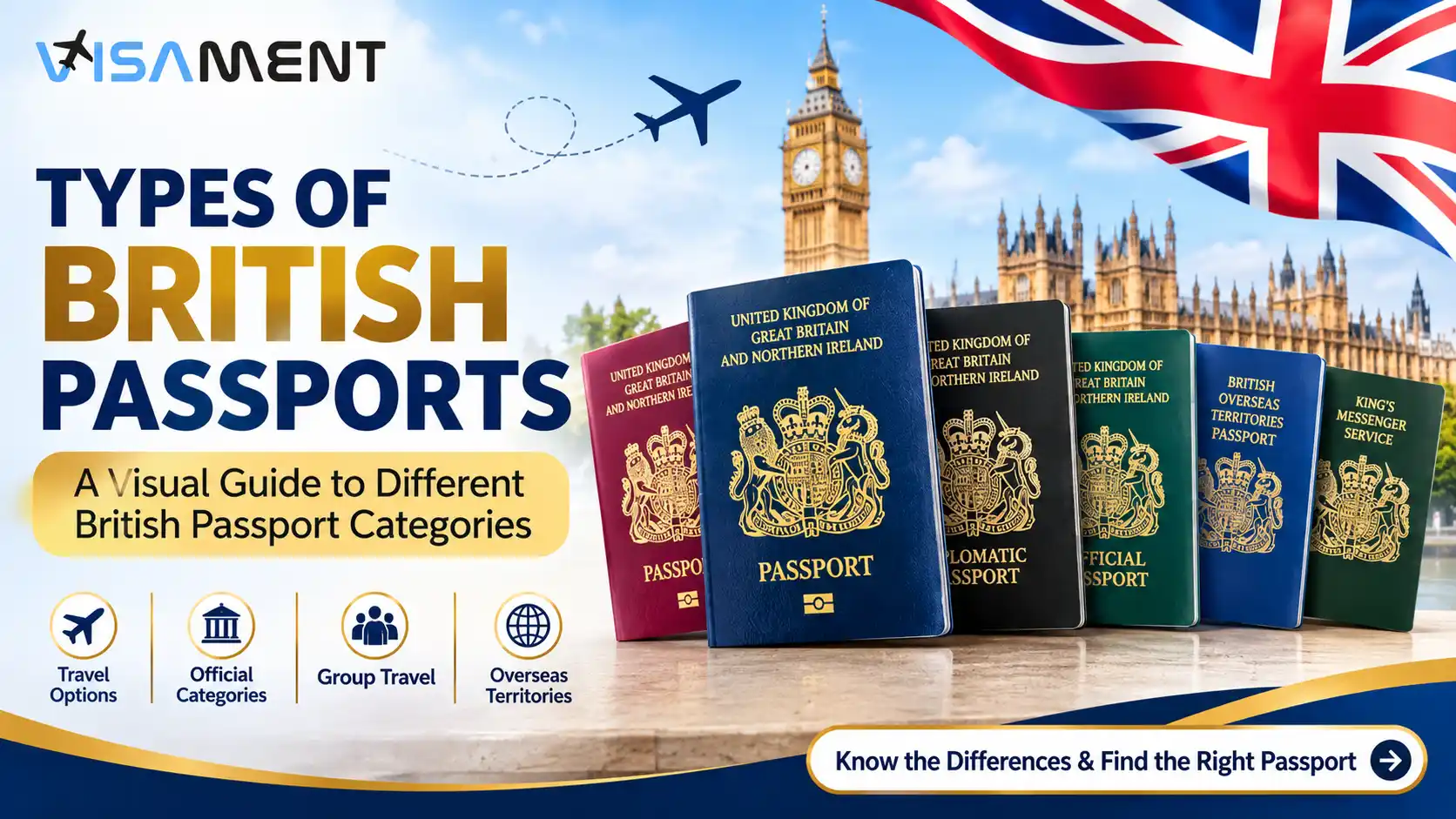
British passports are issued in different categories depending on the holder's nationality, travel requirements and official purpose. While most people use a standard British passport, diplomatic, official and collective passports serve specific purposes. Understanding the different types of British passports also means distinguishing between passport designs, page formats and British nationality categories.
The main British passport categories include:
These categories should not be confused with passport colours or the six types of British nationality. Each describes a different aspect of British travel documentation.
A standard British passport is the general-purpose travel document used by eligible British nationals for international travel. It is the most commonly held British passport and can be used for personal holidays, business trips, family visits and other permitted journeys.
Standard British passports contain the holder's personal information, photograph and an electronic chip containing biometric information. The document is designed to establish the holder's identity and nationality when travelling internationally.
Standard e-passports are available in two page capacities:
The 54-page version is not a separate nationality or diplomatic category. It is simply a larger version of the standard passport.
Standard British passports generally have different validity periods depending on the holder's age:
A child's passport does not become valid for 10 years simply because the child grows older during its validity period. The passport's printed expiry date determines when it must be renewed.
For application requirements, see the relevant official British passport application and renewal guidance.
A British diplomatic passport is a special travel document issued to authorised individuals undertaking eligible diplomatic duties overseas.
Diplomatic passports are associated with individuals who have an approved diplomatic or consular role, including eligible members of the British Diplomatic Service and diplomatic missions abroad.
The UK government strictly controls their issue. British citizenship alone does not make someone eligible for a diplomatic passport.
An important distinction is that a diplomatic passport does not automatically grant diplomatic immunity. Diplomatic privileges and status depend on the relevant accreditation and applicable international law, not simply possession of the passport.
The Foreign, Commonwealth & Development Office (FCDO) and HM Passport Office have roles in the relevant diplomatic passport arrangements.
An official British passport is intended for eligible UK government personnel undertaking authorised official duties overseas.
Official passports are different from ordinary passports because they are issued for specific government-related travel purposes rather than general personal travel.
For example, an eligible government employee travelling overseas on an authorised assignment may require an official passport, depending on their role and the applicable arrangements.
The main distinction concerns the holder's recognised role and purpose of travel:
These are restricted documents, not alternative passport options that members of the public can choose when applying for an ordinary British passport.
According to HM Passport Office guidance, eligible holders may also need to maintain a separate standard British citizen passport for personal travel.
A collective British passport is a group travel document for eligible young people travelling together for educational or cultural purposes.
It is generally used by organised groups such as:
Unlike an individual passport, a collective passport lists several young travellers under one group document and is supported by individual photo identity cards.
According to HM Passport Office guidance, the travellers must be British nationals, resident in the UK and under 18 when they return from the trip. The document is not intended for families travelling together.
Important: Not every destination accepts collective passports. Schools and group organisers should confirm acceptance with the destination country's authorities before making travel arrangements. Young people should use individual passports where possible.
British Overseas Territories passports are issued to eligible British Overseas Territories citizens through the relevant territorial arrangements.
These passports are similar to standard British passports, but their covers and personal details pages identify the relevant territory rather than the United Kingdom. For example, a passport issued through Anguilla's local government arrangements may display the territory's name.
The main points to understand are:
For example, some British Overseas Territories citizens have British citizenship, while others may have different nationality rights and immigration entitlements.
This distinction matters because holding a British passport does not necessarily mean having the automatic right to live and work in the UK.
Other Recommended Reads: Different Types of Indian Passport
Have questions? Our experts guide you through every step of the Indian Visa Application for British Citizens – no confusion, no delays.
Consult an Expert TodayBritish passport colours and physical designs have changed over time. However, colour alone does not establish the holder's nationality category or the passport's specific purpose.
The UK reintroduced blue passport covers in 2020 after leaving the European Union. The current standard design has a blue cover with a gold Royal coat of arms.
There are two relevant e-passport generations:
HM Passport Office is phasing in Series D, so applicants may receive either Series C or Series D during the transition. Both remain valid until their printed expiry dates.
Burgundy passports were previously issued in the European Union common-format design. They were gradually phased out, and HM Passport Office stopped issuing them before 31 December 2020.
Existing burgundy passports did not automatically become invalid when the UK left the EU. They remain valid until their individual expiry dates, provided they have not otherwise been cancelled or withdrawn.
The two standard British passport book options differ in their number of pages:
|
Feature |
Standard passport |
Frequent traveller passport |
|---|---|---|
|
Number of pages |
34 |
54 |
|
Intended users |
Most travellers |
Frequent international travellers |
|
Main difference |
Standard page capacity |
Additional space for visas and stamps |
|
Nationality status |
No difference |
No difference |
Both options serve the same general travel-document purpose. The frequent traveller version simply offers additional pages.
There are six main types of British nationality recognised by the UK Government. These are nationality categories, not six different passport designs.
A person belonging to any of these categories may be eligible to apply for a British passport, subject to the relevant entitlement and other requirements.
|
British nationality category |
Brief explanation |
|---|---|
|
British citizen |
The main form of British citizenship, generally providing the right to live and work in the UK without immigration restrictions. |
|
British Overseas Territories citizen |
A nationality connected with the British Overseas Territories. |
|
British Overseas citizen |
A form of British nationality held by certain people with historical connections to the former British territories. |
|
British subject |
A specific historical nationality category retained by certain individuals under British nationality law. |
|
British National (Overseas) |
A nationality status available to eligible people connected with Hong Kong who registered before the 1997 handover. |
|
British protected person |
A distinct British nationality category associated with certain historical protected territories. |
No. British citizenship is one of the six British nationality categories. Other British nationals may hold a British passport without having British citizenship or the automatic right to live and work in the UK.
For example, a British National (Overseas) can hold a British passport but does not automatically have the right to live in the UK.
For detailed information, consult the official UK Government guide to the six types of British nationality.
The different types of British passports serve different travel and official purposes. Standard passports are intended for general international travel, while diplomatic and official passports support authorised government duties. Collective passports are available for qualifying groups of young travellers, and British Overseas Territories passports reflect specific territorial arrangements.
It is equally important to understand the difference between passport designs and British nationality categories. If you are considering applying for a British passport, check your nationality and entitlement through official UK Government guidance before proceeding.
Yes. Existing burgundy British passports can still be used for international travel until their individual expiry dates, provided they have not been cancelled or withdrawn. The UK stopped issuing burgundy passports before 31 December 2020.
British passports changed from burgundy to blue following the UK's departure from the European Union. The blue passport design began rolling out in 2020 and features a gold Royal crest. The newer Series D blue e-passport was introduced in December 2025.
A diplomatic passport is issued to eligible individuals undertaking authorised diplomatic or consular duties. An official passport is intended for eligible government personnel travelling on official assignments. Both are restricted documents and require government authorisation.
A standard British passport contains 34 pages, while a Frequent Traveller passport contains 54 pages. Both are designed for international travel, but the 54-page version provides additional space for visas and entry stamps, making it useful for people who travel frequently.
Vipul Jain is the Co-Founder of Visament, a trusted platform dedicated to simplifying Indian immigration, consular, and NRI services for applicants across the globe. With extensive expertise in OCI cards, Indian passport services, visa assistance, apostille and document legalization,... See Full Bio

Talk to our documentation experts for free guidance on your application.


When you visit a website, it may store data about you using cookies and similar technologies. Cookies can be important for the basic operations of the website and for other purposes. You get the option of deactivating certain types of cookies, even so, doing that may affect your experience on the website.
It is required to permit the basic functionality of the website. You may not disable necessary cookies.
Used to provide advertising that matches you and your interests. May also be used to restrict the number of times you see an advertisement and estimate the effectiveness of an advertising campaign. The advertising networks place them after obtaining the operator's permission.
Permits the website to recognize the choices you make (like your username, language, or the region you are in). Also provides more personalized and enhanced features.
Aid the website operator to determine how the website performs, how visitors interact with the site, and whether there are any technical issues.