Related Blogs

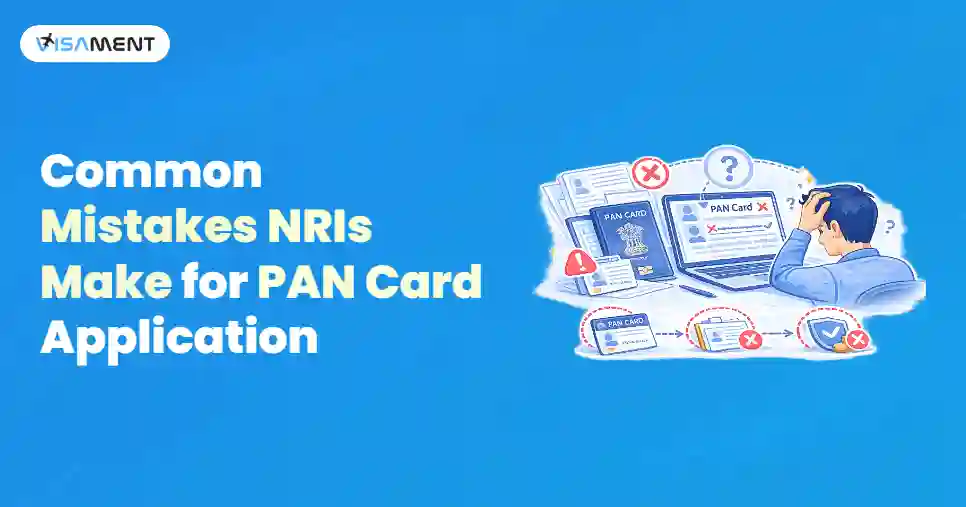
The application process for an Indian PAN card as a Non-Resident Indian (NRI) or Overseas Citizen of India (OCI) seems straightforward on the surface, but in reality, the Income Tax Department of India enforces strict, uncompromising guidelines. A single, tiny mistake, such as uploading an incorrect photo size, signing in to the wrong box, or selecting the incorrect tax code, can result in your application being rejected entirely. For NRIs, preventing a rejection comes down to knowing exactly where the most common pitfalls lie.
This comprehensive guide breaks down the most frequent mistakes applicants make, explaining why they happen and providing clear, actionable steps to ensure your PAN application is approved seamlessly.
Why it happens: Most of the application forms have one or two signature fields. The PAN application form has three different areas requiring your signature or thumb impression. The third box, on the photograph itself, is easy to overlook and is commonly missed most of the time.
What goes wrong: The form is returned to you as incomplete. You must reprint, re-fill, and re-mail. If you have already sent the form internationally, this means you have to pay the courier fees again and incur at least three weeks of additional delay.
How to avoid it:
Here are the three signature areas on the PAN application form:
Before mailing, you should verify all three areas. Better yet, you may let someone else check the form against a diagram of the correct signature positions - fresh eyes catch that you become blind to.
Why it happens: Most of the time, people choose the most convenient document rather than the most current one. An expired passport feels like a valid ID - it still has your name, photo, and date of birth, and a bank statement from eight months ago seems recent enough, but the rules say otherwise.
What goes wrong: The expired passport is not accepted as the identity proof for a fresh PAN application. The bank statements can be used as address proof, but they must be dated within the last three months. Statements older than three months are likely to get rejected.
How to avoid it:
Why it happens: Names can change after many years of emigration and life in another country. Your Indian bank account may list your name as it appears in your old documents. But your passport may have been issued a few years ago with a different name. Also, there's a chance that a US driver's license uses your legal name, in which case it expands the initial that is abbreviated in your passport.
What goes wrong: The NRI PAN card application processor compares the name on the application form with the names on other supporting documents. Any discrepancy can trigger a query or rejection, such as a single additional middle name. Here are some of the common mismatches:
How to avoid it: Before filling out the application form, bring all your documents and compare the name on each one yourself. Use the name exactly the same as it is on your passport as the primary reference. If a document has a different version of your name, then you should include an explanatory covering letter mentioning the discrepancy, or obtain an updated document. Do it before filling the single field on the form.
Have questions? Our experts guide you through every step of the PAN Card Services– no confusion, no delays.
Consult an Expert TodayWhy it happens: The AO (Assessing Officer) code is used to identify the tax jurisdiction responsible for your PAN. NRIs must use the International Taxation AO codes (specific codes assigned by the city and country of residence). The application form requires this code, but it does not provide any guidance on finding the right one.
What goes wrong: If you use a domestic Indian AO code, your application may be flagged during processing and rejected. Worse can also happen; it may be processed and assigned, but to the wrong tax jurisdiction. This may cause problems with your tax filings later.
How to avoid it: Look up the International Taxation AO code for your resident country on the Income Tax Department website before you start filling out the form. You will require: your country of residence and your nearest major city for the relevant Indian consular area. If you cannot find the correct code, then a wrong AO code is among the most damaging and hardest-to-correct errors in the application.
Why it happens: The PAN card photo specifications are strict and specific. Most applicants submit a passport-style photo thinking that it will be acceptable, but passport specifications and PAN specifications have important differences.
What goes wrong: The photo is rejected at verification, and the entire application is returned. If the specifications are violated, then even a good photo can be rejected.
How to avoid it: You should get your photos taken specifically for the PAN applications, and not repurposed passport photos. If you are in the US, a photo service can print to exact dimensions "3.5cmx2.5cm, white background, no glasses, ears visible". Take the photos within 3 months of your intended application date.
Why it happens: Most of the online guides refer to Form 49A (Form 93,94)- known by most of the Indians. When an OCI card holder or foreign national searches for "PAN Card application form", Form 93 appears.
What goes wrong: Most people confuse Form 49A vs 49AA, currently Form 93,94,95,96. Form 93,94 are for Indian citizens (including those who are living abroad), and Form 95,96 are for foreign nationals and OCI/PIO card holders. Submitting the wrong form leads to rejection, and the error is often only discovered weeks into the process after you have mailed the physical documents.
How to avoid it: The rule is quite simple once you know it:
Why it happens: Foreign applicants are usually not aware that overseas bank documents require additional attestation. A clearly printed statement from Bank of America feels official enough, but in the eyes of the Indian Government, it is an unverified foreign document.
What goes wrong: The document is rejected for lack of attestation. You need to get attestation and resubmit, which means you need to visit a bank branch in person or schedule an appointment at an Indian consulate, both of which take time.
What attestation means: For overseas bank statements used as address proof, you need either:
How to avoid it: If you are using an overseas bank statement as address proof, then get it attested by your bank manager before including it in your application package. The visit is going to be quite short, so don't miss it and let it be the reason for application failure.
Why it happens: NRIs who received a PAN card years ago and forgot about it, or those who are unsure whether a family member's earlier application ever went through. Sometimes, the first application "disappeared" into the system without a card arriving, and the applicant assumes it was never processed.
What goes wrong: If a PAN was previously issued in your name and you submit a new application, the system marks it as a duplicate. This results in a penalty and a surrender process- you need to formally surrender one of the PANs. The process is lengthy and administrative. The penalty is a fixed amount of Rs 10,000, no matter whether the duplication was intentional or not.
How to avoid it: Before applying, you must check whether a PAN already exists in your name or not. You can do this by visiting the Income Tax e-filing portal. Then go to "Know your PAN" - you need your name, date of birth, and mobile number. If a PAN already exists, you need a correction/update, not a new application. If you have lost your physical card, then request a reprint- do not apply for a new one.
Why it happens: International tracked mail is more expensive than standard mail. When you are already stretched for time and patience, saving $15-20 on courier costs by cutting the tracking charges seems reasonable.
What goes wrong: Untracked mail disappears without recourse. If your documents do not reach the Protean or UTIITSL processing centre in India, you have no proof of delivery, no claim, and no way to trace what happened. You lose the documents, which may include original certificates, and the fees you have paid for them to be attested and prepared. You must start the process entirely.
How to avoid it: Always use a tracked international courier service with a scan at delivery. The tracking cost is $15-25 additional; the cost of re-doing the application from scratch is $80-120+.
Why it Happens: Once you mail the documents, many applicants shift their attention elsewhere and assume that the process is running on its own. For resident Indian applications, this is fine as the process is faster and better supported. For NRI applications, the assumption of passive progress can be quite costly.
What goes wrong: Some applications have an "Under Process" status for 30, 45, or 60 days. This is usually a sign that a query has been raised - a clarification is needed on a document, a photo issue flagged - that no one has told the applicant. Without tracking status, you may miss the small window to respond before the application lapses.
How to avoid: Check the application status every 7-10 days after submitting the document. Use the Protean tracking portal with your acknowledgment number. If the status remains the same after 20+ working days, you should immediately email Protean or UTIITSL to request a status update. You should include your PAN acknowledgement number and a clear subject line.
Why it Happens: Old Forms 49a and 49aa templates remain widely available online on cached pages, unofficial sites, and even some agency portals during the transition period. The applicants download these old forms and use them without realising that they have been superseded.
What goes wrong: From April 1, 2026, India's Income Tax Department is replacing the current 2-form system with 6 new PAN card forms. All the applications submitted on old templates after the changeover date may be rejected or face processing delays.
New document trap: The form change also introduces a new compulsory requirement- an additional Date of Birth proof document (different from Aadhaar). The applicants who were not aware of this requirement will submit incomplete applications even if they are using the new accurate form.
How to avoid it: You should apply through an authorised service that is already working with the new forms. PAN Card Express is already compliant with the April 2026 changes and will provide the clients with the correct template of the form and checklist of documents.
Securing an Indian PAN card abroad does not have to be so stressful. Most application rejections are completely preventable and stem from minor, easily overlooked details rather than a fundamental lack of eligibility. With the above-mentioned checklist, you can easily catch the formatting errors, name discrepancies, and outdated documents before your paperwork is done. You should always double-check the forms, verify your signatures, and submit your application with complete confidence.
Whether you choose to handle the mailing and tracing independently or decide to take a professional pre-screening service, getting the logistics right is in your control. You may consider taking the PAN card application services from Visament, as they have a team of experts in this field.
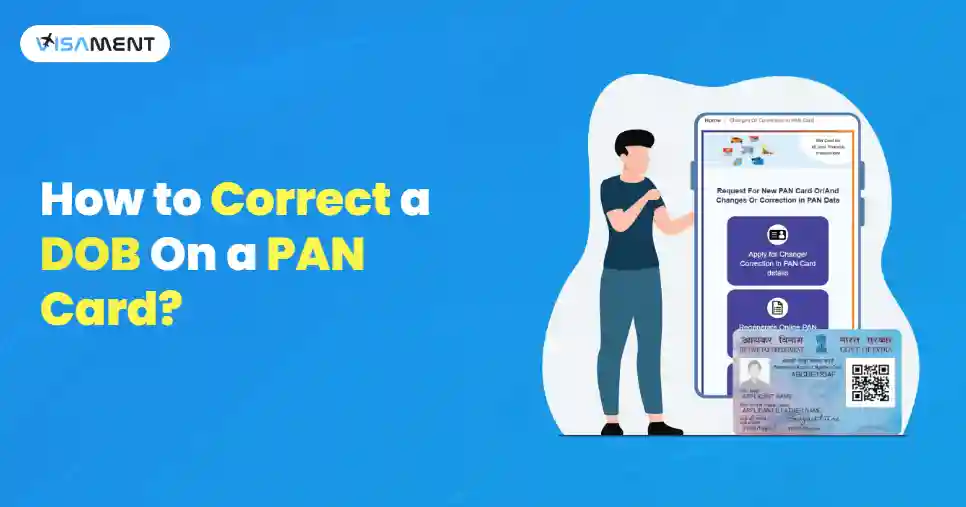
To correct or update the PAN card as an NRI, you need to file a PAN chabge/corerction request through the Protean or UITIITSL portals. You will fill out the correction form, update your details, submit supporting documents, and pay a processing fee.
The documents that are required for the NRI PAN Card are Proof of Identity, Proof of Address, Proof of Date of Birth, and photographs.
Yes, it is mandatory to update your residential status with the Income Tax Department. If you fail to do so, then your PAN card will become inoperative.
A PAN card is not legally mandatory for NRIs. However, it is required if they plan to earn a taxable income, conduct major financial and property transactions, and invest in assets in India.
If the NRI does not have an Aadhaar card, then he is exempt from linking it with his PAN card. But if he holds an Aadhaar card, then it is mandatory to link it with the Aadhaar card to prevent the PAN from becoming inoperative.
NRIs are exempted from Aadhaar mandates. To get a PAN card without an Aadhaar card, you need to apply online using the Protean or UTIITSL website using your foreign passport as primary identity proof and your foreign address for delivery.
Vipul Jain is the Co-Founder of Visament, a trusted platform dedicated to simplifying Indian immigration, consular, and NRI services for applicants across the globe. With extensive expertise in OCI cards, Indian passport services, visa assistance, apostille and document legalization,... See Full Bio

Talk to our documentation experts for free guidance on your application.
PAN Card 2.0: New Features, Benefits and What Existing Holders Need to Know
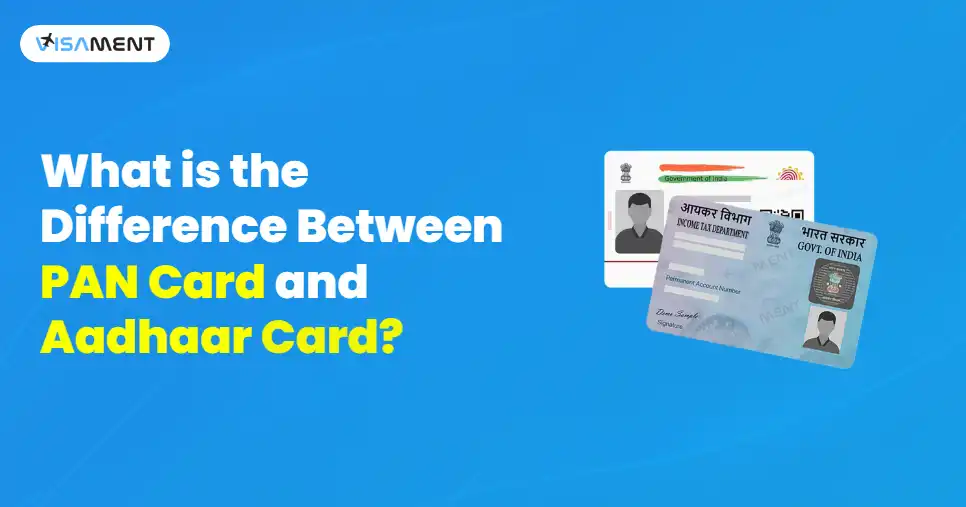
Aadhar Card for NRIs: Document, Eligibility & How to Apply
PAN Card for NRIs: Eligibility, Documents and How to Apply
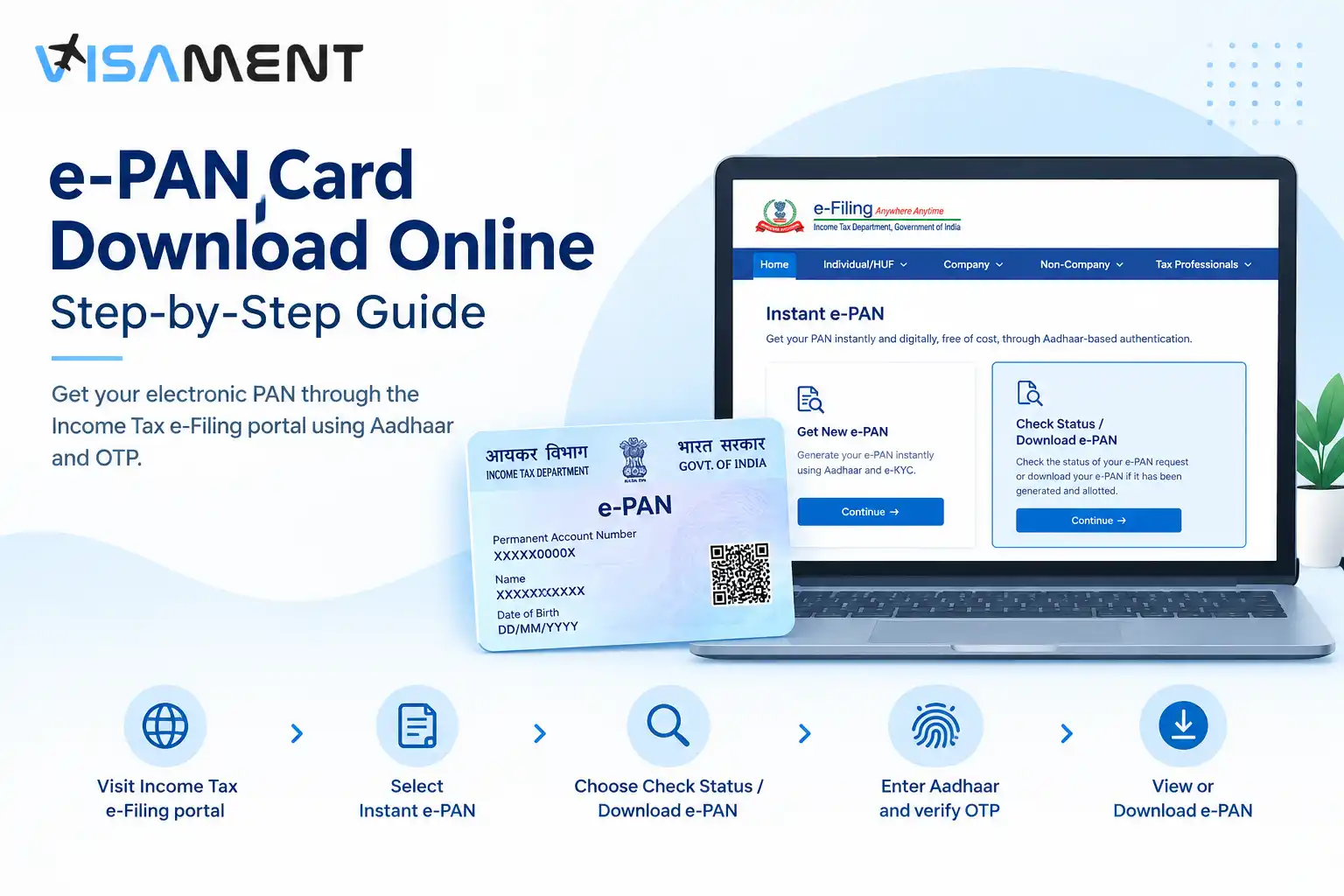
PAN Card Status: How to Track PAN Application Status Online?
Minor PAN Card: How to Apply, Documents Required and Process
_1741091057.png)
When you visit a website, it may store data about you using cookies and similar technologies. Cookies can be important for the basic operations of the website and for other purposes. You get the option of deactivating certain types of cookies, even so, doing that may affect your experience on the website.
It is required to permit the basic functionality of the website. You may not disable necessary cookies.
Used to provide advertising that matches you and your interests. May also be used to restrict the number of times you see an advertisement and estimate the effectiveness of an advertising campaign. The advertising networks place them after obtaining the operator's permission.
Permits the website to recognize the choices you make (like your username, language, or the region you are in). Also provides more personalized and enhanced features.
Aid the website operator to determine how the website performs, how visitors interact with the site, and whether there are any technical issues.