Related Blogs

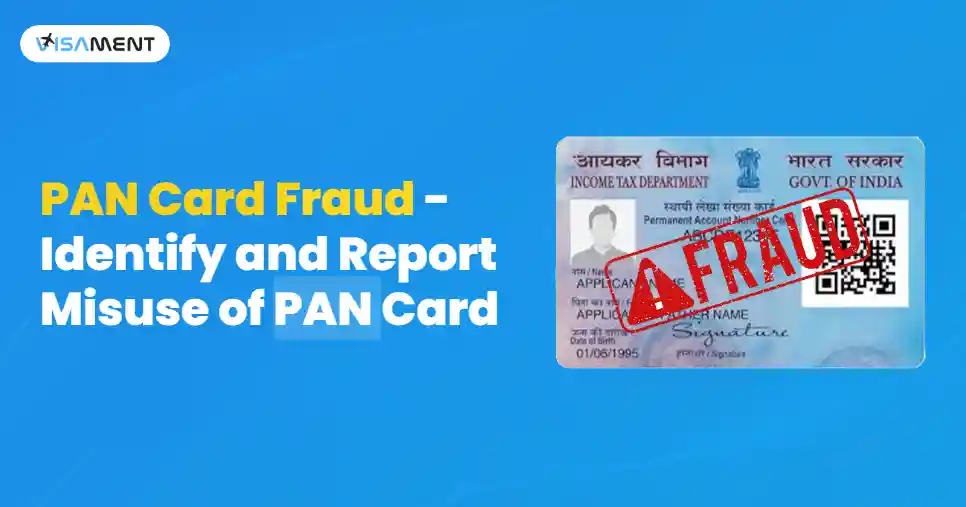
If you discover an unfamiliar loan, credit account, tax entry, or financial transaction connected to your PAN, you may be dealing with PAN card fraud or identity misuse. A PAN number does not by itself give someone access to your bank account, but it can be used alongside other personal information or documents in fraudulent activities. This guide explains how to identify possible PAN misuse, check your tax and credit records, report suspicious activity, and reduce the risk of further fraud.
PAN card fraud is the unauthorised or deceptive use of a person's Permanent Account Number (PAN) as part of identity, financial, or tax-related fraud. PAN is widely used for tax reporting and financial identification, so fraudulent use of PAN information can create problems even when the victim has not personally made the transaction.
For example, a fraudster could potentially use PAN information together with other personal details or forged documents when applying for financial products or carrying out transactions in another person's name.
However, simply sharing or exposing your PAN number does not mean that fraud has definitely occurred. Evidence such as an unfamiliar credit account, tax entry, or financial transaction should be investigated before concluding that your PAN has been misused.
PAN information can become part of different types of identity or financial fraud. Possible scenarios include:
The important point is that PAN misuse generally needs to be considered in the context of broader identity information. A PAN number alone does not automatically enable someone to withdraw money from your bank account or take control of your finances.
PAN-related fraud may remain unnoticed because there is not necessarily an immediate notification when someone uses your PAN information. Watch for unexplained activity such as:
One warning sign does not automatically prove fraud. For example, an unfamiliar tax entry could result from an incorrect reporting of information rather than deliberate identity theft. The next step is to verify the underlying transaction and contact the relevant institution.
There is no single government tool that confirms every type of PAN fraud. A better approach is to check the tax, credit, and financial records where suspicious activity could appear.
The Income Tax Department provides the Annual Information Statement (AIS) through the e-Filing portal. AIS can contain information such as TDS/TCS, specified financial transaction (SFT) information, tax payments, demands and refunds, along with other information. Form 26AS primarily provides tax-credit information, including TDS/TCS data.
If you see information that you do not recognise, investigate the underlying transaction rather than assuming immediately that your PAN was stolen.
For an AIS-related issue, the Income Tax Department provides a grievance route through the AIS section of the e-Filing portal.
Review your credit reports for:
A suspicious credit entry can be an important indication of possible identity misuse. Contact the relevant lender or credit bureau if you find an account that does not belong to you.
Check bank statements, loan communications, investment records, and other financial accounts for transactions you cannot explain.
Keep copies or screenshots of suspicious entries, including dates, reference numbers, communications, and account details. This evidence can be useful when raising a dispute or complaint.
Review your Income Tax e-Filing account and official communications for notices, demands, refund information, or other activity that you do not recognise.
Do not use links received through unexpected emails or text messages to access your tax account. Instead, access the official Income Tax e-Filing website directly.
[Insert image: PAN fraud detection workflow showing suspicious activity → AIS/26AS → credit report → financial institution → complaint | Alt text: "PAN card fraud detection and reporting workflow"]
If you find evidence of possible PAN-related identity fraud, take action based on the type of activity involved.
1. Preserve the evidence.
Save screenshots, statements, emails, SMS messages, loan details, credit-report entries, transaction references, and other relevant records. Do not delete potentially useful evidence.
2. Contact the organisation involved.
If the issue concerns an unknown loan or credit account, contact the lender or financial institution and dispute the account. If the issue concerns an incorrect tax entry, use the appropriate Income Tax Department mechanism and contact the relevant reporting entity where necessary.
3. Report online financial or cyber fraud promptly.
India's National Cyber Crime Reporting Portal provides an online mechanism for reporting cybercrime. For cyber financial fraud, the government directs victims to report immediately through 1930.
4. Make a police complaint when appropriate.
Where the circumstances involve identity theft, forgery, impersonation, or another criminal offence, a police complaint may also be appropriate. The National Cyber Crime Reporting Portal states that complaints are handled by law-enforcement agencies/police based on the information provided.
5. Secure affected accounts.
If the suspected fraud involved compromised online accounts or credentials, change affected passwords and enable available security features such as multi-factor authentication.
The correct reporting route depends on what actually happened. A suspicious AIS entry, an unknown loan, and an unauthorised bank transaction may require different organisations to be contacted.
You cannot eliminate every risk of identity misuse, but you can reduce unnecessary exposure of your PAN and related personal information.
For NRIs, monitoring is particularly useful because an Indian PAN may remain relevant to Indian tax, investment, banking, and other financial activities even while the individual lives overseas.
An incorrect PAN record does not automatically mean that fraud has occurred.
| Situation | Appropriate response |
|---|---|
| Name, address, or other PAN information is incorrect | Follow the appropriate PAN correction/update process |
| Unknown loan or credit account | Contact the lender and dispute the account; review your credit report |
| Unfamiliar tax information | Investigate the transaction and raise the appropriate tax/AIS grievance |
| Online financial fraud | Report promptly through the appropriate cybercrime channel |
| PAN information exposed but no suspicious activity found | Increase monitoring and protect your personal information |
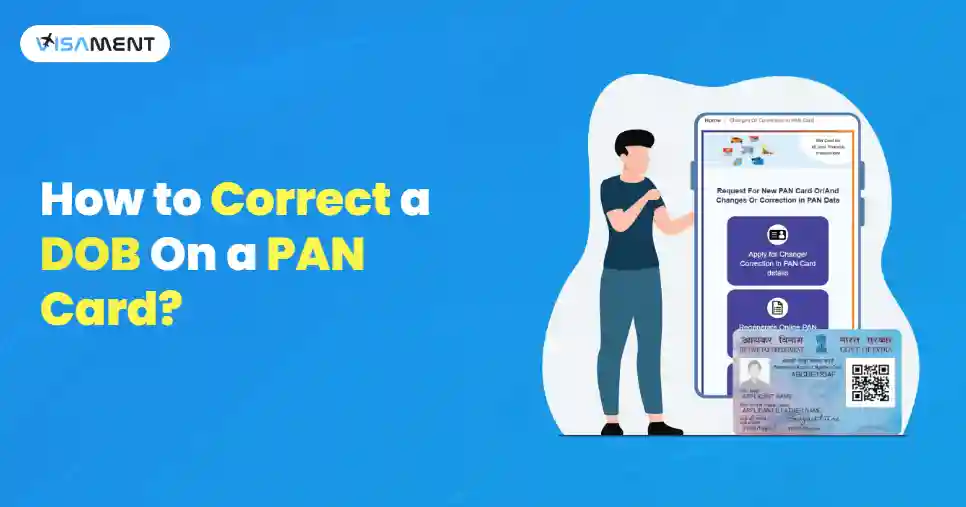
If your issue is simply an incorrect PAN record, use the relevant PAN card details update or correction process rather than treating the discrepancy as confirmed fraud.
You should consider reporting suspected PAN misuse when you find an unexplained financial, credit, tax, or identity-related activity that cannot be attributed to you.
The sooner suspicious activity is documented and reported, the easier it can be to establish what happened and which organisation needs to correct its records.
PAN card fraud is best treated as a potential identity, financial, or tax-related misuse issue, rather than assuming that every exposed PAN number represents fraud. If you discover unfamiliar activity, check your tax and credit records, preserve evidence, contact the organisation involved, and use the appropriate official reporting channel.
Regular monitoring and careful handling of PAN and other personal information can help you identify suspicious activity earlier and reduce the risk of further misuse.
Yes, your identity can be stolen by any criminal along with your money by using your PAN card. So, you must keep your PAN card safe and secure.
Yes, a PAN card can easily be misused for doing the crimial activities. One of the examples is that the criminal can impersonate you and complete your financial transactions in your place.
To report a PAN card fraud, you need to log in to the Tax Information Network of the Income Tax Department. And then to file a complaint, you need to go to the customer care dropdown.
Yes, the PAN cards can be easily faked, and you should always take major precautions whenever you use a PAN card.
If your PAN card is stolen, then you should report this situation to the Income Tax Authorities. You need to visit the online portal of the Tax Information Network and then file a complaint.
Anyone can get all the tax and finance-related information from the PAN card. Apart from this, it can also be used as a valid ID proof for most of the services.
To deactivate your PAN card, you need to visit the online portal of the Tax Information Network of the Income Tax Department.
Review your AIS and Form 26AS for unfamiliar tax-related information, check your credit reports for unknown accounts or enquiries, and review relevant financial records. Investigate any unexplained activity before concluding that fraud has occurred.
PAN information can potentially be used alongside other personal information or documents in a fraudulent loan application. However, a PAN number by itself should not be described as sufficient to obtain a loan.
Vipul Jain is the Co-Founder of Visament, a trusted platform dedicated to simplifying Indian immigration, consular, and NRI services for applicants across the globe. With extensive expertise in OCI cards, Indian passport services, visa assistance, apostille and document legalization,... See Full Bio

Talk to our documentation experts for free guidance on your application.

When you visit a website, it may store data about you using cookies and similar technologies. Cookies can be important for the basic operations of the website and for other purposes. You get the option of deactivating certain types of cookies, even so, doing that may affect your experience on the website.
It is required to permit the basic functionality of the website. You may not disable necessary cookies.
Used to provide advertising that matches you and your interests. May also be used to restrict the number of times you see an advertisement and estimate the effectiveness of an advertising campaign. The advertising networks place them after obtaining the operator's permission.
Permits the website to recognize the choices you make (like your username, language, or the region you are in). Also provides more personalized and enhanced features.
Aid the website operator to determine how the website performs, how visitors interact with the site, and whether there are any technical issues.