Moving to India involves more than booking a flight and finding a place to live. Before relocating, you may need to coordinate your immigration or citizenship status, documents, finances, tax position, housing, healthcare, work, schooling, and household belongings. This moving to India guide explains the main decisions to make before departure, what to arrange during the transition, and what to prioritize after arriving.
Key takeaways
- Your relocation requirements depend on whether you are an Indian citizen, returning NRI, OCI cardholder, or foreign national.
- Review important identity, immigration, financial, tax, medical, and family documents before moving.
- Moving to India can affect your tax residency, so your individual circumstances should be reviewed before relocation.
- Housing, healthcare, employment, schooling, and banking should be planned alongside immigration and documentation.
- Check current customs requirements before shipping household goods or other belongings to India.
- After arrival, prioritize essential documentation, accommodation, utilities, banking, healthcare, and family arrangements.
1. Start by Understanding Your Status
The first step is to determine what legal status you will have in India after the move. The planning process is different for an Indian citizen returning from abroad, an OCI cardholder, and a foreign national.
An Indian citizen returning to India generally has a different set of considerations from a foreign citizen who plans to live in India. An OCI card can provide specified benefits to eligible foreign citizens of Indian origin, but OCI is not the same as Indian citizenship and does not confer all rights available to Indian citizens.
If you are a foreign national, check the immigration permission applicable to your nationality and intended stay before making permanent relocation arrangements. Depending on your circumstances, visa, registration, or other immigration requirements may apply.
Before making travel or housing commitments, confirm:
- Your citizenship and immigration status
- Passport validity
- OCI or visa status, if applicable
- Whether additional registration requirements apply
- The official government or Indian mission guidance relevant to your circumstances
Do not assume that another person's relocation process will apply to you.
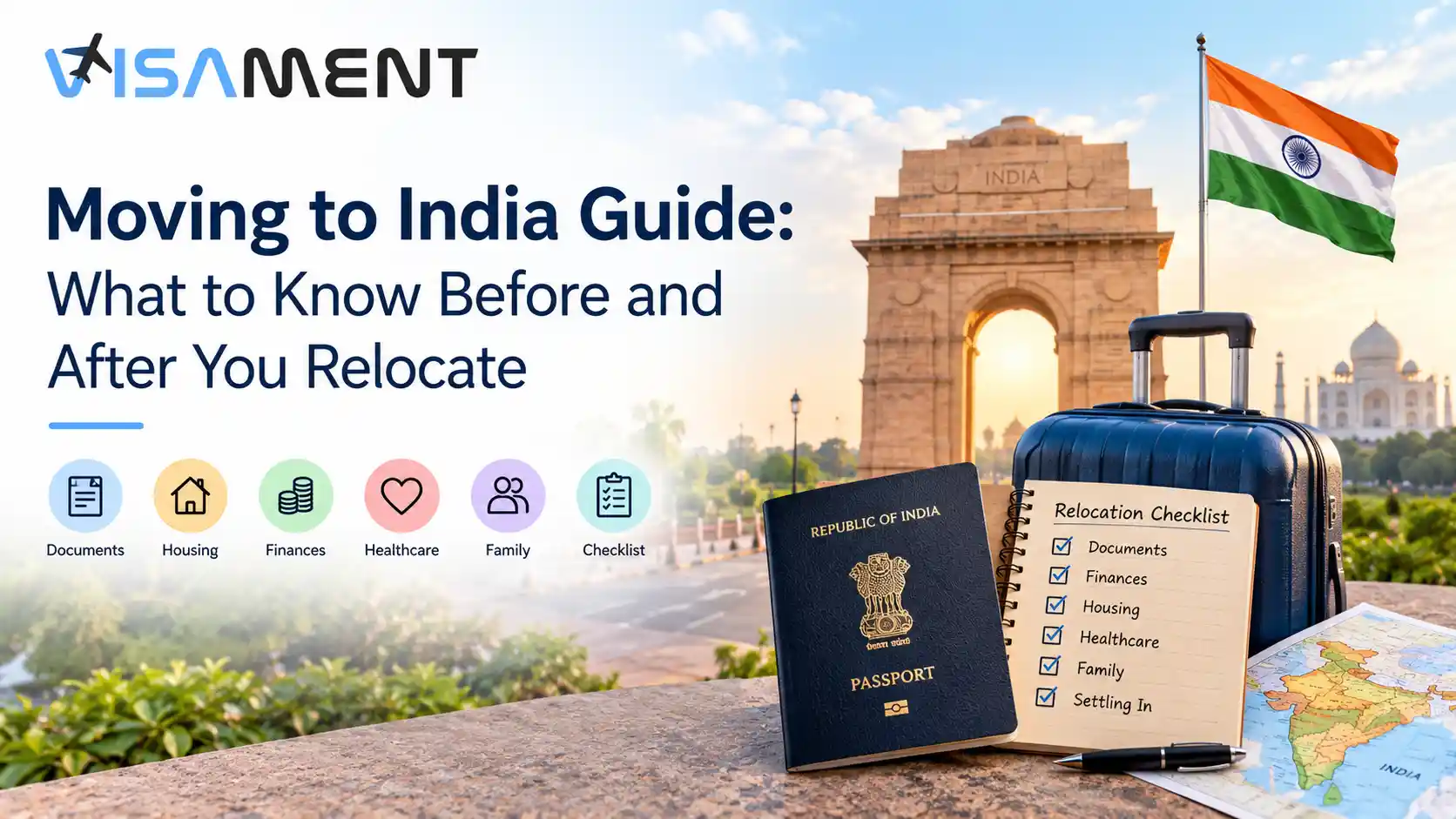
2. Complete Your Pre-Move Checklist
A well-organized move starts several weeks or months before departure. Create one central checklist containing the tasks that must be completed in your current country and the arrangements that need to be made in India.
Documents
Collect important identity and family records, including passports, birth certificates, marriage certificates, education records, medical records, insurance documents, and relevant financial paperwork. Keep secure digital copies as well as physical originals where appropriate.
Money and accounts
Review your foreign bank accounts, investments, loans, insurance policies, recurring payments, and subscriptions. Make a plan for accessing money during the transition and determine which accounts or services need to be updated.
Housing
Decide whether you will initially rent, stay with family, or move into an existing property. If you are unfamiliar with the city, temporary accommodation can give you time to assess neighborhoods before making a long-term decision.
Work and family
Confirm employment arrangements, school admissions, childcare, professional documentation, and any arrangements involving dependants.
Health
Collect medical records and prescriptions and review your health insurance arrangements. If you or a family member has ongoing healthcare needs, identify suitable providers before the move.
Belongings
Separate items into four groups: ship, carry, store, and sell/donate. This can reduce unnecessary shipping costs and simplify customs clearance.
3. Organize Your Immigration and Identity Documents
Your document requirements depend on your status, but preparing them early can prevent avoidable delays.
For an Indian citizen, confirm that your passport and other identity documents are current. Passport Seva provides official information on passport services, including fresh passports, reissue, miscellaneous services, and services available through Indian missions and posts abroad.
For an OCI cardholder or foreign national, check the current requirements applicable to your status through the Ministry of Home Affairs and the relevant Indian mission. The MHA maintains current OCI information, including official guidance, FAQs, and OCI miscellaneous services.
Depending on your circumstances, your document folder may include:
- Valid passport or applicable travel document
- OCI card or Indian visa documentation, where applicable
- PAN and relevant financial records
- Aadhaar documentation, where applicable
- Birth and marriage records
- Children's school and vaccination records
- Medical records and prescriptions
- Insurance documents
- Employment and professional records
- Property or rental documentation
Do not assume that every document applies to every person. Requirements can vary according to citizenship, immigration status, age, family circumstances, and the purpose of the move.
4. Review Taxes and Finances Before Relocating
Tax planning deserves attention before you move because Indian tax residency is determined under applicable tax rules and depends on your individual circumstances and time spent in India.
For tax years beginning on or after April 1, 2026, the Income Tax Department states that residential status is governed by the Income Tax Act, 2025. The basic residency framework continues to consider factors including the individual's period of stay in India and certain circumstances relating to Indian citizens and persons of Indian origin.
That means moving to India does not automatically produce the same tax result for everyone.
Before relocating, consider reviewing:
- Expected days of presence in India
- Income earned in India and abroad
- Foreign investments and financial assets
- Existing Indian investments
- Property income
- Bank accounts
- Tax filing obligations in your current country
- Potential interaction between Indian and foreign tax rules
If your situation involves substantial foreign income, investments, businesses, trusts, property, or complex cross-border transactions, obtain professional tax advice before changing your residence.
Your banking arrangements may also need review. Do not assume that an account opened while you were non-resident should simply remain unchanged after your circumstances change. Ask your bank how your account status and related arrangements should be handled under current RBI rules.

Also Want to Know About
NRIs Returning to India from the UK Check Now!
5. Arrange Housing, Healthcare and Everyday Essentials
Once you know where you plan to live, focus on the practical systems that make daily life work.
Housing
If you are moving to a city you already know well, you may be comfortable arranging permanent housing before arrival. If you are unfamiliar with the area, consider temporary accommodation first and evaluate:
- Commute and transportation
- Schools and childcare
- Healthcare access
- Neighborhood services
- Internet and mobile connectivity
- Grocery and shopping access
- Safety and accessibility needs
- Rental or property costs
Avoid choosing a permanent home solely because it looks convenient online. Local conditions can vary significantly between neighborhoods.
Healthcare and insurance
Arrange appropriate health coverage and keep important medical records accessible. If you take regular medication, plan ahead for continuity of treatment and confirm how prescriptions can be obtained in India.
Everyday services
Plan for mobile connectivity, internet, electricity, water, transportation, domestic services, and other utilities. These may seem minor, but arranging them early can make the first few weeks substantially easier.
6. Plan Work, Schooling and Family Needs
A relocation can affect each family member differently.
If you are employed in India, confirm your employment arrangements and the documents your employer requires. If you are starting a business or working independently, identify the registrations, tax, banking, and professional requirements that apply to your specific structure rather than relying on generic relocation advice.
For families, investigate schools before choosing a permanent home. Consider admission timelines, curriculum, transportation, language, special educational requirements, and the transfer of academic records.
If children are moving from another country, keep copies of school records, birth certificates, vaccination records, and other documents that the relevant school or authority may request.
Partners and dependants may also have different immigration, employment, healthcare, or documentation requirements. Treat each person's situation separately rather than assuming one person's status covers the entire family.
7. Decide What to Do With Your Belongings
Moving household goods internationally requires planning. Start by deciding what is genuinely worth transporting.
For each item, ask:
Ship it → Carry it → Store it → Sell or donate it
Create an inventory of valuable or important belongings and retain relevant purchase or ownership documents where appropriate.
Indian Customs' current 2026 traveller guidance includes provisions concerning baggage and transfer of residence for people relocating to India. Customs treatment can depend on the type of goods, circumstances of travel, and applicable rules, so check the latest official requirements before shipment.
Do not assume that an item permitted in your current country will automatically be exempt from Indian customs requirements.
8. Plan Your First Few Weeks in India
The first few weeks should focus on establishing a stable base rather than trying to complete everything at once.
Prioritize:
- Confirm your accommodation.
- Arrange essential utilities and connectivity.
- Complete any required immigration or local documentation.
- Organize banking and access to funds.
- Set up healthcare and insurance arrangements.
- Complete school or employment onboarding.
- Review your tax and financial position after your actual arrival pattern becomes clear.
- Resolve urgent transportation and daily-life needs.
Keep copies of important applications, receipts, correspondence, and official documents in one secure location.
If you are returning after many years abroad, also allow time to update practical information such as addresses, contact details, bank records, insurance records, and other services that may have changed while you were away.
9. Follow a Simple Relocation Timeline
A flexible timeline can help you avoid last-minute decisions.
|
Timing
|
Main priorities
|
|
2–3 months before
|
Confirm status, review documents, plan taxes and finances, choose a city, research housing and schools
|
|
About 1 month before
|
Finalize accommodation, organize belongings, arrange shipping, collect medical and family records
|
|
Moving week
|
Keep essential documents, medicines, valuables, and important contact information accessible
|
|
First week in India
|
Set up accommodation, connectivity, banking, healthcare, transportation, and urgent documentation
|
|
First 30–90 days
|
Review longer-term housing, employment, schooling, tax, financial, and family arrangements
|
The timeline is a planning framework rather than a legal deadline. Some moves will require more preparation, particularly when immigration, property, schooling, or complex financial matters are involved.
10. Final Moving-to-India Checklist
Before leaving, make sure you have reviewed:
- Citizenship, OCI, visa, or other immigration status
- Passport and identity documents
- Family and civil records
- Tax and financial arrangements
- Banking access
- Housing
- Health insurance and medical records
- Employment or business arrangements
- Schooling and childcare
- Household belongings and shipping
- Customs requirements
- Essential accommodation and utilities for arrival
- Secure digital and physical document backups
If you are moving permanently, revisit your checklist after arrival rather than treating the move as complete on the day you land. Some financial, tax, administrative, and family decisions depend on what actually happens after relocation.
Chat to Support on Whatsapp
Stop worrying about delays. Apply now and get Indian Counsellor Services.
Chat Now Conclusion
Moving to India is easier to manage when you treat it as a series of connected decisions rather than one large task. Start by confirming your legal status, organize your documents, review your tax and financial position, arrange housing and healthcare, and plan work, education, and belongings before departure.
The most important point is to avoid assuming that every returning NRI, OCI cardholder, or foreign national follows the same process. Government requirements can change, and immigration, tax, banking, and customs rules can depend on individual circumstances. For regulated matters, always verify the latest information with the relevant Indian authority before acting.
If you need assistance with Indian documentation as part of your relocation planning, consider getting help with the specific document or service you need rather than treating a general relocation guide as a substitute for individualized advice.