Related Blogs

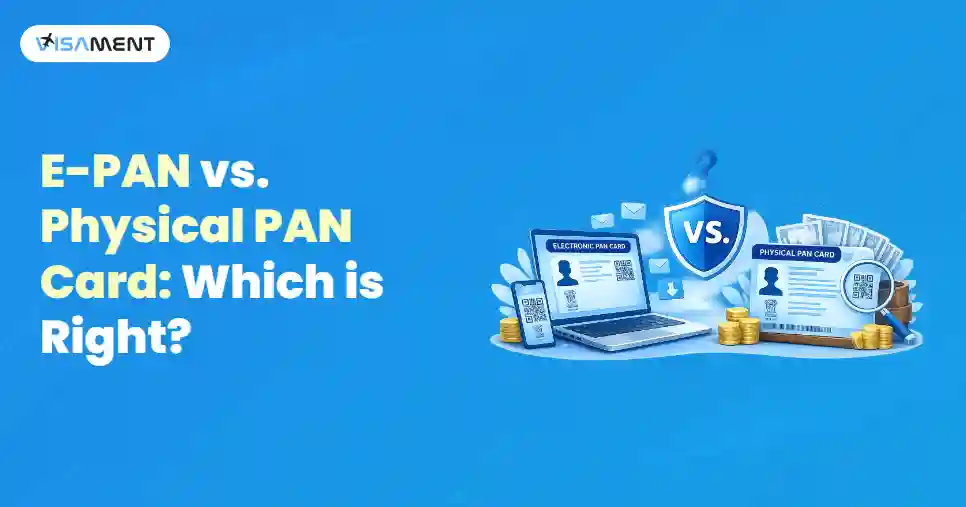
It is crucial to understand the difference between the physical PAN cards and e-PAN cards, as it will help you in choosing the best one as per your lifestyle when you apply for new PAN. Although it is recommended that you opt for both, as it is the best combination. You can enjoy the benefits of both versions of the PAN card.
This guide will help you understand the essential differences between a physical PAN card and an e-PAN card. You will get to learn how each of them works, their potential drawbacks, benefits, and more. We have also suggested the best option for you as per your requirements.
Both the Physical PAN and e-PAN serve the same legal purpose, but their practical differences can impact your daily usage significantly. Here is the difference between the e PAN card and the physical PAN card:
Storage methods are different for both the e-PAN card and the physical PAN card. A physical card can be stored in your wallet, potentially exposed to loss or damage.
While an e-PAN can be stored digitally on multiple devices or in cloud storage, offering redundancy in case one device is lost.
A physical PAN card can be physically stolen, while an e-PAN is opened digitally and a password is required for unauthorised use.
The most obvious difference lies in their format. A Physical PAN card is a tangible, laminated plastic card that you can hold and present. While an e-PAN is a digital document, usually a PDF file, that exists completely on electronic devices.
This means the physical card is carried in a wallet, while the other is saved on your phone or computer.
Both PAN cards are accessed differently. The physical PAN card can be kept in your wallet, while the e-PAN can be kept in a digital device, such as a laptop or smartphone. Sometimes, you may need an internet connection to open and display the PDF file.
This digital dependency can be both a benefit and a drawback, according to your situation.
The table for e PAN card vs Physical PAN Card:
| Feature | Physical PAN Card | E-PAN |
|---|---|---|
| Format | Laminated Plastic Card | Password-protected PDF Document |
| Access | Carried in wallet, presented physically | Accessed on a digital device (phone, laptop) |
| Delivery Time | Approximately 15 working days (Protean, 2026) | According to the latest official guidelines for email (Protean, 2026) |
| Tangibility | Yes, a physical object | No, purely digital |
| Verification | Manual Inspection | Digital display, QR code scan |
| Risk of Loss | Physical loss, damage | Device loss, digital security breach |
A physical PAN card is a laminated plastic card, similar in size to a credit card. It features your signature, photograph, date of birth, and your unique 10-character PAN. This card also contains your full name and the name of your father, making it a valid identity proof.
After you have successfully applied for a PAN card, either online or offline, the physical card is printed and delivered to your communication address. This process generally takes around 15 working days from the application date. This card arrives via post, and you can also monitor its delivery by using the tracking number.
The main feature of a physical card is that it is tangible in nature. You can present it physically for verification, which is generally preferred in traditional settings or by less equipped institutions, incapable of digital verification.
Have questions? Our experts guide you through every step of the PAN Process– no confusion, no delays.
Consult an Expert TodayAn e-PAN card is the electronic version of your Physical PAN card. It is a password-protected PDF file that contains all the details found on your physical card, including your signature, your photo, and the 10-digit PAN. This digital format is easy for online use.
After your PAN application is processed, the e-PAN is usually sent to the email address you provided in your application. As per Protean (2026), you can expect to get your e-PAN within, according to the latest official guidelines for a successful application submission. You can also download it from the official portal of Protean or UTIITSL by using your PAN or acknowledgement number.
The e-PAN PDF is secured with a password to prevent fraud. The password is usually your date of birth in the format of DDMMYYYY. It often includes a QR code for fast verification, which can be scanned by the authorised entities. You can store the digital format easily on your smartphone, laptop, or cloud storage.
Despite the growth of digital documents, the physical PAN card still offers many compelling advantages. It is tangible in nature and accepted widely in traditional settings, which makes it a reliable choice for many. The physical PAN cards are reassuring, especially when you are dealing with older institutions.
Having a physical card provides a sense of security and familiarity that digital documents sometimes lack. For many, a physical card feels more real and official, making them more comfortable using it. The tangible can decrease anxiety in formal settings.
In many parts of India, mostly in smaller towns or rural areas, physical verification remains normal. Not all government offices or institutions are fully equipped to process digital documents. A physical PAN card ensures universal acceptance without the need for any special technology.
One of the best advantages is that you don't need a laptop, smartphone, or internet connection to use it. This makes the physical card best for situations where your device might be out of battery or lost, or where the connectivity is bad. It is a completely independent form of identification.
A quick Summary:
An e-PAN is a modern and highly convenient way to keep track of your PAN. Because it is digital, it fits perfectly into our paperless world. It is incredibly easy to find, use, and store safely.
Choosing an e-PAN helps the planet by saving the plastic used to make physical cards and the paper used for forms. It is a small but necessary step toward a greener and paperless future.
With an e-PAN, your tax ID is always just a few taps away on your smartphone. You never have to worry about leaving your wallet at home or losing your card. This quick access is very helpful if you suddenly need to provide your PAN details without warning.
Keeping your e-PAN on a phone or computer is often much safer than carrying a physical card that could be stolen or lost. You can lock your digital card with a password or encrypt it in cloud storage, making it very hard for the wrong people to get hold of your information.
Quick summary:
 Also Want to Know About PAN Application Status Meaning? Check Now!
Even though a plastic PAN card is useful, having a physical card has some clear downsides. Most of these problems happen simply because it is a physical object that you have to take care of and wait for.
When you apply for a new Physical PAN card or ask for a reprint, you have to wait for it to be printed and mailed to your house. This delivery process can take up to 15 working days. This long wait can be a big problem if you need your PAN card immediately for something important, like opening a bank account.
The biggest problem with a physical card is that you can easily lose it or damage it. Your wallet could get stolen, you might misplace the card, or it could get ruined over time from everyday use. If you need to replace a lost or broken card, getting a new one takes time and requires you to apply all over again.
You might feel like you always have to keep the card in your wallet just in case you need it. This takes up extra space and makes it more likely that you will lose it or have it stolen along with other valuables. It also means that your private personal details are always sitting in your pocket.
Quick points:
Using a digital PAN card is very convenient, but there are a few important things to keep in mind because it lives on your phone or computer. To have a smooth and safe experience, you need to make sure your digital devices are secure.
Even though the e-PAN is legally valid on your screen, some offices or banks might still ask you for a paper copy. This means you might need a printer from time to time, which goes against the idea of being completely paperless. It is always a good idea to check ahead of time if a digital version is okay or if you need a printout.
To use your e-PAN, you must have a working device like a smartphone, laptop, or tablet. This means you depend on your device's battery life and sometimes a mobile network. If your phone dies or you are in a place with no signal, you won't be able to open or show your e-PAN.
The safety of your e-PAN depends completely on how secure your device is. If your phone or computer gets a virus, gets hacked, or is stolen, your e-PAN details could be at risk. It is highly important to protect your devices using strong passwords, fingerprints, or face locks, and trusted antivirus software.
The decision between a physical PAN card and an e-PAN card largely depends on the individual's preferences, lifestyle, and how they conduct their financial transactions. There is no one 'best' option, so you should rather choose the one that matches most closely with your needs. The combination of both of them might work the best.
You should keep in mind where and how often you use your PAN card. If you visit banks, government offices, or engage in offline property transactions more often, the physical card offers immediate and easy verification. If your interactions are mostly online, such as ITR filing, digital investments, and online KYC, then e-PAN would be more convenient.
If your preference is traditional documents, you rarely use smartphones for official purposes, or live in an area with bad internet, a physical PAN card would be more suitable. Conversely, if you are tech-savvy, conduct most of the transactions online, and want instant access, the e-PAN would be a preferred choice. You should consider the fact that how comfortable you are with the digital documents.
For most of the Indians, the best thing would be obtaining both a physical PAN card and an e-PAN. When you apply for a new PAN, you will automatically receive an e-PAN via email, and the physical card is dispatched separately. This way, you can enjoy the benefits of both: the reliability of a physical PAN card for offline use and the convenience of an e-PAN card for digital access.
As we see, the trend is clearly towards greater digitisation, with the e-PAN becoming quite prevalent and accepted across all sectors. As the digital infrastructure is improving and more services are moving online, the e-PAN becomes the primary mode of obtaining the PAN application for many. However, the physical card will continue to play an important role for those who need it.
Understanding the difference between a physical PAN card and an e-PAN card helps you make an informed choice according to your lifestyle. If you apply for a PAN using official channels, you will automatically receive both versions, that proviodes you the flexibility of instant digital access and the reliability of a physical document. This dual approach makes sure that you always stay prepared for all financial transactions, whether online or offline, without delays.
You may also consider taking assistance from the experts of Visament, as they have many years of experience. They can help you in applying for the PAN card, whether physical or e-PAN. You can get them from the comfoprt og yoru home at affordable prices.
Yes, both documents are equally and legally valid as per the Income Tax Department of India. ePAN is a digitally signed document containing a verifiable QR code that makes it valid proof of identity and PAN for all official and financial transactions, such as opening bank accounts, filing taxes, or making investments.
Yes, the unique 10-character alphanumeric number is the same. The only difference is the medium. Both of them hold identical legal weight, display the same personal details, and link to the same tax profile.
Yes, you can convert your e-PAN card to a physical PAN card. If you initially applied for an e-PAN only and now want a physical plastic card, you don't need to apply for a new number (having more than one PAN is illegal). Instead, you can apply for the PAN reprint.
Yes, if you have lost your physical PAN card or just want a digital backup on your phone, you can download an e-PAN. If your PAN was issued or updated recently (within the last 30 days), you can usually download the e-PAN free of charge from the Protean or UTIITSL website by using your acknowledgement number. If it has been longer than 30 days, you cans till download it by paying a small online processing fee of approximately INR 8.26.
If you have applied for both options together: The e-PAN is usually generated and emailed to you within a few hours to a couple of days. The physical PAN card is printed and dispatched via post, usually arriving at your communication address within 15 working days from the date your application is approved.
It depends on how you apply: Completely Free: If you apply for an instant e-PAN directly through the Income Tax e-filing portal using your Aadhaar-linked mobile number for OTP authentication, it is 100% free. Nominal Charge: If you apply through standard service portals like UTIITSL or Protean, there is a small processing fee (around INR 66 to 72 for just the e-PAN, or roughly INR 101 to 107 if you choose the bundle that includes both the e-PAN and the physical card delivery).
Vipul Jain is the Co-Founder of Visament, a trusted platform dedicated to simplifying Indian immigration, consular, and NRI services for applicants across the globe. With extensive expertise in OCI cards, Indian passport services, visa assistance, apostille and document legalization,... See Full Bio

Talk to our documentation experts for free guidance on your application.
PAN Card 2.0: New Features, Benefits and What Existing Holders Need to Know
PAN Card for NRIs: Eligibility, Documents and How to Apply
Minor PAN Card: How to Apply, Documents Required and Process
Business PAN Card: Eligibility, Documents & How to Apply
Minor PAN Card to a Major PAN Card - Benefits & Process


When you visit a website, it may store data about you using cookies and similar technologies. Cookies can be important for the basic operations of the website and for other purposes. You get the option of deactivating certain types of cookies, even so, doing that may affect your experience on the website.
It is required to permit the basic functionality of the website. You may not disable necessary cookies.
Used to provide advertising that matches you and your interests. May also be used to restrict the number of times you see an advertisement and estimate the effectiveness of an advertising campaign. The advertising networks place them after obtaining the operator's permission.
Permits the website to recognize the choices you make (like your username, language, or the region you are in). Also provides more personalized and enhanced features.
Aid the website operator to determine how the website performs, how visitors interact with the site, and whether there are any technical issues.