Related Blogs

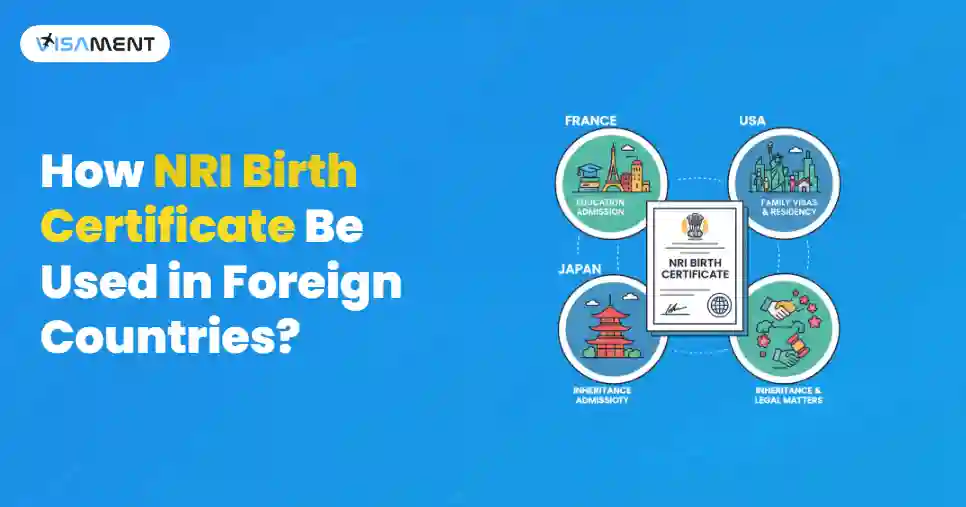
NRIs living abroad may need their Indian birth certificate for various official purposes, including immigration applications, foreign citizenship, school admissions, marriage registration, and family documentation. However, having an Indian birth certificate does not automatically mean every foreign authority will accept it without additional verification. Understanding its uses, apostille requirements, and translation rules can help NRIs prepare their documents correctly and avoid unnecessary delays.
An Indian birth certificate is an official civil record issued by the competent birth registration authority in India. It generally contains information such as the individual's name, date of birth, place of birth, and parents' details, depending on the registration record.
For NRIs, this document can be useful when dealing with government departments, educational institutions, immigration authorities, and other organizations overseas. It provides documentary evidence of birth details that may be required for citizenship, permanent residency, or other official procedures.
An Indian birth certificate is different from a birth certificate issued by a foreign country's civil registration authority. The country of birth and the issuing authority determine which document and authentication requirements apply.
An Indian birth certificate can serve several purposes outside India. Its acceptance depends on the requirements of the authority or institution requesting the document.
Foreign immigration authorities may request an Indian birth certificate as part of an immigration or permanent residency application.
The certificate can help establish:
For example, an Indian citizen applying for permanent residency in Canada or Australia may be asked to provide a birth certificate to support personal or family details included in the application.
A birth certificate is supporting documentation, not proof of immigration eligibility. Applicants must still meet the destination country's immigration requirements and submit the other documents requested by the relevant authority.
An Indian birth certificate may be required when an individual applies for foreign citizenship or needs to establish their family background.
For example, a person applying for citizenship through descent may need to submit birth records to establish their relationship with a parent or another qualifying family member.
Depending on the country's nationality laws, the certificate may help verify:
However, an Indian birth certificate does not automatically establish eligibility for foreign citizenship. The destination country's nationality laws determine whether the applicant qualifies and which supporting documents are acceptable.
Schools and educational institutions in foreign countries may request birth certificates during admission or student record verification.
An Indian birth certificate can help establish a child's age and date of birth, particularly when enrolling in a school overseas.
It may also be requested when:
For example, parents relocating from India to the UK may be asked to provide their child's birth certificate during school registration.
The exact requirements depend on the institution. Some schools may accept alternative identity or age documents.
Certain foreign authorities may request a birth certificate during marriage registration or other legal procedures.
Depending on local regulations, the certificate may help establish a person's age, date of birth, or identity details.
It may be requested for:
However, a birth certificate is not universally required for marriage registration. Requirements vary between countries and local registration authorities. Applicants should confirm which documents are necessary before submitting an application.
An Indian birth certificate can help establish a parent-child relationship when an overseas authority requests family documentation.
This can be particularly relevant when an NRI applies for family sponsorship, dependent status, or family reunification.
For example, parents living in the USA may need to submit their child's Indian birth certificate when an authority requests evidence of the relationship.
The certificate may contain the names of the parents, making it useful for verifying family details. However, if the names are missing, incomplete, or inconsistent with other records, additional supporting documents may be necessary.
Apart from immigration and citizenship, an Indian birth certificate may be requested for other administrative purposes overseas.
These may include:
Whether a birth certificate is necessary depends on the organization and the specific service being requested.
An Indian birth certificate may require apostille or normal attestation before it can be submitted to a foreign authority. The requirement depends on the destination country and the organization requesting the document.
The Ministry of External Affairs (MEA), Government of India, provides authentication services for Indian documents intended for overseas use.
India has been a member of the Hague Apostille Convention since 2005. An apostille is used for eligible public documents intended for use in another country where the Convention applies.
Indian birth certificates are among the personal documents eligible for apostille through the prescribed MEA process. Depending on the document and applicable procedure, authentication by the designated state or Union Territory authority may be required before MEA apostille.
Normal attestation is the authentication route used for countries where the Apostille Convention does not apply or where apostille is not accepted.
The document may need authentication by the relevant Indian authorities, followed by further legalization requirements specified by the destination country.
|
Basis |
Apostille |
Normal Attestation |
|---|---|---|
|
Purpose |
Authentication under the Hague Convention |
Authentication for countries where apostille is not applicable |
|
Applicable countries |
Convention countries where it is in force between the relevant states |
Countries where apostille is not accepted |
|
Process |
MEA apostille for eligible documents |
Relevant authentication and legalization process |
|
Additional requirements |
Generally replaces diplomatic or consular legalization under the Convention |
Further embassy or consular legalization may be required |
Important: An apostille verifies the origin of a public document, including the authenticity of the signature and official seal. It does not verify whether the name, date of birth, or other information recorded on the birth certificate is factually correct.
Before submitting a certificate, check the destination country's requirements and the receiving authority's instructions.
An Indian birth certificate does not always need translation for overseas use. The requirement depends on the language accepted by the receiving authority.
Many Indian birth certificates are issued in English, but some contain information in regional languages or multiple languages.
If the destination authority does not accept the language used in the certificate, it may require a certified translation.
Before arranging a translation, check:
For example, an NRI submitting an Indian birth certificate to an authority in Germany or France should check the specific translation requirements rather than assuming that an ordinary translation will be accepted.
Preparing the correct birth certificate is important because differences in personal information or document format can create verification problems.
Before submitting an Indian birth certificate overseas, check the following:
If the birth certificate contains incorrect names, dates, or parent details, consider addressing those discrepancies before arranging authentication. An apostille does not correct errors in the underlying document.
An Indian birth certificate can be an important supporting document for NRIs dealing with foreign immigration authorities, citizenship applications, educational institutions, marriage registration, and family documentation. However, acceptance depends on the purpose of submission and the destination country's requirements.
Before using the certificate abroad, verify its details, authentication requirements, and translation rules. If corrections or apostille assistance are needed, addressing them before submission can help avoid unnecessary documentation problems.
Need help preparing your Indian birth certificate for overseas use? Visament can assist with birth certificate documentation, correction guidance, and apostille or attestation requirements.
Yes, the NRIs can obtain a birth certificate in India. Firstly, place an order for a birth certificate document, fill out all the necessary details, then upload all your original documents, and make the payment online. Your new birth certificate will be fetched by the service providers, and they will email it to you.
To get your unregistered birth certificate, you need to visit the local municipality/gram panchayat and get a Non-Availability Certificate (NABC), then submit an affidavit and pay the applicable late fees.
If your child is born in a foreign country, then you can obtain their birth certificate by first registering at the nearest Indian Consulate or Embassy within one year of their birth. Then you need to apply for citizenship under Section 4(1) of the Citizenship Act, 1955. The documents required are parental passports and their foreign birth certificate.
According to the Registration of Births and Deaths (Amendment Act), 2023, the birth certificate is a single and compulsory document for many services, such as driving licenses, government jobs, educational admission, and voter registration. It is effective from October 1, 2023, and for the children who were born after Oct 1, 2023, birth certificates are the only document that can be used as proof of date of birth for passports.
Yes, you can get an Indian passport without having a birth certificate, especially for those born before October 1, 2023. According to the regulations of 2016, the applicants can submit other documents, such as an Aadhaar card, a PAN card, etc.
You can correct a spelling mistake in your birth certificate by submitting a correction application to your local gram panchayat, municipal corporation, or the registrar of births and deaths.
An Indian birth certificate may support a foreign citizenship application by establishing birth details or parentage. However, the destination country's nationality laws determine the eligibility requirements and acceptable evidence.
A name discrepancy may lead to additional verification or a request for supporting documents. Depending on the nature of the difference, the receiving authority may require an explanation, additional identity records, or correction of the birth certificate.
Vipul Jain is the Co-Founder of Visament, a trusted platform dedicated to simplifying Indian immigration, consular, and NRI services for applicants across the globe. With extensive expertise in OCI cards, Indian passport services, visa assistance, apostille and document legalization,... See Full Bio

Talk to our documentation experts for free guidance on your application.


When you visit a website, it may store data about you using cookies and similar technologies. Cookies can be important for the basic operations of the website and for other purposes. You get the option of deactivating certain types of cookies, even so, doing that may affect your experience on the website.
It is required to permit the basic functionality of the website. You may not disable necessary cookies.
Used to provide advertising that matches you and your interests. May also be used to restrict the number of times you see an advertisement and estimate the effectiveness of an advertising campaign. The advertising networks place them after obtaining the operator's permission.
Permits the website to recognize the choices you make (like your username, language, or the region you are in). Also provides more personalized and enhanced features.
Aid the website operator to determine how the website performs, how visitors interact with the site, and whether there are any technical issues.