Related Blogs

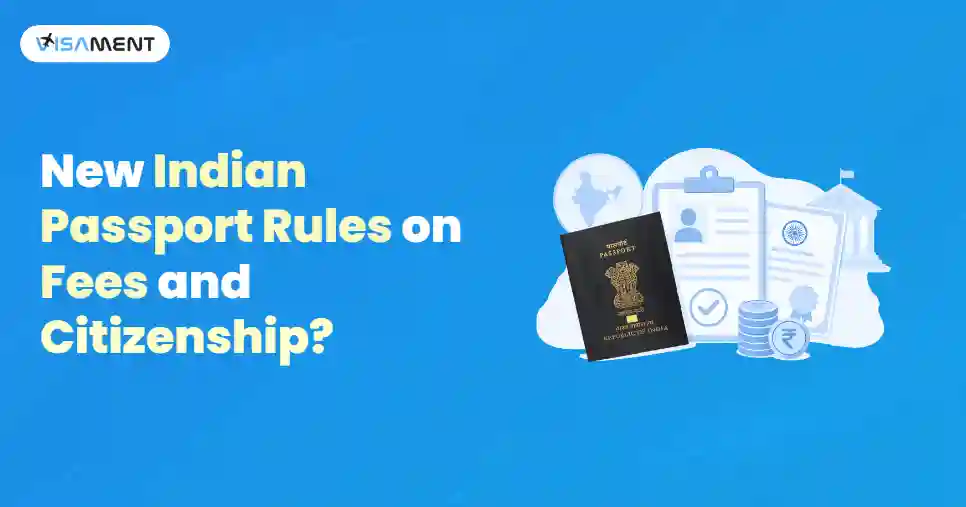
The Indian Government and the Ministry of External Affairs have issued 2 new statements regarding the Indian passport. During the Passport Seva Divas on June 24, 2026, it was declared that the Indian passport is only a travel document, not proof of citizenship. Secondly, the passport application fees have been hiked. The new passport fees will come into effect from 1st July 2026. Ever since these two statements have been announced.
This blog will help you to understand all about the Indian Passport Latest Update and the Indian Passport Latest News.
No. An Indian passport is not conclusive proof of Indian citizenship. According to the Ministry of External Affairs (MEA), a passport is primarily a travel document issued to facilitate international travel and verify the holder's identity abroad. While it is issued after the government verifies an applicant's eligibility, it does not by itself establish citizenship if it is challenged under the law. In such cases, the concerned authorities may require additional documents to confirm an individual's citizenship status.
The Government of India has revised the Passport Fee structure for passport applications through an amendment to the Passport Rules, 1980. The new rules will come into effect on July 1, 2026.
| Type of Service | Booklet Size | Normal Passport Fee | Tatkal Passport Fee |
|---|---|---|---|
| Fresh or Reissue | 36 pages | Rs. 2,500 | Rs. 5,000 |
| Fresh or Reissue | 60 pages | Rs. 3,500 | Rs. 6,000 |
|
For Minors (up to 18 years) |
36 pages | Rs. 1,500 | Rs. 5,000 |
| Lost, damaged, or stolen | 36 pages | Rs. 5,000 | Rs. 7,500 |
| Lost, damaged, or stolen | 60 pages | Rs. 6,000 | Rs. 8,500 |
| Type of Service | Booklet Size | Standard Fee | Tatkal Fee |
|---|---|---|---|
| Fresh or Reissue | 36 pages | Rs. 1,500 | Rs. 2,000 |
| Fresh or Reissue | 60 pages | Rs. 2,000 | Rs. 2,000 |
|
For minors (up to 18 years) |
36 pages | Rs. 1,000 | Rs. 2,000 |
| Lost, damaged, or stolen | 36 pages | Rs. 3,000 | Rs. 5,000 |
| Lost, damaged, or stolen | 60 pages |
Rs. 3,500 |
Rs. 5,500 |
The revised passport fee structure, effective 1 July 2026, will impact all applicants applying for a new passport, passport reissue, or Tatkaal service. The following groups are particularly affected:
Travel to a foreign country as often as you like! Enjoy unlimited and seamless trips.
This clarification was declared during a detailed briefing on India's rapidly expanding passport and mobility ecosystem.
Under the Citizenship Act, 1955, there are 4 ways to obtain an Indian citizenship. These are:
 Also Want to Know About Passport for Government Employees? Check Now!
The current update on the Indian passport system highlights two major changes that every applicant must be aware of. Firstly, the MEA has clarified that an Indian passport is primarily a travel document and should not be treated as a standalone proof of citizenship. Second, the revised passport fee structure means applicants should plan and budget accordingly before applying or renewing their passports.
These updates are intended to provide clarity and simplify the passport application services. Before submitting your application, always verify the latest guidelines and fee structure on the official Passport Seva website to avoid delays and issues.
No. Aadhaar cards, PAN cards, Voter ID and even Indian passports are not considered conclusive proof of Indian citizenship. These documents are mainly used to establish your identity, residency or eligibility for specific services and taxation.
Yes, you should definitely apply for a passport before July 1, 2026. The MEA is significantly increasing the passport service charges, which will take effect on July 1, 2026.
A passport is universally recognised as the highest form of identification and proof of citizenship for international travel, but its requirements vary based on your specific jurisdiction.
The Indian Government clarified that a passport is not conclusive proof of citizenship because it is legally defined as a travel document issued under the Passports Act, 1967.
In India, there is no single document that serves as a conclusive, standalone proof of citizenship for native-born ciitzens. Authorities usually review a chain of documents, such as birth certificates and domicile certificates.
Yes, a passport remains a highly valid travel and identity document. A passport establishes your nationality abroad, but it is considered a standalone travel document rather than a form of citizenship.
The government has increased the passport application fees to align the charges with the rising administrative costs of processing, printing and securing passports.
Under the revised fee structure implemented via the Passport Amendment Rules, 2026, a Tatkaal passport costs Rs. 3500 for a 36-page booklet and Rs. 6000 for a 60-page booklet.
Yes, the passport fees vary for both minors and adults in India. Minors below 18 years pay lower application fees than adults, and their passports have a shorter validity.
The revised passport fees officially come into effect on July 1, 2026.
Yes, NRI passport applications are directly affected by the new rules. NRIs face a revised fee structure, simplified documentation procedure and specific application guidelines.
Passport application fees are non-refundable. The government will not issue a refund if your application is rejected or denied
Vipul Jain is the Co-Founder of Visament, a trusted platform dedicated to simplifying Indian immigration, consular, and NRI services for applicants across the globe. With extensive expertise in OCI cards, Indian passport services, visa assistance, apostille and document legalization,... See Full Bio

Talk to our documentation experts for free guidance on your application.
When you visit a website, it may store data about you using cookies and similar technologies. Cookies can be important for the basic operations of the website and for other purposes. You get the option of deactivating certain types of cookies, even so, doing that may affect your experience on the website.
It is required to permit the basic functionality of the website. You may not disable necessary cookies.
Used to provide advertising that matches you and your interests. May also be used to restrict the number of times you see an advertisement and estimate the effectiveness of an advertising campaign. The advertising networks place them after obtaining the operator's permission.
Permits the website to recognize the choices you make (like your username, language, or the region you are in). Also provides more personalized and enhanced features.
Aid the website operator to determine how the website performs, how visitors interact with the site, and whether there are any technical issues.