Related Blogs

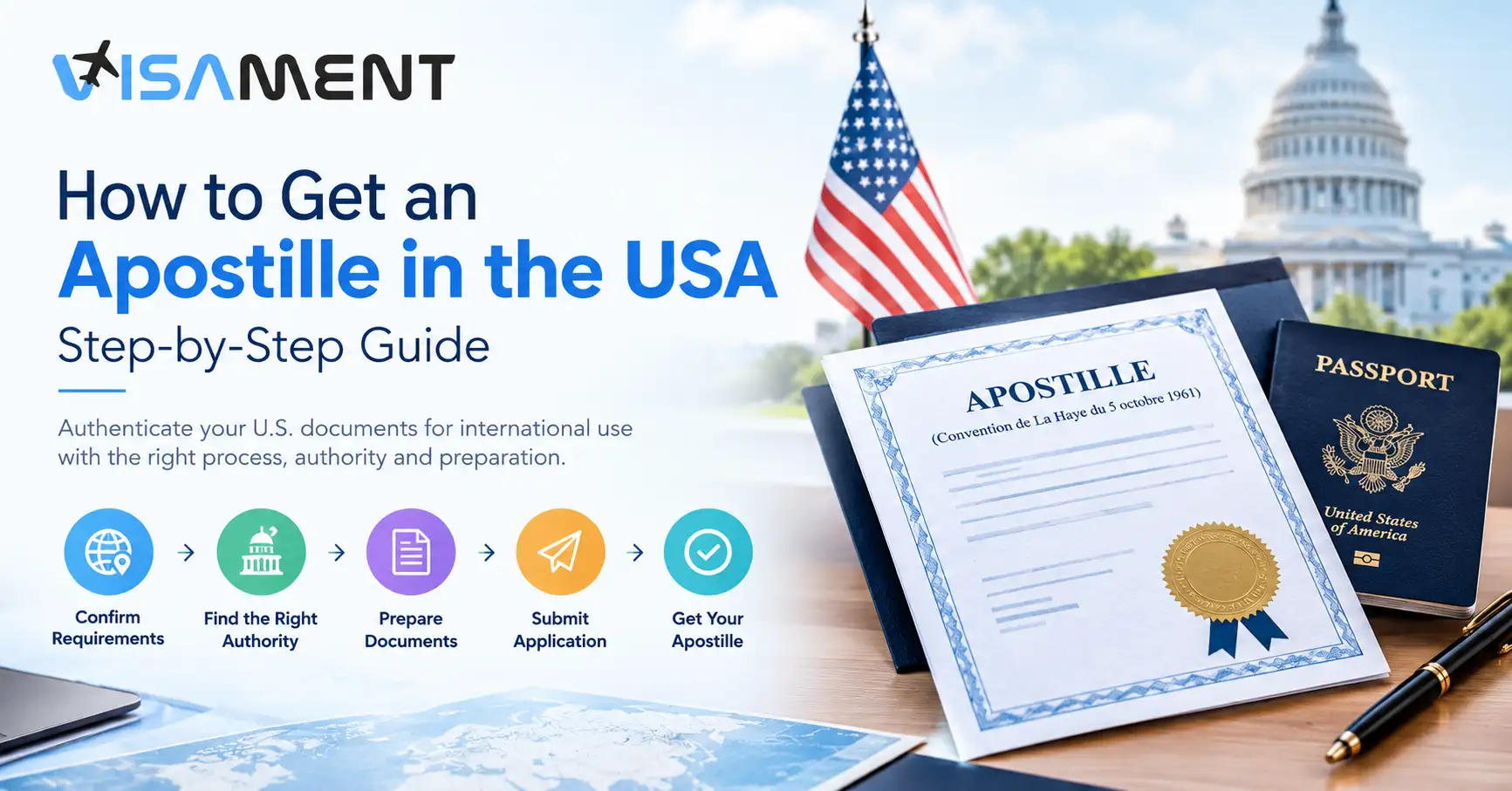
Need to use a U.S. document in another country? You may need an apostille, but the correct process depends on the document, the authority that issued or certified it, and the country where you plan to use it. State-issued records and federal documents can follow different procedures, and some documents require additional certification before submission.
This guide explains how to choose the right authority, prepare your paperwork, apply for an apostille, and check the latest requirements before sending your documents.
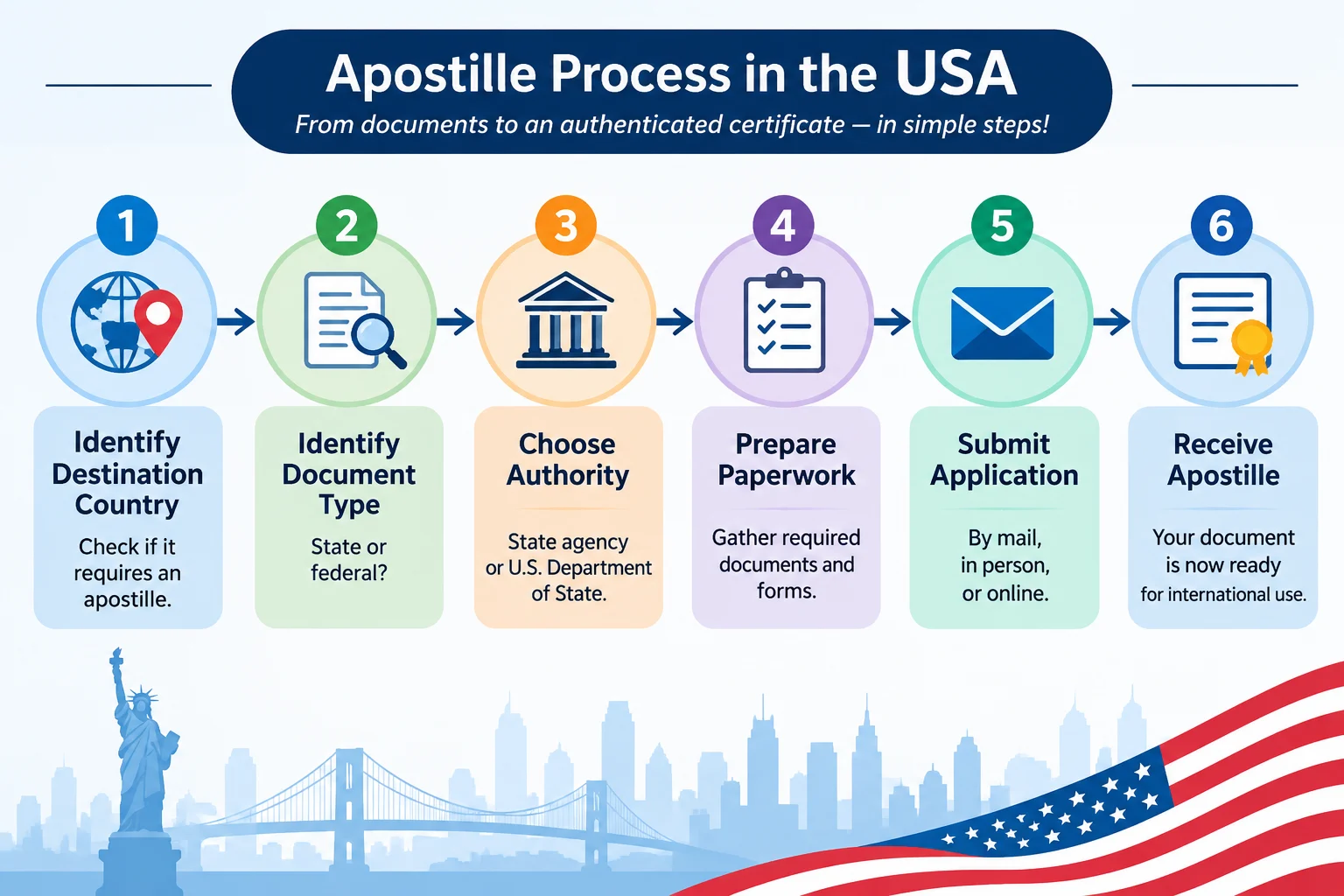
Before preparing your documents, confirm the requirements of the country where you will use them. An apostille is a certificate used to authenticate qualifying public documents for use between countries where the 1961 Hague Apostille Convention applies. It replaces the traditional legalization process covered by the Convention.
If the Convention does not apply to your situation, you may need an authentication certificate followed by additional legalization through the destination country's embassy or consulate. Do not assume that every country follows the same process.
Check the official HCCH Apostille Convention status table and confirm the requirements with the receiving institution or the destination country's embassy or consulate. Even when an apostille is appropriate, the recipient may require a particular document format, translation, or supporting paperwork.
The next step to apply for Apostille in USA is determining which office can authenticate your document. In the United States, the correct route generally depends on whether the document is state-issued, notarized, or issued by a federal agency.
|
Document type |
General route |
|---|---|
|
Birth or marriage certificate issued by a state |
Follow the issuing state's vital-record and apostille requirements. |
|
Power of attorney or affidavit notarized in a state |
Follow that state's rules for authenticating the notary's signature or commission. |
|
FBI background check |
Follow the U.S. Department of State's federal authentication procedure. |
|
Other federal documents |
Check the federal requirements for the issuing official and document. |
For state-issued vital records, you may need a certified copy from the relevant vital-records office before applying to the state's designated apostille authority. A notarized private document may require a different type of verification. Federal documents follow separate requirements.
Do not send a document to an authority simply because it is located near you. The issuing jurisdiction and the document's certification history determine the appropriate route.
Start with the U.S. government's guide to authenticating documents for use abroad. For a state document, check the official website of the Secretary of State or other designated authority in the state that issued or notarized it.
Once you know the correct authority, check its document requirements before completing an application. The paperwork needed for an apostille is not identical for every document.
Use this checklist as a starting point:
For example, a state-issued birth certificate may need to be obtained in certified form and processed through the issuing state's designated route. A power of attorney may need notarization and verification of the notary's authority. An FBI background check follows federal instructions instead.
After confirming the requirements and preparing the document, submit your request to the appropriate authority. Follow these steps in order.
For qualifying federal documents, the U.S. Department of State's Office of Authentications uses Form DS-4194, along with the document, applicable fee, and required submission materials. The form is not a universal requirement for every state-level apostille; state authorities have their own procedures.
Before sending federal documents, review the Office of Authentications' current instructions. These instructions explain accepted submission methods, payment, return shipping, and processing expectations.
There is no single fee or processing time that applies to every U.S. apostille. Costs and timelines depend on the responsible authority, document type, submission method, required prior certifications, shipping, and any third-party assistance you choose.
For federal requests, the U.S. Department of State's current guidance lists a $20 nonrefundable fee per document for authentication services. Its published processing guidance distinguishes mail requests from walk-in service and eligible urgent appointments. These federal details do not determine the fees or timelines charged by state authorities. Check the current federal instructions before submitting your request.
For state-issued documents, consult the relevant state's official fee schedule and processing estimates. Allow additional time for shipping and any preliminary certification.
When your document arrives, check that the apostille certificate corresponds to the correct document and that the certificate and any attached pages appear complete. Follow the issuing authority's instructions for handling the completed paperwork.
Before presenting the document abroad, reconfirm the receiving institution's requirements. You may still need a translation, a particular document format, or other supporting material. An apostille authenticates the relevant signature, official capacity, and seal or stamp; it does not guarantee acceptance for every purpose.
Have questions? Our experts guide you through every step of the Documents Apostille in USA – no confusion, no delays.
Consult an Expert TodaySmall preparation errors can cause delays, extra costs, or returned applications. Avoid these common problems:
To get an apostille in the USA, confirm the destination country's requirements, identify the correct state or federal authority, prepare the document in the required format, submit the application according to current official instructions and check the apostille status in USA. Checking these details before applying can help you avoid preventable delays and extra costs.
If you would like assistance with document preparation or the application process, visit Visament, we provide you with a simple and easy apostille application process at an affordable cost with years of experience experts who will help you to fill out the application
Mail applications are available for many apostille and authentication requests, but the options depend on the responsible authority. Check your state's instructions or the U.S. Department of State's federal request process.
An apostille in the USA costs between $5 and $25 per document in direct government fees. It also depends on the issuing state and document type.
No. Some private documents require notarization before the notary's signature can be authenticated. Government-issued and federal documents can follow different procedures. Check the rules for your document before notarizing it.
The issuing state's rules and the document's certification history determine the correct route. Start with the authority responsible for the document and confirm whether prior certification is required.
Getting a document apostilled in the USA requires the original document, a completed application form, proof of identity and processing fees.
Getting an apostille in the USA takes anywhere from 3-5 weeks for state-issued documents and about 10-12 days for federal documents.
Vipul Jain is the Co-Founder of Visament, a trusted platform dedicated to simplifying Indian immigration, consular, and NRI services for applicants across the globe. With extensive expertise in OCI cards, Indian passport services, visa assistance, apostille and document legalization,... See Full Bio

Talk to our documentation experts for free guidance on your application.
PAN Card 2.0: New Features, Benefits and What Existing Holders Need to Know
PAN Card for NRIs: Eligibility, Documents and How to Apply
Business PAN Card: Eligibility, Documents & How to Apply
How to Get a Birth or Marriage Certificate Apostilled in India?
What Is an Apostille? Meaning, Purpose and How It Works



When you visit a website, it may store data about you using cookies and similar technologies. Cookies can be important for the basic operations of the website and for other purposes. You get the option of deactivating certain types of cookies, even so, doing that may affect your experience on the website.
It is required to permit the basic functionality of the website. You may not disable necessary cookies.
Used to provide advertising that matches you and your interests. May also be used to restrict the number of times you see an advertisement and estimate the effectiveness of an advertising campaign. The advertising networks place them after obtaining the operator's permission.
Permits the website to recognize the choices you make (like your username, language, or the region you are in). Also provides more personalized and enhanced features.
Aid the website operator to determine how the website performs, how visitors interact with the site, and whether there are any technical issues.