Related Blogs

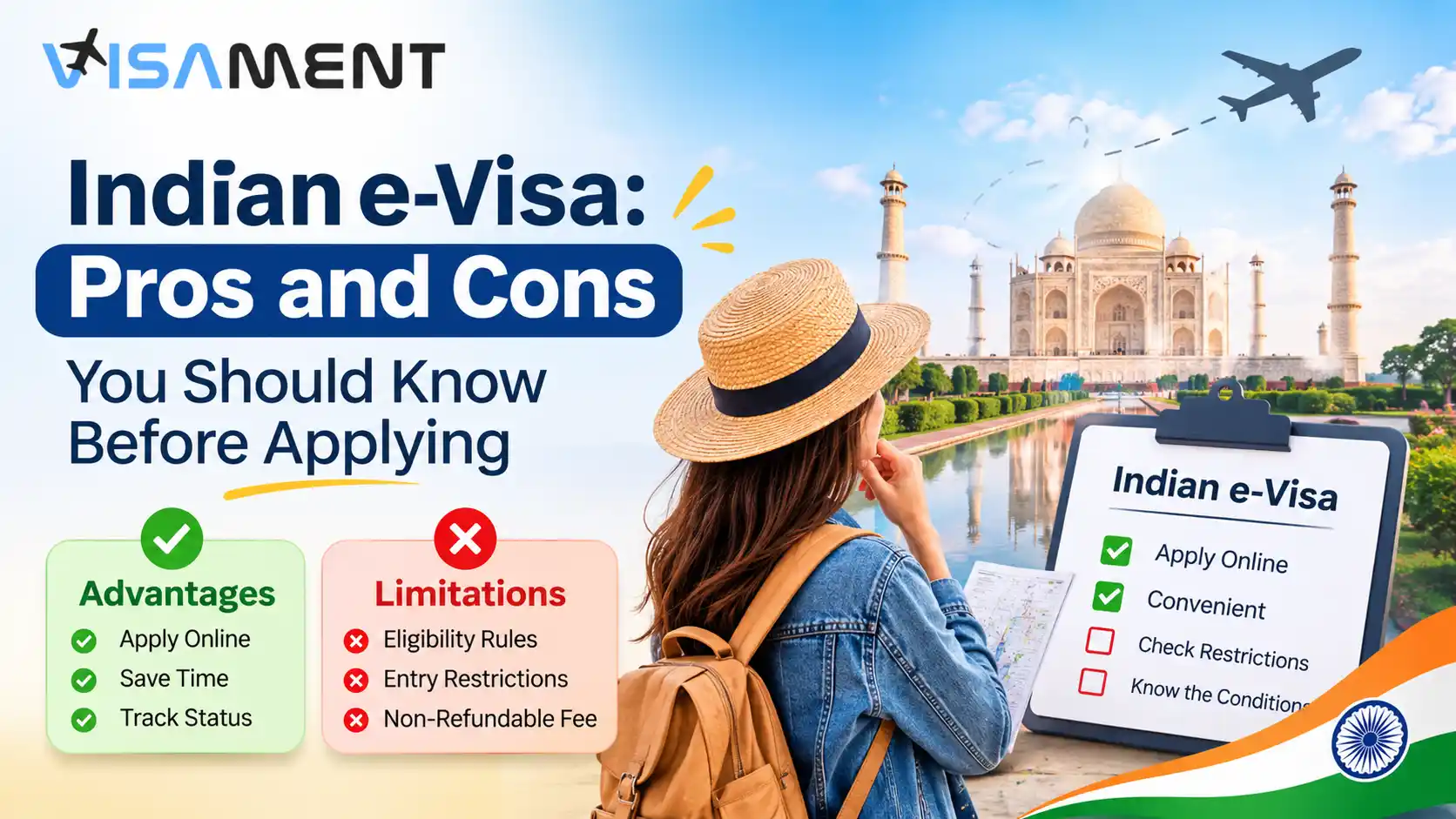
Planning a trip to India and wondering whether an electronic visa is the right option? An Indian e-Visa makes applying more convenient for eligible international travellers, but it also comes with restrictions on nationality, travel purpose, entry points and permitted stay. Understanding the advantages and disadvantages before applying can help you avoid unnecessary expenses, application problems and travel disruptions. Here is what you should consider before choosing an Indian e-Visa over a regular visa.
The main advantages of an Indian e-Visa are online application, remote document submission, online status tracking and reduced need for in-person application arrangements. These benefits make the electronic route convenient for eligible travellers.
One of the biggest benefits is the ability to complete the application remotely. Travellers can submit their personal details, passport information and supporting documents online without making a conventional embassy or consulate visit for e-Visa submission.
This is particularly useful for people living far from an Indian diplomatic mission or those with busy schedules.
An online application eliminates the need to travel to an embassy or consulate solely to submit an e-Visa application. Digital document uploads and online payment also make the process more convenient.
However, online submission does not guarantee faster approval. Processing depends on government assessment, the application submitted and any additional verification required.
Applicants can check e-Visa application status through the official Indian e-Visa portal. The government also communicates whether the application has been granted or rejected through the email address provided during submission.
This allows travellers to monitor their application without repeatedly contacting a visa office.
The Indian electronic visa system offers different categories for eligible travel purposes.
Tourists can consider an e-Tourist Visa, qualifying business visitors can consider an e-Business Visa, and eligible patients can apply for an e-Medical Visa. Separate arrangements may also apply to medical attendants.
Having purpose-specific categories makes the system useful for different types of short-term visits, provided the intended activities match the selected category.
For travellers whose nationality, travel purpose, arrival checkpoint and intended stay meet the applicable conditions, an e-Visa can provide a practical way to visit India.
The Government of India offers different tourist e-Visa options, including one-month, one-year and five-year options. Several categories permit multiple entries, subject to their respective conditions.
Have questions? Our experts guide you through every step of the Indian e-Visa Application – no confusion, no delays.
Consult an Expert TodayDespite its convenience, an Indian e-Visa has important limitations. Travellers must consider eligibility, entry restrictions, permitted activities, application risks and the conditions attached to the approved visa.
Indian e-Visa eligibility is restricted to nationalities and applicants who meet the government's requirements.
Having a foreign passport does not automatically make someone eligible. Passport type, personal circumstances and nationality-related conditions can affect eligibility.
For example, a traveller whose nationality or passport does not qualify for the electronic route may need to apply through the regular visa process instead.
An Indian e-Visa cannot be used at every airport, seaport or land border in India.
The government specifies authorised entry checkpoints for e-Visa holders. Travellers planning to arrive through a non-designated checkpoint may need to consider another visa arrangement.
For example, if your international itinerary includes a connecting journey through a smaller airport that is not authorised for e-Visa entry, you should verify the permitted arrival point before purchasing tickets.
The Bureau of Immigration and official e-Visa portal publish the applicable checkpoint information. Always check the latest list before departure.
One common misunderstanding is treating visa validity as the maximum period a traveller can remain in India.
Visa validity determines the period during which the visa can be used for permitted entry, while permitted stay determines how long the traveller may remain in India.
For example, one-year and five-year e-Tourist Visas have multiple-entry conditions and a maximum aggregate stay of 180 days during a calendar year. The one-month tourist option has different validity conditions. The e-Business and e-Medical categories also have their own rules.
Therefore, a longer validity period does not automatically mean unlimited or continuous residence in India. Government e-Visa conditions.
The Indian government's e-Visa processing fee is non-refundable. This applies even when the application is rejected or the traveller decides not to visit India.
The applicable fee can also vary depending on nationality and visa category. Therefore, applicants should verify the amount displayed on the official portal before payment.
Paying the fee does not guarantee approval, making it important to check eligibility and application details beforehand.
An online application depends on accurate information and correctly uploaded documents. Incorrect passport numbers, spelling differences, unsuitable photographs and missing supporting documents can create complications.
For instance, entering a passport number incorrectly may cause discrepancies between the approved ETA and the travel document. Similarly, choosing a tourist category for activities that require a business visa can create problems.
Applicants should carefully check every detail before submission. Read our guide to Indian e-Visa photo requirements to understand the importance of suitable digital photographs.
An Indian e-Visa is designed for specific permitted activities. It does not automatically authorise employment, long-term residence or activities outside the selected category.
Another important limitation is that Indian e-Visas are generally non-extendable and non-convertible under the published government conditions.
Travellers who need a different visa category, a longer or specialised immigration arrangement, or permission for activities outside the e-Visa conditions should investigate the appropriate regular visa route before travelling.
An Indian e-Visa may be suitable for:
A regular visa should be considered when the traveller is ineligible for an e-Visa, requires a different category or intends to undertake activities that the electronic visa does not permit.
Before choosing an Indian e-Visa, review the following:
These checks can help prevent avoidable mistakes and unexpected travel complications.
An Indian e-Visa offers convenience and simplified online submission for eligible international travellers, but its restrictions can affect travel plans. Check your eligibility, intended activities, entry checkpoint and permitted stay before applying. Choosing between an e-Visa and a regular visa should depend on your actual travel requirements, not convenience alone.
Need help choosing the right Indian visa? Visament can assist with understanding documentation requirements and navigating the Indian visa application process. Explore our Indian visa services for additional guidance.
No. Indian e-Visa holders must enter through designated international airports or authorised seaports. Travellers should check the latest approved entry-point list before booking their journey.
Entry permissions depend on the e-Visa category. Several Indian e-Visa options, including the one-year and five-year e-Tourist Visas, allow multiple entries. Applicants should check the entry conditions attached to their specific visa.
The permitted stay depends on the e-Visa category and validity option. For example, one-year and five-year e-Tourist Visa holders are generally permitted to stay for a maximum aggregate period of 180 days during a calendar year. Other categories have different conditions.
No. The Indian government's e-Visa application fee is non-refundable, even if the application is rejected or the traveller cancels the proposed trip. Applicants should verify their details and eligibility before payment.
Yes. Travellers should carry a copy of their approved Electronic Travel Authorisation (ETA) while travelling to India. They must also verify that the application status shows GRANTED before departure.
Yes. Children travelling to India require separate e-Visa applications and individual passports. A child cannot be included on a parent's passport for this purpose.
Vipul Jain is the Co-Founder of Visament, a trusted platform dedicated to simplifying Indian immigration, consular, and NRI services for applicants across the globe. With extensive expertise in OCI cards, Indian passport services, visa assistance, apostille and document legalization,... See Full Bio

Talk to our documentation experts for free guidance on your application.


When you visit a website, it may store data about you using cookies and similar technologies. Cookies can be important for the basic operations of the website and for other purposes. You get the option of deactivating certain types of cookies, even so, doing that may affect your experience on the website.
It is required to permit the basic functionality of the website. You may not disable necessary cookies.
Used to provide advertising that matches you and your interests. May also be used to restrict the number of times you see an advertisement and estimate the effectiveness of an advertising campaign. The advertising networks place them after obtaining the operator's permission.
Permits the website to recognize the choices you make (like your username, language, or the region you are in). Also provides more personalized and enhanced features.
Aid the website operator to determine how the website performs, how visitors interact with the site, and whether there are any technical issues.