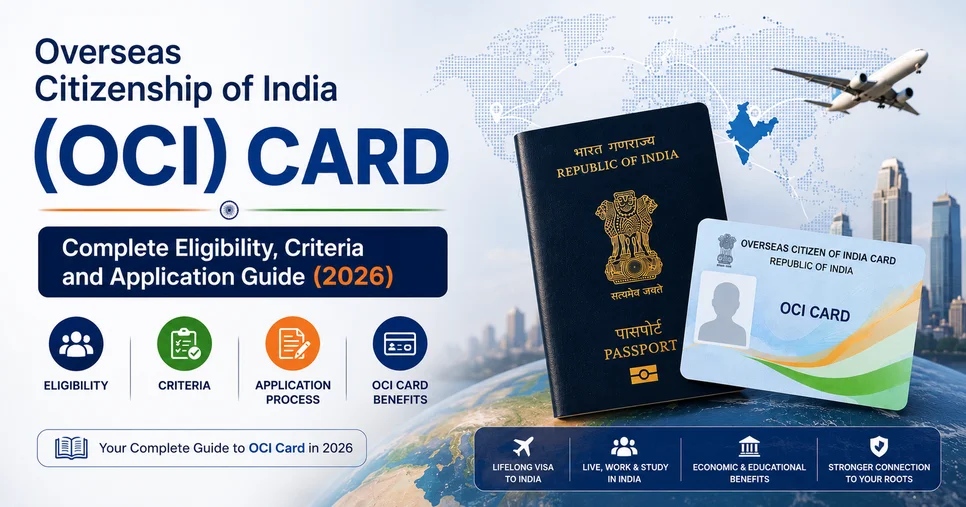
An OCI Card (Overseas Citizen of India Card) is a lifelong visa facility available to eligible foreign citizens of Indian origin. It allows multiple entries into India and enables cardholders to live, work, and study in India without applying for a visa for every visit.
For many former Indian citizens and people of Indian origin living abroad, the OCI card is the easiest way to maintain long-term ties with India while retaining foreign citizenship.
In this guide, you'll learn who can apply for an OCI card, the documents required, application fees, processing times, common mistakes to avoid, and the complete OCI application process.
What Is an OCI Card?
The Overseas Citizen of India (OCI) Card is a long-term immigration status introduced by the Government of India under the Citizenship Act, 1955.
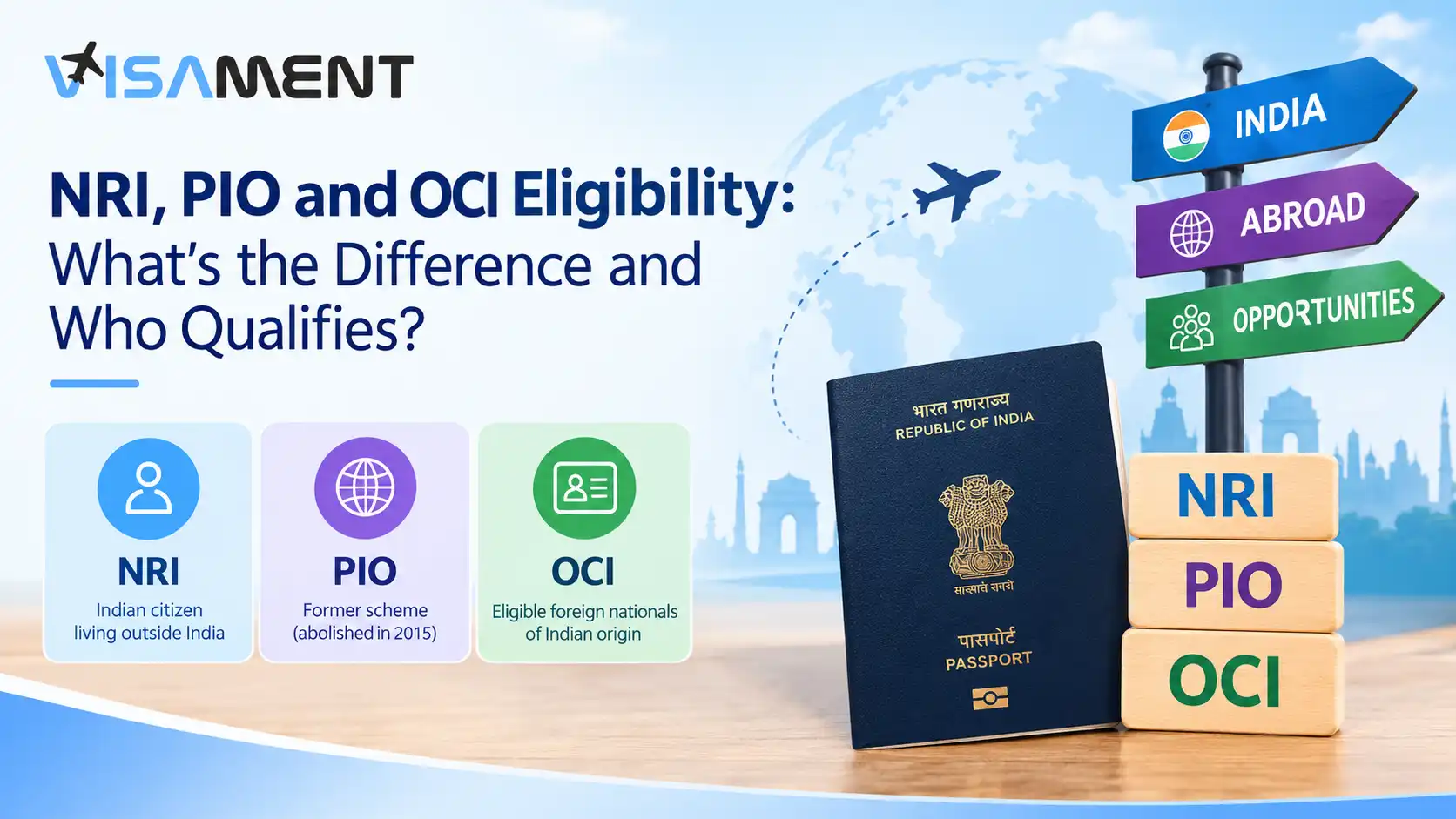
Although the name includes the word "citizen," an OCI card does not grant Indian citizenship or dual citizenship. Instead, it provides eligible foreign nationals of Indian origin with lifelong visa-free travel to India and several benefits similar to those available to Non-Resident Indians (NRIs).
OCI cardholders can:
- Travel to India multiple times without a visa
- Stay in India for an unlimited period
- Work in India in most professions
- Study in India
- Open bank accounts and make investments in India
- Purchase residential and commercial property in India
However, OCI cardholders cannot vote in Indian elections, hold constitutional offices, or purchase agricultural and plantation land.
Also read: What is an Overseas Citizenship of India (OCI)?
Who Can Apply for an OCI Card?
You may be eligible to apply for an OCI card if you fall under any of the following categories:
- You were a citizen of India on or after January 26, 1950
- You were eligible to become an Indian citizen on January 26, 1950
- You belong to a territory that became part of India after August 15, 1947
- You are a child, grandchild, or great-grandchild of an Indian citizen
- You are a minor child of an Indian citizen or an OCI cardholder
- You are the foreign spouse of an Indian citizen or OCI cardholder and have been married for at least two years
Who cannot apply for an OCI Card?
Individuals who are or have ever been citizens of Pakistan or Bangladesh are generally not eligible for OCI registration.
OCI Card Eligibility Criteria
The table below provides a quick overview of OCI eligibility:
| Category |
Eligibility |
| Former Indian Citizen |
Previously held Indian citizenship |
| Person of Indian Origin |
Parent, grandparent, or great-grandparent was an Indian citizen |
| Foreign Spouse |
Married to an Indian citizen or OCI cardholder for at least two years |
| Minor Child |
Child of an Indian citizen or OCI cardholder |
| Foreign-Born Child |
Eligible through Indian-origin parent(s) |
Before applying, make sure you can provide documentary evidence supporting your eligibility category.
Check Eligibility: OCI Card Eligibility Checker
Also read: OCI Card Benefits & Eligibility in the USA
Documents Required for OCI Application
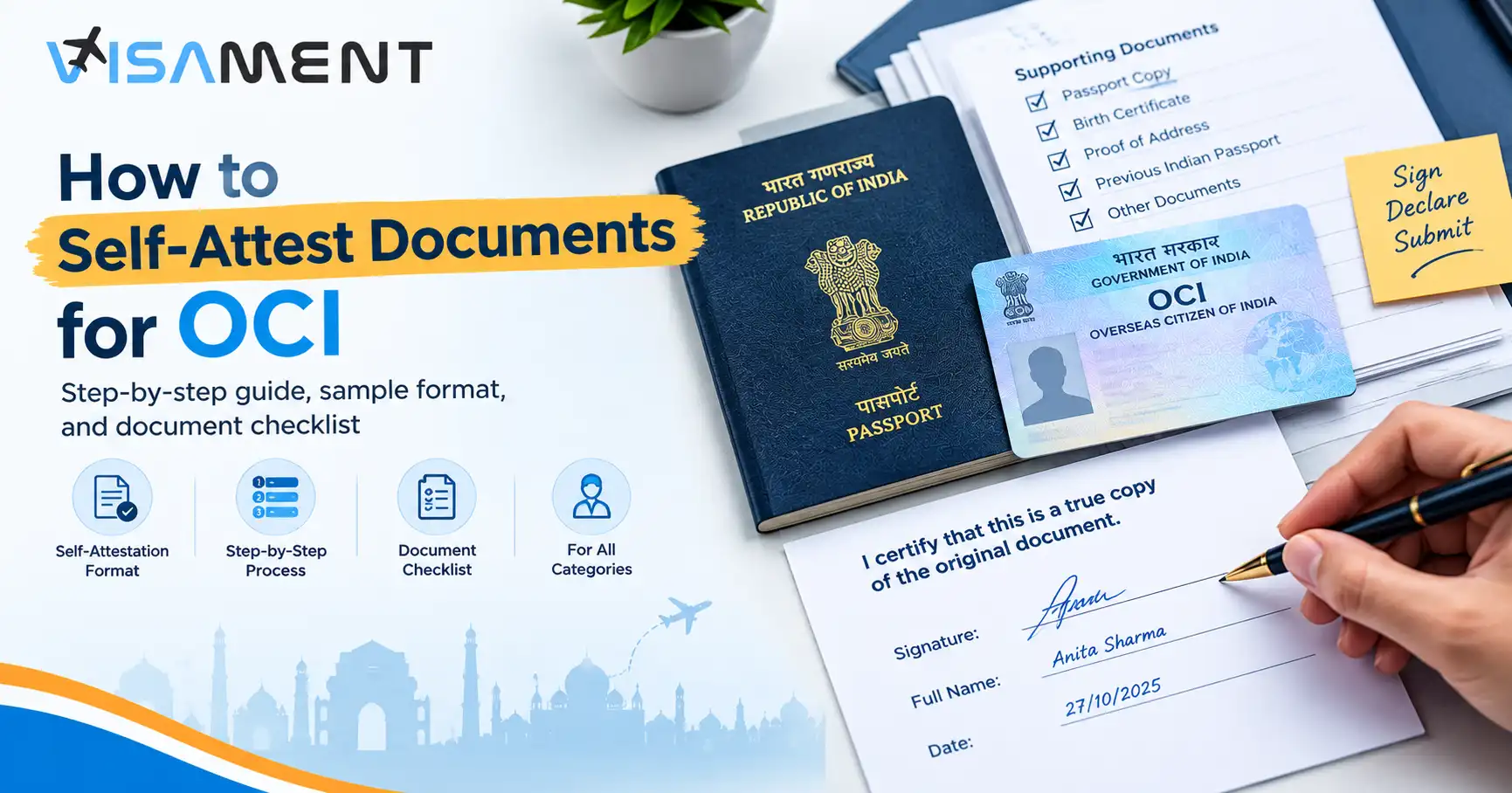
The exact document requirements depend on the applicant category and country of residence. However, most applicants will need the following documents.
Basic Documents Required
- Valid foreign passport
- Recent passport-size photograph (2×2 inches, white background, 80% face coverage)
- Signature or thumb impression
- Proof of current residential address
- Completed OCI application form
For Former Indian Citizens
- Canceled Indian passport
- Renunciation or surrender certificate (where applicable)
- Naturalization certificate or foreign citizenship certificate
For Applicants Claiming Indian Origin
- Birth certificate
- Parents' or grandparents' Indian passport
- Relationship proof connecting the applicant to the Indian ancestor
For Foreign Spouses
- Marriage certificate
- Spouse's Indian passport or OCI card copy
- Additional documents required by the Indian Mission
For Minor Applicants
- Birth certificate
- Parents' passports
- Parents' OCI cards (if applicable)
- Parental authorization documents
Expert Tip: Many OCI applications are delayed because the applicant's name, date of birth, or place of birth differs across supporting documents. Review every document carefully before submission to avoid unnecessary delays.
Also read: OCI Card Required Documents for USA
OCI Card Application Fees
OCI application fees vary by country. As of 2026:
| Country |
Total Fee |
| USA |
$275 + $3 ICWF + $19 VFS = ~$297 |
| India |
₹15,000 |
| UK |
~£190 + service charge |
The total amount usually includes:
- OCI registration fee
- Consular fee
- Indian Community Welfare Fund (ICWF) fee
- Service provider fee (VFS Global or BLS)
- Courier charges (if selected)
Applicants should verify the latest fee structure through VFS Global OCI Services for their country.
OCI Card Processing Time
OCI processing times vary depending on the country, application category, document verification requirements, and workload at the Indian Mission.
As of 2026, most applications are processed within 4–8 weeks, but the foreign spouse category may require additional interview time.
| Application Type |
Estimated Processing Time |
| Fresh OCI Application |
4–8 weeks |
| OCI Re-Issue |
3–6 weeks |
| OCI Miscellaneous Services |
2–6 weeks |
| Lost OCI Card Replacement |
4–8 weeks |
Applications involving additional verification or missing documents may take longer.
How to Apply for an OCI Card
The OCI application process consists of four major stages.
Step 1: Complete the Online OCI Application
Visit the official OCI portal → https://ociservices.gov.in/ and complete the online application form.
You'll need to:
- Select your application category
- Enter passport details
- Enter personal information
- Provide family details
- Upload photographs and signatures
Ensure that all information matches your passport exactly.
Step 2: Upload Supporting Documents
Upload all required documents based on your eligibility category.
Common uploads include:
- Passport copy
- Address proof
- Indian origin documents
- Birth certificate
- Marriage certificate (if applicable)
Incomplete documentation is one of the most common reasons for delays.
Step 3: Submit Your Application
After completing the online application:
- Print the application form
- Gather supporting documents
- Submit the application through the authorized service provider for your country (VFS Global or BLS)
Applicants may be required to provide biometrics, depending on age, location, and application type (required for applicants aged 12 and above).
Step 4: Track and Receive Your OCI Card
Once submitted, your application undergoes verification and approval by the relevant authorities.
After approval, the OCI card is printed and dispatched in accordance with the procedures applicable in your jurisdiction.
How to Check OCI Application Status
You can track your OCI application online using the reference number provided during registration.
The status may show stages such as:
- Application Submitted
- Under Process
- Documents Verified
- Granted
- Printed
- Dispatched
Applicants should monitor their status regularly and respond promptly if additional documents are requested.
Common OCI Application Mistakes to Avoid
Avoiding common errors can help reduce delays and improve the chances of approval.
Incorrect Personal Details
Ensure your name, passport number, and date of birth exactly match your passport.
Wrong Photograph Specifications
Use photographs that meet OCI photo requirements: 2×2 inches, white background, 80% face coverage.
Missing Renunciation Documents
Former Indian citizens must provide the required renunciation or surrender documents where applicable.
Incomplete Supporting Documents
Missing relationship proof, birth certificates, or address documents frequently lead to processing delays.
Last-Minute Applications
If you have upcoming travel plans, apply well in advance to allow sufficient time for processing.
2026 OCI Updates
- Applications submitted online more than 180 days ago will not be accepted; submit a fresh application
- Biometrics required for applicants 12 years and above
- New photo specifications: 2×2 inches, white background, 80% face coverage
OCI Card Renewal and Re-Issue
Although the OCI card is issued for life, certain situations may require reissuance or updates to the record.
Common situations include:
- Issuance of a new passport
- Change of personal details
- Damaged OCI card
- Lost OCI card
- Updating information after reaching specified age categories under applicable OCI guidelines
Applicants should review the latest OCI re-issuance requirements before travel.
OCI Card vs Indian Visa
| Feature |
OCI Card |
Indian Visa |
| Validity |
Lifelong |
Limited duration |
| Entries |
Multiple |
Depends on visa type |
| Stay in India |
Unlimited |
Restricted by visa conditions |
| Employment |
Permitted in most sectors |
Limited |
| Property Ownership |
Residential and commercial property allowed |
Limited |
| Repeated Applications |
Not required |
Required after visa expiry |
For individuals who travel to India regularly or maintain long-term ties with the country, an OCI card is generally more convenient than applying for multiple visas.
Conclusion
The OCI card offers a practical way for foreign citizens of Indian origin to maintain strong ties with India. It provides lifelong visa-free travel, long-term stay privileges, access to education and employment opportunities, and several benefits that simplify living and doing business in India.
By understanding the eligibility requirements, preparing the required documents, and carefully following the application process, applicants can significantly improve their chances of a smooth, successful OCI application.