Related Blogs

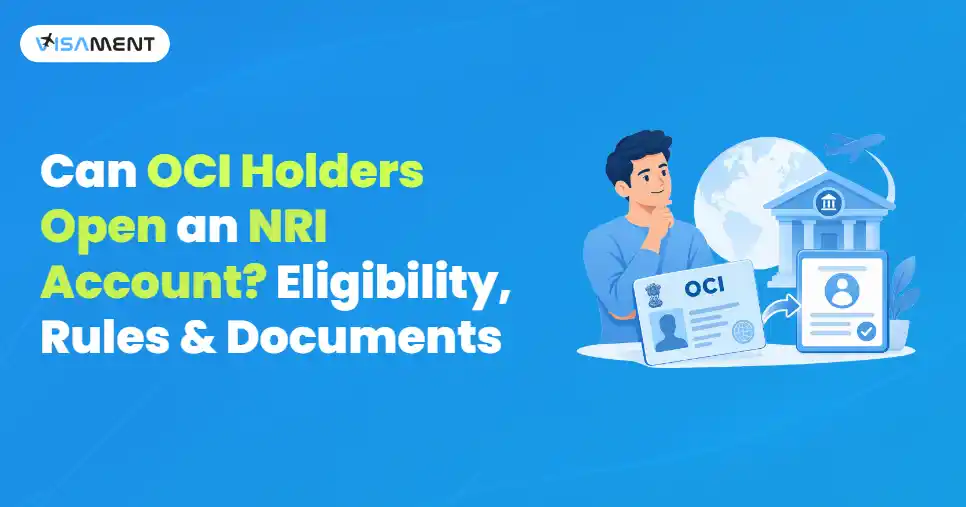
Are you an Overseas Citizen of India living abroad and wondering, "Can OCI holders open an NRI account "? If so, then yes, you can. However, your eligibility depends on your residential status under FEMA guidelines, not on your OCI card alone. OCI cardholders can open an NRE, NRO, or FCNR(B) account if they qualify as persons resident outside India under FEMA regulations. This makes it easy to manage foreign earnings, Indian income, investments, and remittances.
Read the blog below to learn more about the eligibility criteria, RBI and FEMA rules, available account types, required documents, tax implications, and steps to open the correct NRI account.
OCI cardholders living outside India can open NRE, NRO, and FCNR accounts with authorized banks in India.
You can open an NRI account as an OCI holder if:
Note: If you are planning to relocate to India permanently, changes in your residential status and your bank might require your non-resident accounts to be redesignated as per RBI regulations.
Most OCI cardholders still have financial ties with India. Hence, they might receive:
You must use the correct bank account to help you comply with RBI regulations, simplify foreign remittances, and ensure your banking activities align with FEMA requirements.
 Also Want to Know About NRE vs NRO Account for OCI Holders Check Now!
The OCI NRI account eligibility depends on whether you qualify as an individual living outside of India under FEMA guidelines. If you meet this requirement, you can usually access NRI banking facilities offered by authorized banks.
Most individuals assume that having an OCI card will automatically make them a Non-Resident Indian (NRI). An OCI card is an immigration status that allows eligible individuals of Indian origin to live, work, and travel to India without repeated visa applications.
The NRI status will be determined by FEMA guidelines based on your residential status. In terms of banking, banks will consider your FEMA residential status, not your OCI card.
| OCI Holder | NRI (For Banking) |
|---|---|
| Immigration Status | Residential status under FEMA |
| OCI card issued under the Citizenship Act | Defined under FEMA guidelines |
| Does not determine NRI account eligibility | Determines eligibility for NRI banking |
| Will remain valid after returning to India | Might change if your residency changes |
For instance,
You must understand this to choose the correct banking option and avoid compliance issues.
Stop worrying about delays. Apply now and get your NRO Account Opening on time with our expert service.
RBI allows eligible OCIs to open and maintain various non-resident accounts. There are three main types of NRI bank accounts:
Each of these accounts serves a different purpose based on where you earn your income and how you intend to use your funds.
| If you plan to | Best Account |
|---|---|
| Save your foreign earnings | NRE |
| Receive rental income in India | NRO |
| Keep deposits in foreign currency | FCNR (B) |
| Send money back abroad easily | NRE or FCNR (B) |
| Manage Indian income | NRO |
The exact requirements will vary between banks. Most banks ask OCI applicants to submit the following documents while opening the account.
A few banks also offer digital account opening, allowing eligible OCI holders to complete the application online via video KYC or by submitting notarized documents from abroad.
Opening an NRI account is an easy process if you have the necessary documentation ready.
Make sure you compare banks based on:
Tax rules are based on the type of NRI account you choose.
Note: If you also have to pay tax in another country, you might benefit from the Double Taxation Avoidance Agreement (DTAA). However, this depends on the treaty between India and your country of residence.
Stop worrying about delays. Apply now and get your NRE Account Opening on time with our expert service.
Your banking needs may differ depending on where you live and where you earn your income. Here are a few common situations to help choose the correct account type.
Most OCI cardholders receive income from multiple sources. For instance:
In such cases, maintaining both an NRE and an NRO account might help you manage different income sources appropriately while complying with banking regulations.
Also Want to Know About General Instructions for New OCI Card Registration? Check Now!Opening the correct account and meeting the eligibility criteria are two of the most important factors in opening an NRI account.
However, you must also avoid the following mistakes when applying for an OCI NRI account.
You must avoid such mistakes to manage your finances smoothly and prevent future compliance issues.
OCI cardholders can open an NRE, NRO, or FCNR (B) account. However, they must qualify as persons resident outside India under FEMA regulations. Although having an OCI card is important, your residential status is a major factor in determining eligibility for an OCI NRI account. Before opening an NRI account, you must identify where your income comes from and choose the account that best fits your needs. NRE accounts are suitable for foreign earnings, NRO accounts are designed for income earned in India, and an FCNR (B) account is used by individuals planning to keep fixed deposits in foreign currency. You must understand these options to manage your finances efficiently while complying with RBI and FEMA guidelines.
You can also contact the experts at Visament if you are planning to apply for a new OCI card, renew an existing one, or require assistance with OCI-related documentation. They can provide end-to-end support for OCI applications, renewals, and other Indian documentation services to ensure a smooth experience.
No, they are not. An OCI card represents an immigration status, while the NRI status for banking purposes depends on your residential status in accordance with FEMA guidelines.
Yes, they can have both NRE and NRO accounts. Eligible OCI holders can maintain both accounts to separately manage overseas income and income earned in India.
You must inform your bank if your residential status changes to non-resident under FEMA guidelines. Your existing resident account may need to be redesignated in accordance with RBI regulations.
Most banks require a PAN card for tax-related purposes. However, documentation requirements may vary by bank and account type.
Yes, they can, subject to RBI regulations, FEMA provisions, applicable tax rules, and the bank's procedures.
Vipul Jain is the Co-Founder of Visament, a trusted platform dedicated to simplifying Indian immigration, consular, and NRI services for applicants across the globe. With extensive expertise in OCI cards, Indian passport services, visa assistance, apostille and document legalization,... See Full Bio

Talk to our documentation experts for free guidance on your application.
Bank of India NRI Account - Types, Eligibility Criteria, and Steps to Apply
NRI Returning to India: Financial Planning Guide
Power of Attorney for NRI Banking in India: NRE & NRO Rules Guide
How Much Money Can an NRI Bring to India? Limits and Declaration Rules
NRI Account Opening in Dubai: Requirements & Process



When you visit a website, it may store data about you using cookies and similar technologies. Cookies can be important for the basic operations of the website and for other purposes. You get the option of deactivating certain types of cookies, even so, doing that may affect your experience on the website.
It is required to permit the basic functionality of the website. You may not disable necessary cookies.
Used to provide advertising that matches you and your interests. May also be used to restrict the number of times you see an advertisement and estimate the effectiveness of an advertising campaign. The advertising networks place them after obtaining the operator's permission.
Permits the website to recognize the choices you make (like your username, language, or the region you are in). Also provides more personalized and enhanced features.
Aid the website operator to determine how the website performs, how visitors interact with the site, and whether there are any technical issues.