Related Blogs

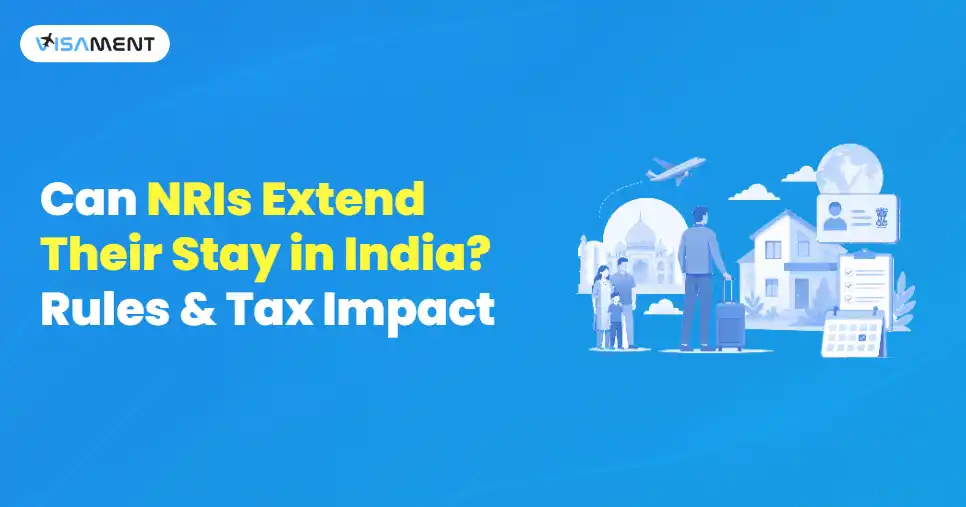
Many Non-Resident Indians (NRIs) return to India for various reasons, including family visits, retirement, work, medical treatment, or personal reasons. When planning a longer visit, one common question arises: Can NRIs extend their stay in India?
The short answer is yes, but it depends on the individual's legal status, such as:
For Indian citizens, there is no immigration limit on the duration of their stay in India. However, an extended stay can affect tax residency and financial obligations. OCI cardholders typically do not need a visa or routine stay extensions, while foreign nationals on visas must follow their visa conditions.
This blog explains the implications of an extended stay in India for NRIs and OCI cardholders, along with the related legal and tax considerations.
Yes, an NRI can extend their stay in India. However, it also depends on your legal status.
Most individuals assume that NRIs need permission to stay for a long time in India, but in reality, it is not true.
If you are an Indian citizen, then you will have all the constitutional rights, and you are not required to apply for an Indian visa extension or stay extension.
However, if you have obtained a foreign citizenship, then the rules will be based on the status you hold, such as OCI card status or a valid visa status.
An NRI is a citizen of India who resides outside India for business, education, employment, or various other purposes.
As an NRI can stay inside India:
However, there is no extension limit for length of stay from an immigration perspective, but staying in India for a long time can change NRI tax residency rules under the Income-Tax Act, and it may also affect your residential status under FEMA for various financial purposes.
If you've obtained foreign citizenship but hold an OCI card, you enjoy various long-term travel benefits, such as:
OCI cardholders are generally not required to register with the FRRO solely based on the length of their stay. However, they must follow any other legal conditions that apply.
It’s important to note that an OCI card does not grant Indian citizenship. OCI holders remain foreign nationals subject to the conditions of the OCI scheme.
This is the question where most individuals get confused.
Your ability to stay in India and your tax residency are two separate matters.
An NRI is allowed to stay in India for an extended period, but this may impact their residential status for tax purposes. Depending on the number of days you have spent in India during a financial year and other applicable conditions under the Income Tax Act, your residential status may change.
The 182-day rule for NRIs is used to determine whether an individual may be considered a resident for income tax purposes.
Normally, if an Indian citizen who is eligible for NRI status spends 182 days or more in India during the relevant tax year, they may become a tax resident, depending on the applicable provisions of the Income Tax Act.
However, this is not the only rule used to determine tax residency.
The Income Tax Act also has a specific provision applicable to certain Indian citizens and persons of Indian origin who are visiting India.
In some cases, if an individual's total income, other than income from foreign sources, is more than ₹15 lakh during the financial year, the threshold may be reduced from 182 days to 120 days, subject to the relevant conditions under the Income Tax Act.
The 120-day rule is used to determine tax residency and does not mean that an individual is legally prohibited from staying in India for more than 120 days.
As this rule includes various conditions and exceptions, expert advice is recommended before planning an extended stay in India.
If you stay in India and your residential status changes, then you may be classified as:
This depends on your past years of residence and other applicable conditions.
A Change in Residential Status Can Impact:
If you plan to stay in India for several months, consider reviewing your financial arrangements:
Proper planning can help you avoid tax liabilities or compliance issues.
Here are some of the common misconceptions about whether NRIs can extend their stay in India.
Myth: NRIs must apply for a stay extension to stay longer in India.
Fact: Indian citizens do not need to apply for a stay extension or visa extension.
Myth: You cannot stay in India for more than 182 days. It is illegal.
Fact: An Indian citizen or an OCI cardholder can stay in India for more than 182 days or a longer period legally. However, an extended stay can affect tax residency, not immigration status.
Myth: OCI cardholders need to renew their stay every 6 months.
Fact: OCI cardholders generally do not need a visa or stay extension for their visits to India, subject to applicable rules and conditions.
Stop worrying about delays. Apply now and get Indian Counsellor Services.
Chat NowNRIs and OCI cardholders can stay in India for longer periods, but the rules can be different based on their status. Indian citizens do not need a visa or stay extension to remain in India, while OCI cardholders can generally stay in India for extended periods without needing a routine visa extension.
However, staying in India for a longer period can affect your tax residency, tax obligations, and financial compliance. The 182-day and 120-day rules are important to understand when planning a long-term stay in India.
If you are unsure about your NRI status, documentation, or the requirements for staying in India for a longer period, Visament can help you understand the process and required documentation. Planning your stay in advance can help you avoid confusion and unnecessary compliance issues.
Yes, an Indian citizen can stay in India without any immigration time limit. However, staying for a longer time period can affect their tax residency status.
Yes, an OCI cardholder can stay in India without applying for a visa during each visit, which is subject to applicable Indian laws.
It depends on the condition of the Indian Income Tax Act. The 182-day rule is one of the conditions through which an individual can get residency status.
The 120-day rule for NRIs is that if an individual India in come is more than 15 lakh INR, then he or she may become a tax resident after staying in India for more than 120 days, which is subject to the applicable conditions legally.
No, NRIs don't need to take permission or a visa extension to enter India or stay for a longer time period.
Vipul Jain is the Co-Founder of Visament, a trusted platform dedicated to simplifying Indian immigration, consular, and NRI services for applicants across the globe. With extensive expertise in OCI cards, Indian passport services, visa assistance, apostille and document legalization,... See Full Bio

Talk to our documentation experts for free guidance on your application.
NRI Buying Property in India: Rules, Documents & Complete Process
Bank of India NRI Account - Types, Eligibility Criteria, and Steps to Apply
NRI Returning to India: Financial Planning Guide
Power of Attorney for NRI Banking in India: NRE & NRO Rules Guide
How Much Money Can an NRI Bring to India? Limits and Declaration Rules


When you visit a website, it may store data about you using cookies and similar technologies. Cookies can be important for the basic operations of the website and for other purposes. You get the option of deactivating certain types of cookies, even so, doing that may affect your experience on the website.
It is required to permit the basic functionality of the website. You may not disable necessary cookies.
Used to provide advertising that matches you and your interests. May also be used to restrict the number of times you see an advertisement and estimate the effectiveness of an advertising campaign. The advertising networks place them after obtaining the operator's permission.
Permits the website to recognize the choices you make (like your username, language, or the region you are in). Also provides more personalized and enhanced features.
Aid the website operator to determine how the website performs, how visitors interact with the site, and whether there are any technical issues.