Related Blogs

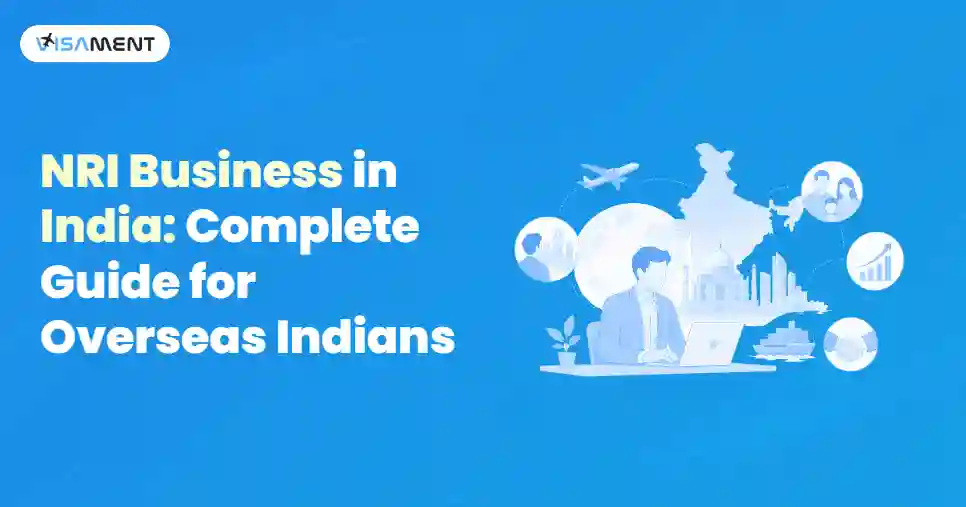
India has seen rapid growth in its economy with supportive government initiatives and a prosperous startup ecosystem. All these have made India an attractive destination for entrepreneurs worldwide. Overseas Indians have been establishing businesses in their home country, offering many opportunities to reconnect with the Indian market. They too benefit from its expanding customer base and investment potential. If you are planning to launch a startup, invest in an existing company, or expand your overseas business, you must first understand the legal and financial framework involved.
Read the blog below to learn more about NRI business in India, the available options, applicable regulations, and practical steps to build a successful venture.
Yes, a Non-Resident Indian (NRI) can establish or invest in a business in India.
The answer to the question "Can NRI start business in India?" depends on the type of business, investment route, and regulatory approvals required for the chosen sector.
You are eligible to establish a business in India if:
Note: The eligibility criteria may vary depending on the business activity and applicable government policies.
India has strong economic growth, has seen digital transformation, and has expanded their startup ecosystem. Government initiatives such as Startup India have further encouraged innovation by simplifying business registration, improving access to funding, and supporting emerging enterprises.
A few major advantages include:
The above-mentioned factors have increased NRI investment across various sectors, making India an attractive destination for long-term business expansion.
Say goodbye to paperwork stress! Hassle-free PAN card Services
Apply NowOne of the most important decisions when planning your NRI business in India is choosing the correct business structure. This decision affects taxation, compliance requirements, ownership flexibility, and future scalability.
The table below outlines the business structures available for NRIs.
| Business Structure | Suitable For | Limited Liability | Foreign Ownership |
|---|---|---|---|
| Private Limited Company | Startups and growing businesses | Yes | Yes (subject to) |
| LLP | Professionals and Service Firms | Yes | Allowed in eligible sectors |
| Partnership Firm | Small businesses | No | Subject to applicable regulations |
| Sole Proprietorship | Small individual businesses | No | May have practical limitations for NRIs |
This is a popular choice for NRIs because it offers limited liability, greater credibility, and better fundraising opportunities. Private Limited Companies can be ideal for startups and business planning long-term growth.
LLPs provide operational flexibility with limited liability protection, making it suitable for consultants, professionals, and service-based businesses.
This is suitable for businesses with multiple partners but offers fewer legal protections than a company or LLP.
This is easy to operate but may not always be suitable for NRIs due to regulatory and operational limitations.
Choosing the correct business structure is a key part of an NRI business setup strategy in India. This must also align with your business objectives and compliance requirements.
Here is a list of the best business ideas for NRIs.
India offers opportunities across both traditional and emerging industries. Choosing the correct sector depends on your experience, available capital, and long-term objectives.
The requirement criteria depend on your business structure. Here is a list of the documents commonly required for the process:
Note: Sometimes, overseas documents may need to be notarised or apostilled based on the country of residence.
After choosing the correct business structure, the next step is to register a company in India. To register a company in India, follow the steps below.
After incorporation, you must apply for:
Note: The exact process may vary depending on the type of entity. Following these general steps can simplify the process of starting a business in India while ensuring compliance with Indian laws.
It is necessary to understand the FEMA rules for NRI business. FEMA stands for the Foreign Exchange Management Act, which governs foreign exchange transactions, investments, and capital flows involving non-residents.
India offers multiple opportunities for NRI investment across startups, companies, and emerging industries. These options include:
Government initiatives such as StartUp India have further strengthened the ecosystem by encouraging innovation and simplifying business registration procedures for eligible startups.
Note: If you are planning to scale your business, choose funding from angel investors, venture capital firms, or financial institutions.
The first and basic step is successfully launching a company. If you want to manage your business in India effectively, entrepreneurs must focus on ongoing compliance and operational efficiency.
The main responsibilities are:
You can also choose to seek professional legal, accounting, and compliance support to help reduce administrative challenges and ensure your business remains compliant.
Here is a list of mistakes or errors that individuals make during the registration process.
Proper planning can save time, reduce costs, and minimise legal complications.
Before starting a business in India as an NRI, you must know several practical factors beyond registration.
Different sectors have different investment rules.
Starting an NRI business in India can be a rewarding opportunity for both OCIs and NRIs who are looking for ways to expand their entrepreneurial journey in one of the world's fastest-growing economies. Whether you are searching for ways to start a business in India, planning your NRI business setup, or evaluating NRI investment opportunities, understanding the legal framework, registration process, and compliance requirements is important for long-term success. Choosing the correct business structure, staying compliant with FEMA regulations, and fulfilling tax and regulatory obligations can help you build a strong foundation for your business in India.
If you are facing any issues or require assistance with Indian documentation for your business, you can contact Visament. They have trained experts who offer end-to-end support to simplify these processes on your behalf.
Yes, an NRI can own a business in India through eligible business structures, which are subject to applicable FEMA, RBI and sector-specific regulations.
Yes, an OCI holder can establish or invest in a business in India, subject to applicable laws and sector-specific restrictions.
The process usually involves choosing a business structure, obtaining DSC and DIN, reserving a company name, filing incorporation documents, and completing PAN, TAN, and GST registrations wherever applicable.
Technology, healthcare, e-commerce, consulting, education, manufacturing, and franchise businesses are some of the best business ideas for NRIs, depending on their expertise and investment goals.
Usually, you will need a passport, proof of overseas address, photographs, business incorporation documents, and other records required by the MCA or regulatory authorities.
Yes, eligible NRIs can invest in Indian start-ups while complying with applicable investment regulations.
GST registration depends on the nature of the business, turnover thresholds, and statutory requirements under the GST laws.
In many cases, profits may be repatriated subject to FEMA regulations, RBI guidelines, and tax compliance requirements.
Yes, foreign nationals can establish businesses in India, although the applicable rules differ from those governing NRIs and OCI cardholders.
An NRI is an Indian citizen living outside of India, while an Overseas Citizen of India (OCI) is a foreign national of Indian origin. Both may conduct business in India, but their legal rights, documentation requirements, and regulatory considerations may differ depending on the business activity.
Vipul Jain is the Co-Founder of Visament, a trusted platform dedicated to simplifying Indian immigration, consular, and NRI services for applicants across the globe. With extensive expertise in OCI cards, Indian passport services, visa assistance, apostille and document legalization,... See Full Bio

Talk to our documentation experts for free guidance on your application.



When you visit a website, it may store data about you using cookies and similar technologies. Cookies can be important for the basic operations of the website and for other purposes. You get the option of deactivating certain types of cookies, even so, doing that may affect your experience on the website.
It is required to permit the basic functionality of the website. You may not disable necessary cookies.
Used to provide advertising that matches you and your interests. May also be used to restrict the number of times you see an advertisement and estimate the effectiveness of an advertising campaign. The advertising networks place them after obtaining the operator's permission.
Permits the website to recognize the choices you make (like your username, language, or the region you are in). Also provides more personalized and enhanced features.
Aid the website operator to determine how the website performs, how visitors interact with the site, and whether there are any technical issues.