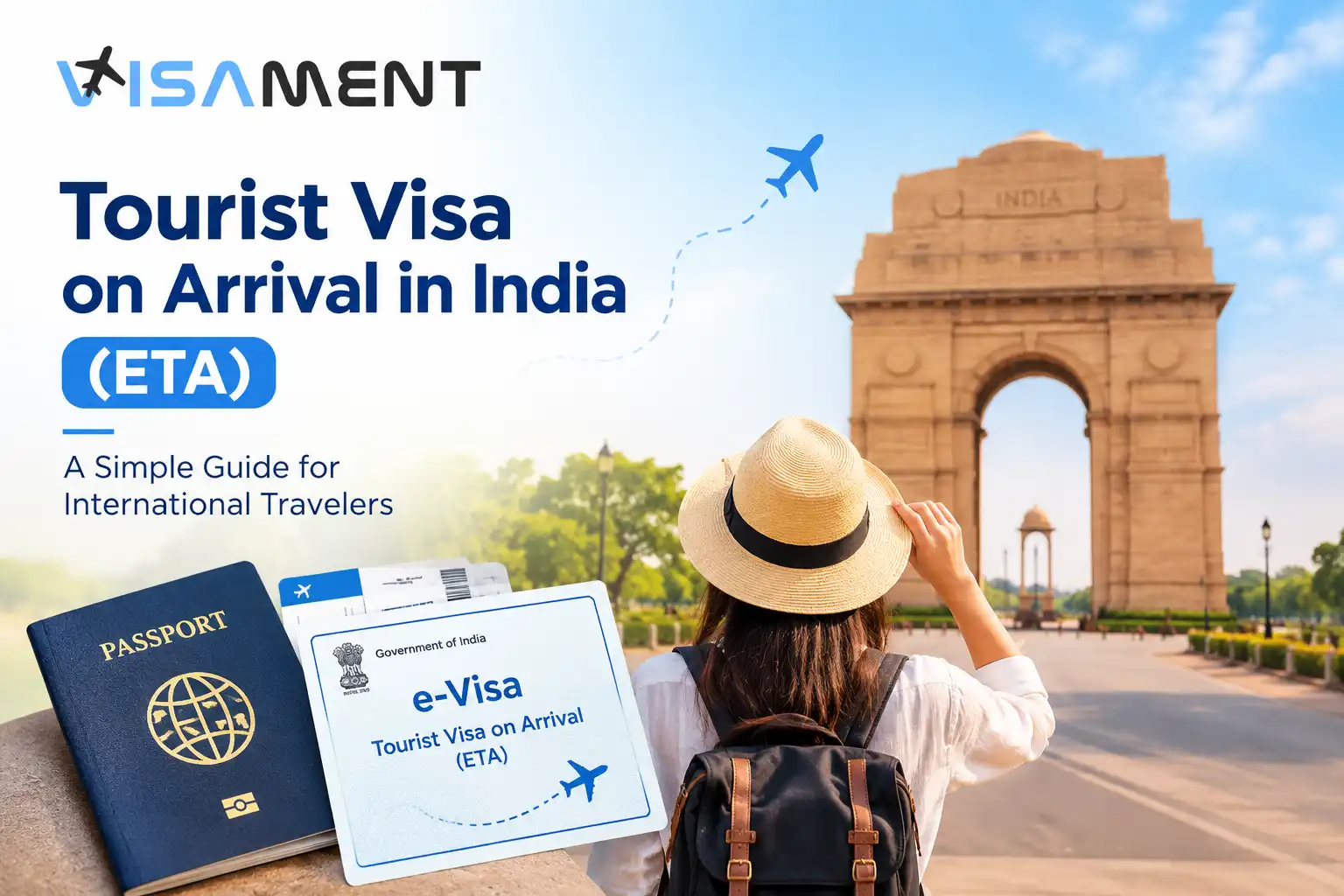
If you are planning a tourist trip to India, you may wonder whether you can simply arrive at an Indian airport and get your visa there. India does offer a Visa-on-Arrival (VoA) facility, but it is limited to nationals of Japan, South Korea and qualifying UAE nationals and is available only at six designated international airports.
This guide explains who can use the facility, the requirements, airports, fee, validity and arrival procedure, as well as what to do if you are not eligible.
Key Takeaways
- India does not offer a general tourist visa on arrival to travelers from all countries.
- The current Visa-on-Arrival facility is available to nationals of Japan, South Korea and qualifying UAE nationals.
- UAE nationals must have previously obtained an Indian e-Visa or regular/paper visa to use the VoA facility.
- Visa-on-Arrival is available at Bengaluru, Chennai, Delhi, Hyderabad, Kolkata and Mumbai international airports.
- Applicants must generally have a passport valid for at least six months, a return or onward ticket and sufficient funds for their stay.
- The current government-listed VoA fee is ₹2,000 or the equivalent in foreign currency per passenger, including children.
- An e-Arrival Card is not a visa. It is separate from India's Visa-on-Arrival and e-Visa systems.
Does India Offer a Tourist Visa on Arrival?
Yes, but India's tourist visa on arrival is not a general facility available to all foreign travelers.
According to the current Indian Visa Online guidance managed by the Bureau of Immigration, the facility is available to nationals of Japan and South Korea, and to UAE nationals who have previously obtained an Indian e-Visa or regular/paper visa. The facility is subject to additional eligibility conditions and is issued only at six designated international airports.
This means you should not assume that you can travel to India first and arrange a tourist visa at the airport simply because your nationality is eligible for an Indian e-Visa.
Who Is Eligible for an India Visa on Arrival?
The current Visa-on-Arrival rules apply to:
|
Nationality
|
Visa-on-Arrival eligibility
|
|
Japan
|
Eligible, subject to applicable conditions
|
|
South Korea
|
Eligible, subject to applicable conditions
|
|
United Arab Emirates
|
Eligible only if the UAE national has previously obtained an Indian e-Visa or regular/paper visa
|
The facility applies to visits of up to 60 days for tourism, business, conference or medical purposes, provided the traveler meets the other conditions. Applicants must not have a residence or occupation in India and must satisfy the applicable immigration requirements.
There are also important exclusions. The official guidance states that the facility is not available to diplomatic or official passport holders. It also excludes a person if they or either of their parents or grandparents—paternal or maternal—were born in or were permanent residents of Pakistan. Such travelers must obtain an appropriate visa from the relevant Indian Mission or Post.
Special Rule for UAE Nationals
UAE nationality alone does not automatically make a traveler eligible for India's Visa-on-Arrival facility.
The Indian government specifies that the scheme applies to UAE nationals who previously obtained an Indian e-Visa or regular/paper visa. UAE nationals visiting India for the first time are advised to apply for an e-Visa or regular/paper visa instead. Pakistan-origin UAE nationals are not eligible for the VoA scheme.
India Visa on Arrival Requirements
Eligible travelers should make sure they satisfy the basic requirements before boarding their flight.
The current official eligibility conditions include:
- Passport validity: The passport must have a minimum validity of six months.
- Purpose and duration: The visit must fall within the permitted purposes and the stay must not exceed 60 days.
- Return or onward ticket: Travelers should have evidence of a return or onward journey.
- Financial means: Applicants must have sufficient money to support themselves during their stay in India.
- Indian residence or occupation: The applicant must not have a residence or occupation in India.
- Immigration eligibility: The traveler must not be a person whom the Government of India considers persona non grata or an undesirable person.
- Passport type and background: Additional restrictions apply to diplomatic/official passport holders and people covered by the Pakistan-origin restriction.
Meeting these conditions does not remove the need for immigration authorities to assess the traveler on arrival.
Where Can You Get Visa on Arrival in India?
India's Visa-on-Arrival facility is available only at six designated international airports:
|
Airport
|
City
|
|
Kempegowda International Airport
|
Bengaluru
|
|
Chennai International Airport
|
Chennai
|
|
Indira Gandhi International Airport
|
Delhi
|
|
Rajiv Gandhi International Airport
|
Hyderabad
|
|
Netaji Subhas Chandra Bose International Airport
|
Kolkata
|
|
Chhatrapati Shivaji Maharaj International Airport
|
Mumbai
|
The Indian Visa Online portal specifically identifies these six airports as the entry points for the Visa-on-Arrival facility.
Having an eligible nationality does not mean that you can obtain VoA at any Indian airport. If you plan to rely on this facility, check that your intended arrival airport is one of the designated locations before booking travel.
India Visa on Arrival Fee and Validity
The current government-listed fee for India's Visa-on-Arrival facility is ₹2,000 per passenger, including children, or the equivalent amount in foreign currency. The fee must be paid before the visa is granted.
The immigration officer may grant a double-entry Visa-on-Arrival valid for up to 60 days, subject to the applicable conditions. The VoA is non-extendable and non-convertible under the current official guidance.
Because visa fees and immigration rules can change, travelers should verify the current fee and conditions on the official Indian Visa Online portal shortly before departure.
Get Expert Help for Your Indian Visa Services!
Have questions? Our experts guide you through every step of the Indian Visa Process– no confusion, no delays.
Consult an Expert Today How Does the India Visa on Arrival Process Work?
If you are eligible, the process takes place at the designated airport after you arrive in India.
1. Prepare the VoA application
The Indian government advises eligible Japanese, South Korean and qualifying UAE nationals to complete the Visa-on-Arrival application form. Travelers can download and print the form before travel or complete the form on arrival. The form may also be available from the airline.
2. Complete the required arrival documentation
Carry the completed VoA application form along with the required disembarkation card.
3. Visit the Visa-on-Arrival counter
Present the application and supporting documents to the Visa Officer at the designated visa counter at the airport.
4. Pay the visa fee
The VoA fee must be paid before the visa is granted.
5. Complete immigration formalities
Once the application has been considered and the visa is granted, complete the applicable immigration formalities before entering India.
A Visa-on-Arrival should therefore not be treated as an automatic entry permission. Eligibility allows you to apply for the facility; the final grant is subject to the applicable immigration assessment.
India Visa on Arrival vs e-Visa vs e-Arrival Card
These three terms describe different parts of India's entry process and should not be used interchangeably.
|
Feature
|
Visa-on-Arrival
|
e-Visa
|
e-Arrival Card
|
|
When completed
|
On arrival
|
Before travel
|
Before arrival
|
|
Who uses it
|
Limited eligible nationalities
|
Eligible nationalities/categories
|
Foreigners and OCI card holders as applicable
|
|
Main purpose
|
Grant of visa at designated airport
|
Obtain an Indian visa electronically before travel
|
Provide arrival information
|
|
Is it a visa?
|
Yes
|
Yes
|
No
|
|
Application timing
|
At designated arrival airport
|
Online before travel
|
Online before arrival
|
The Indian government states that foreigners and OCI card holders can complete the e-Arrival Card within 72 hours before arrival through the designated official channels. The e-Arrival Card is specifically described as being for arrival information and not as a visa.
An e-Visa is different: eligible applicants apply online, pay the applicable fee, receive an Electronic Travel Authorization (ETA), and travel after confirming that the ETA has been granted.
What If You Are Not Eligible for India Visa on Arrival?
If your nationality is not covered by India's limited VoA scheme, do not plan to obtain a tourist visa after landing in India.
Instead, check whether you qualify for an Indian e-Tourist Visa. The official e-Visa system provides online visa services for eligible nationalities and categories. Applicants must meet the applicable requirements and receive a granted ETA before traveling.
If you do not qualify for an e-Visa, you may need to apply for a regular/paper visa through the appropriate Indian Mission or Post. The correct route depends on your nationality, purpose of travel and individual circumstances.
For travelers who need help determining the appropriate route or preparing their application, professional Indian visa application assistance can help reduce documentation and submission errors. However, no service provider can override India's official eligibility or immigration requirements.
India Tourist Visa on Arrival: What to Check Before You Travel
Before relying on Visa-on-Arrival, confirm all of the following:
- Your passport nationality is eligible.
- You meet the specific conditions applicable to your nationality.
- If you are a UAE national, you have previously obtained the required Indian e-Visa or regular/paper visa.
- Your passport has at least six months' validity.
- You have a return or onward ticket.
- You have sufficient funds for your stay.
- You are arriving at one of the six designated VoA airports.
- Your purpose and planned duration comply with the current VoA rules.
- You have checked the latest official requirements shortly before travel.
Conclusion
India does have a Visa-on-Arrival facility, but it is deliberately limited. Nationals of Japan and South Korea, along with qualifying UAE nationals who have previously obtained an Indian e-Visa or regular/paper visa, may use the facility if they meet the applicable conditions.
If you are not eligible, check India's e-Visa or regular visa options before traveling rather than assuming a visa can be obtained at the airport. Also remember that an e-Arrival Card is an arrival-information requirement, not a substitute for a visa.


 Also Want to Know About