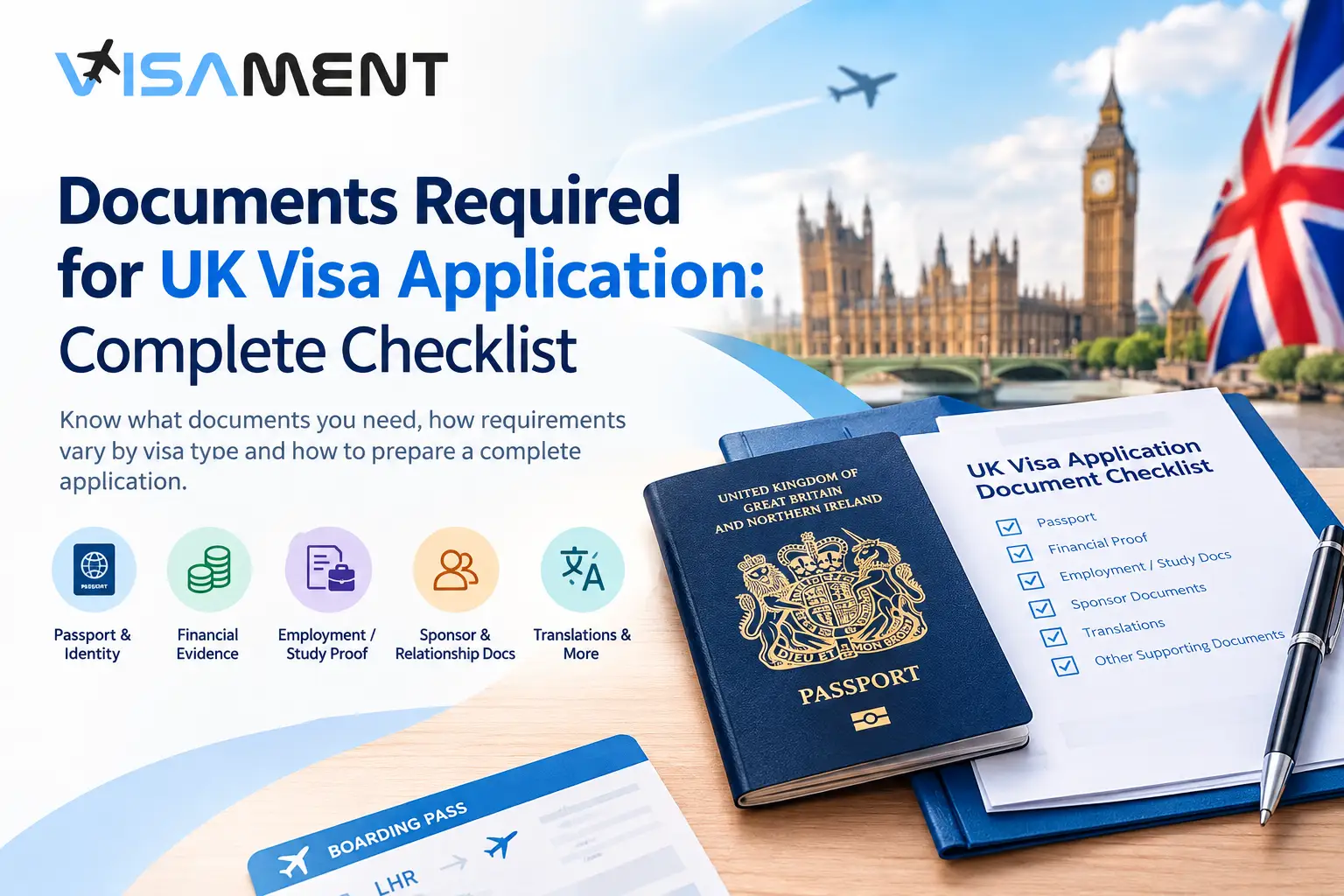
Preparing the documents required for a UK visa application is an important step before submitting your application. The documents you need depend on whether you are applying for a Visitor, Student, Work or Family visa, as well as your nationality and personal circumstances.
This guide explains the common document categories, financial and sponsorship evidence, translation requirements and additional documents that may apply to different visa routes. Use it as a starting checklist and confirm the final requirements through official UK government guidance before applying.
Key Takeaways
- A valid passport or accepted travel document is a common requirement for UK visa applications.
- Supporting documents vary according to the visa category and individual circumstances.
- Financial evidence may include bank statements, payslips or sponsorship records, depending on the applicable rules.
- Student, Work and Family visa applicants may need additional route-specific evidence.
- Documents not in English or Welsh generally require a translation that meets Home Office requirements.
- The official application guidance and document checklist should take priority over generic online lists.
What Documents Are Required for a UK Visa Application?
The documents required for a UK visa depend on the purpose of your travel and the visa route you choose. A passport or other accepted travel document is a common starting point, but additional evidence may be needed to demonstrate your circumstances and satisfy the requirements of your particular route.
Depending on your application, you may need:
- A valid passport or travel document.
- Evidence supporting the purpose of your visit, study, work or family application.
- Financial evidence, where applicable.
- Employment, business or education records, if relevant.
- Sponsorship or relationship documents, where required.
- Additional evidence specified in the relevant visa guidance.
Not every applicant needs every document on this list. Start by using the official GOV.UK visa checker to identify the appropriate route and its requirements.
UK Visa Document Requirements by Visa Type
The evidence you need depends on the visa category. The following table provides an overview of common document types; it is not a substitute for the official checklist for your application.
|
Visa category
|
Examples of relevant documents
|
|
Standard Visitor visa
|
Passport, evidence of the visit's purpose, financial and personal circumstances, and sponsorship evidence where applicable
|
|
Student visa
|
Passport, Confirmation of Acceptance for Studies (CAS), and financial or additional evidence where required
|
|
Work visa
|
Passport, Certificate of Sponsorship (CoS) where applicable and evidence required for the specific work route.
|
|
Family visa
|
Passport or identity evidence, relationship documents and applicable financial evidence
|
These are examples, not complete checklists. Some requirements depend on your circumstances, nationality, application location and the specific immigration route.
For example, a Student visa applicant may need a CAS from their education provider, whereas a person applying for a Family visa may need evidence of their relationship with a qualifying family member. Check the relevant official guidance before deciding which documents to submit.
General Documents Required for a UK Visa
Use the following checklist as a starting point. Not every document listed below is mandatory for every applicant.
1. Valid Passport or Travel Document
You will generally need a valid passport or another accepted travel document. Follow the instructions for your visa category and application method.
Depending on the application, you may also need information or copies relating to previous passports, visas or travel history.
2. Visa Application Details
Keep the information used in your application consistent with your supporting evidence. This may include your full name, date of birth, nationality, passport details, travel plans and information about any sponsor.
Check spellings, dates and document numbers carefully before submitting your application.
3. Evidence of Your Purpose of Travel
The documents relevant to your travel purpose depend on your visa category.
For a Standard UK Visitor visa, useful supporting evidence may include information about the activities you intend to undertake in the UK, the reason for your visit and your circumstances outside the UK.
For study or work applications, the relevant evidence may instead relate to your course, education provider, employer or sponsorship arrangement.
4. Financial Documents
You may need financial evidence to demonstrate that you meet the requirements applicable to your visa route.
Depending on the circumstances, relevant documents may include:
- Bank statements showing available funds and their origin.
- Payslips and employment records.
- An employer's letter confirming your role and salary.
- Business records or other evidence of self-employment.
- Documents relating to financial support from a sponsor.
The exact requirements vary by visa category. Do not assume that a particular bank balance or statement period applies to every UK visa application.
5. Sponsor Documents, Where Applicable
If another person or organisation is supporting your application, you may need evidence explaining the support being provided and how it will be funded.
For a sponsored visit, this may include information about the relationship between the applicant and sponsor, the expenses being covered and the sponsor's ability to provide the stated support.
A sponsorship or invitation letter does not automatically replace other evidence required for the relevant visa route.
6. Additional Documents for Your Circumstances
Depending on your application, you may also need:
- Marriage or birth certificates to establish a relationship.
- Documents supporting a family visa application.
- Education records or course-related documents.
- Employment or sponsorship information.
- A tuberculosis (TB) test certificate, if required.
- Parental consent and relationship documents for certain applicants under 18.
Check the official requirements to determine whether any of these documents apply to you.
Financial evidence should support the information you provide in your application. The relevant requirements depend on the visa category and your circumstances.
For example, an employed visitor may use bank statements and employment evidence to explain their financial position. If a family member is paying for the trip, the applicant may need to explain the support being provided and supply relevant evidence about the sponsor.
For a Student or Family visa, specific financial rules may apply. Applicants should follow the relevant official guidance rather than relying on a general visitor checklist.
Important: Make sure your financial evidence is consistent with your declared income, employment and source of funds. If there are unusual transactions or other circumstances that need explaining, provide a clear and truthful explanation supported by appropriate evidence where relevant.
How to Prepare and Submit Your UK Visa Documents
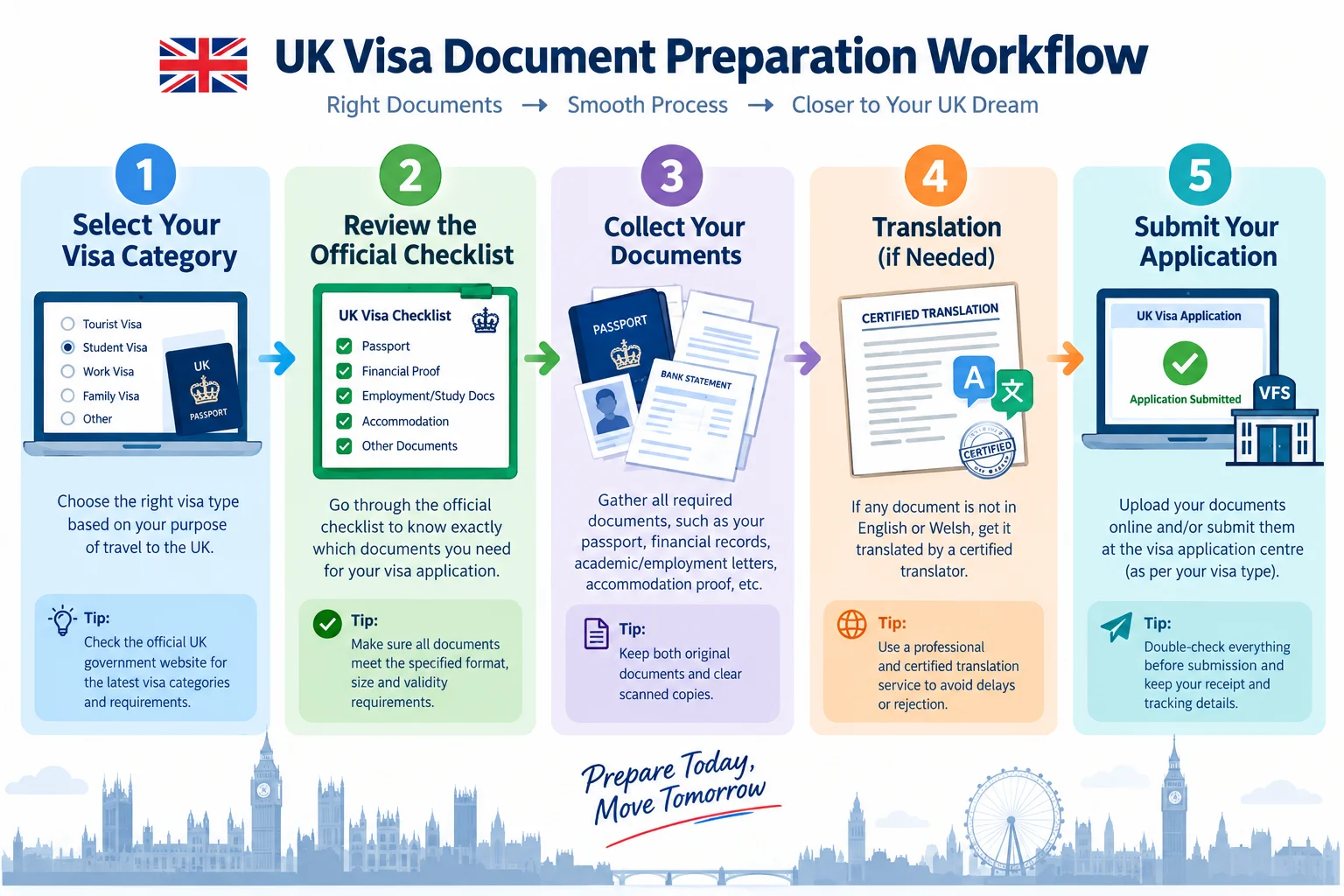
Follow these steps to prepare your supporting documents:
- Identify the correct visa category. Check which route applies to your purpose of travel and nationality.
- Review the official document requirements. Use the relevant GOV.UK guidance and the checklist provided during your application.
- Collect the relevant evidence. Prepare documents that address the requirements applicable to your circumstances.
- Check document quality. Ensure scans or photographs are clear and show the complete document, including relevant details.
- Arrange translations where necessary. Follow the applicable Home Office requirements for documents not in English or Welsh.
- Follow the submission instructions. Upload documents or present them as directed by your application process.
GOV.UK explains that document submission arrangements depend on the application method. Applicants may be asked to provide specific evidence based on the information entered in their application. Read the official guidance on uploading evidence before submitting files.
Do UK Visa Documents Need to Be Translated into English?
Documents submitted in a language other than English or Welsh generally need a full translation that meets the Home Office's requirements.
According to the official Visitor visa supporting documents guidance, translations must be independently verifiable and include:
- Confirmation from the translator that the translation is accurate.
- The date of translation.
- The translator's full name and signature.
- The translator's contact details.
Check the guidance applicable to your visa category before arranging translations, as the requirements for your application must be followed.
Common Mistakes to Avoid When Preparing UK Visa Documents
Avoid these common document preparation mistakes:
- Using the wrong checklist: Requirements for a Visitor visa may differ significantly from those for a Student, Work or Family visa.
- Submitting incomplete documents: Check that all required pages and relevant information are visible.
- Providing inconsistent information: Names, dates, employment details and financial information should match across the application and supporting evidence.
- Assuming a sponsor letter is sufficient: Additional evidence may be required to demonstrate the support being offered and meet the applicable requirements.
- Overlooking translation rules: Arrange translations that meet the relevant official requirements.
- Relying on outdated online lists: Recheck current GOV.UK guidance before applying.
Submitting documents does not guarantee visa approval. The decision depends on whether the application meets the applicable immigration requirements and how the evidence is assessed.
Conclusion
The documents required for a UK visa application depend on your visa category, personal circumstances and the applicable immigration rules. A passport is a common starting point, while financial, employment, education, sponsorship and relationship evidence may be needed for particular routes.
Before applying, review the official guidance, prepare accurate and readable documents, arrange required translations and check your final document checklist. This helps you submit evidence that is relevant to your application without relying on a generic list that may not fit your circumstances.