Related Blogs

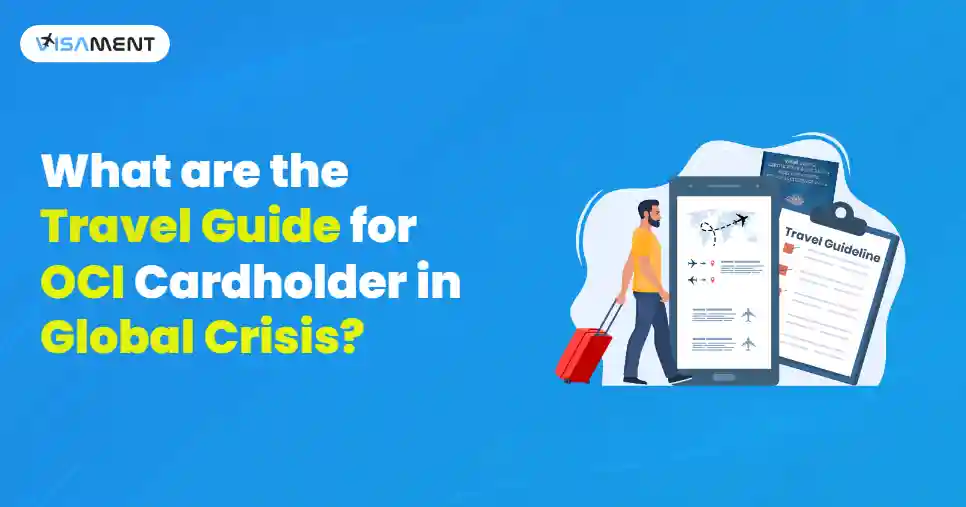
Any global crisis, such as geopolitical instability, high tension, pandemics, natural disasters, or political instability, can cause travel disruptions for OCI cardholders.
OCI cardholders can face various issues and problems during these times, such as delays in flights, travel restrictions to affected regions, and other documentation issues.
So, in this blog, we will discuss a travel guide for the OCI cardholder during any crisis, like the US-Iran-Israel conflict, and provide all the safety measures to make sure safe travel and minimal disruption to OCI travellers.
An OCI (Overseas Citizen of India) card is issued to a foreign national of Indian origin to live, stay, or work in India for an indefinite period.
An OCI cardholders also get many benefits, like
However, during any kind of global crisis, OCI status does not affect it, but you may face issues like travel disruption, flight delays, and entry restrictions due to the conflicts.
For an emergency travel guide for OCI cardholders, the Indian government has also issued a travel advisory for safety from any global issue.
You must know what you should do before planning a trip during a global crisis.
All OCI travellers need to check the travel advisory by going to the:
Before travelling during any global conflict, you need to check the flight status. To ensure that your flight will depart easily, and there are no sudden changes in the flight status.
This will help you to have other alternative options without struggling at the last minute.
You must check all the entry points to see whether they are restricted or not. During an emergency travel situation, most of the countries restrict entry points for flights for the safety of citizens.
Check the following before travelling to any country during a crisis.
If you are planning to travel during the emergency conditions, then you must register with the Indian embassy in case of any emergency or for your safety concerns.
Here are different types of emergency travel guides for OCI cardholders in crisis that affect their international travel.
The main reason for the global conflict is a high rise in geopolitical tensions among the countries, leading to the following situation.
If any natural pandemic happens, such as an earthquake, a tsunami, or a flood, then it can lead to:
Emergencies like pandemics or any outbreak, such as COVID-19, can result in:
Due to the civil disruptancy an political instability in the country, OCI cardholder travel may be affected because of:
In times of a global crisis or any geopolitical conflicts, an OCI cardholder can face many challenges, such as:
Make sure you know all these challenges and are prepared well to face them, which will help you tackle them in future.
The government has issued an India travel advisory for NRIs and foreigners in the Middle East crisis. This travel advisory also includes the list of documents that you will need during any kind of global crisis, which are:
Here's a quick tip for all the individuals: always have a copy of all the essential documents in the cloud storage or your email storage for easy access and storage.
Stop worrying about delays. Apply now and get your OCI card on time with our expert service.
Here are some of the Points which an OCI cardholder does if he or she is left stranded during an emergency.
Check all the latest updates through the official government sources.
If you are a standard and stuck in conflicted areas, then you need to contact the nearest Indian embassy who can assist you with:
If you need to extend your duration of stay, then the Indian embassy can help you with it.
 Also Want to Know About Health Insurance for OCIs? Check Now!
Here are the travel plans for the emergency assistance for those stranded in a foreign country.
If you are stranded in any foreign country, then you should listen to the guidelines and all the instructions of the local authority of the country.
Contacting your country's embassy will help you to provide the essential information, like:
If you are left stranded and are unable to connect with your embassy, then you need to follow the points given below.
During any emergency condition, if you are left stranded, then you need to inform your family members so they can help you in the emergencies, and provide you assistance during these time.
Anu, living in the USA, planned a trip to India during the time of an emergency crisis, with high geopolitical tension arising in the Middle East countries.
Then, suddenly, all the flights are disrupted, and the airspace is closed in the Middle East country, leading to the cancellation of the flight to India.
However, instead of panicking, she calmly handled the situation, and she:
Her intelligence, preparation, and travel insurance have helped her to manage the travel situation, which has been disrupted due to the crisis.
During the time of any global crisis like the US-Israel-Iran Conflict, COVID-19, or any other pandemic or natural disaster, airlines play an important role.
Through airlines, you will get most of the logistics, goods and services, and most importantly, people travel from one country to another.
However, during an emergency crisis, you can see the role of an airline, such as:
Travel insurance is important for the OCI status holder, NRIs and foreign nationals during a global crisis because it covers:
You should choose a good premium insurance as it will include the maximum coverage and provide maximum protection to an individual.
Given below are some tips for the individual during an emergency travel.
Given below are some of the top mistakes that applicants make when they plan to travel during any crisis.
You need to take all the safety measures during any emergency crisis. It can help you in the preparation and to tackle all things that you are going to face, such as
Travel guide for the OCI cardholder during any crisis, helps you to get all the information, assistance and legal complications from the country.
The government issued the travel advisory, which can reduce the stress among the OCI cardholders, NRIs and foreign nationals. However, during an emergency crisis, you can also face issues such as flight delays, flight disruptions, cancellation of flights, re-routing of flights, and transit hub restrictions.
Stay informed by checking the latest guidelines by the government of India, and for the OCI cardholders, making all emergencies easy to manage. You need to be aware, prepared, and ready to tackle all the issues and problems during any emergency.
Yes, an OCI cardholder can travel during an emergency crisis, but needs to follow all the guidelines and travel advisories by the government of India. Also, they need to follow all the health protocols and need to get special permission from the government, depending on the situation.
No, OCI cardholders don't need a visa during emergencies, but they can get a temporary restriction on travel if there are high tensions among the neighbouring countries.
If you have lost your OCI card during the time of travel, then you need to go to the nearest police station and file a missing report of your OCI card, by providing all the documents, and then you need to visit the nearest Indian embassy or mission and report the lost OCI card and get assistance.
Yes, the OCI cardholders can get the evacuation or emergency assistance from their country of citizenship. India will not provide them with any assistance regarding the evacuation.
Travel insurance is not mandatory, but it is highly recommended by the authorities and government during the time of travel.
If you want to stay updated during any crisis, then you need to regularly check updates from the official government sources, contact the embassies or follow the travel advisory and local state instructions during any kind of crisis.
Vipul Jain is the Co-Founder of Visament, a trusted platform dedicated to simplifying Indian immigration, consular, and NRI services for applicants across the globe. With extensive expertise in OCI cards, Indian passport services, visa assistance, apostille and document legalization,... See Full Bio

Talk to our documentation experts for free guidance on your application.
When you visit a website, it may store data about you using cookies and similar technologies. Cookies can be important for the basic operations of the website and for other purposes. You get the option of deactivating certain types of cookies, even so, doing that may affect your experience on the website.
It is required to permit the basic functionality of the website. You may not disable necessary cookies.
Used to provide advertising that matches you and your interests. May also be used to restrict the number of times you see an advertisement and estimate the effectiveness of an advertising campaign. The advertising networks place them after obtaining the operator's permission.
Permits the website to recognize the choices you make (like your username, language, or the region you are in). Also provides more personalized and enhanced features.
Aid the website operator to determine how the website performs, how visitors interact with the site, and whether there are any technical issues.