Related Blogs

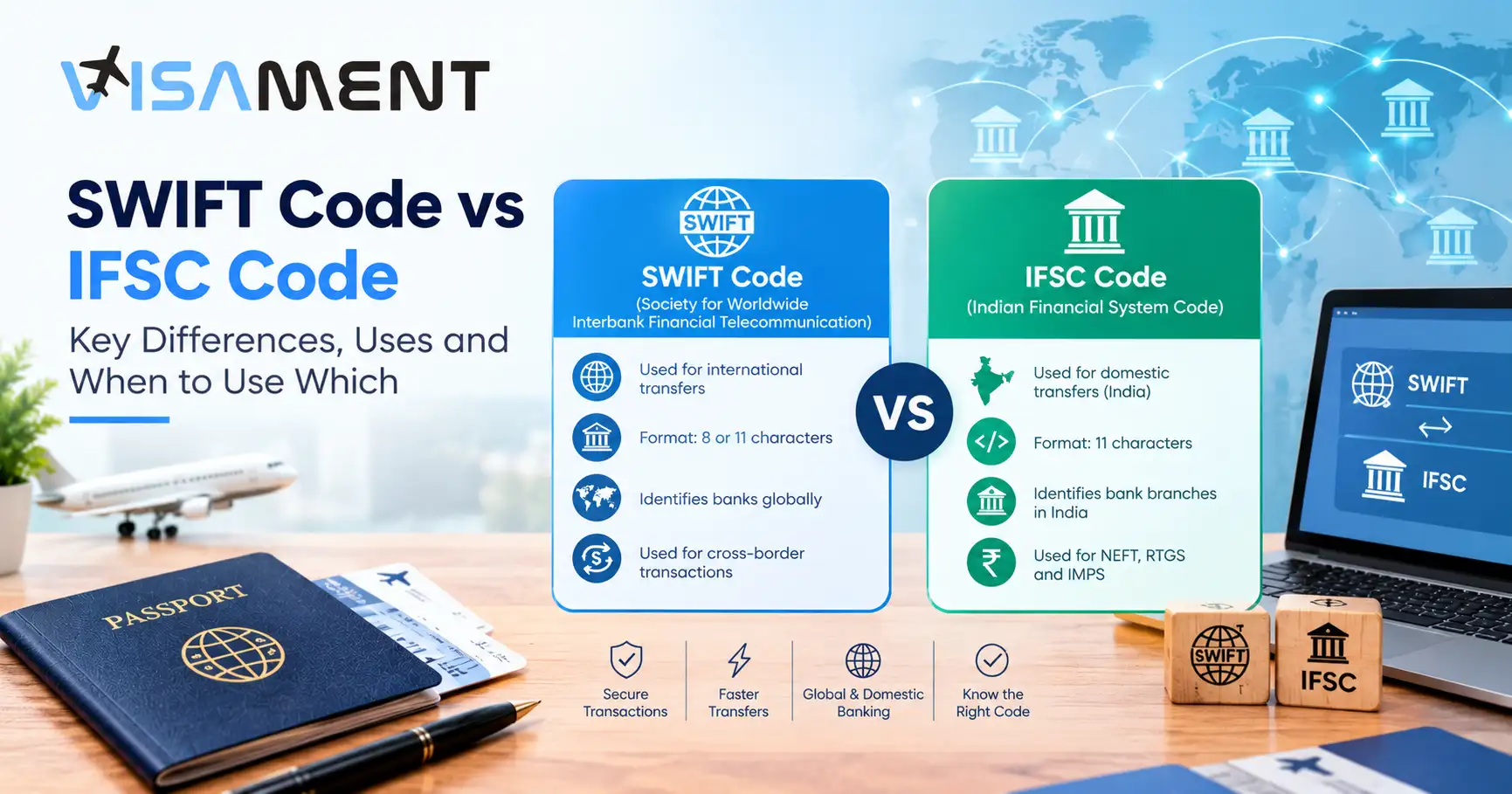
If you are sending or receiving money through an Indian bank, you may be asked for a SWIFT code, BIC, or IFSC code. Although all are banking identifiers, they are not the same and serve different purposes. SWIFT/BIC is primarily used to identify financial institutions in international financial transactions, while IFSC identifies participating Indian bank branches for domestic payment systems such as NEFT.
Understanding the difference can help you provide the correct banking information and avoid delays caused by incorrect or incomplete details.
|
Feature |
SWIFT/BIC |
IFSC |
|---|---|---|
|
Full name |
Business Identifier Code |
Indian Financial System Code |
|
Main purpose |
Identifies financial institutions/business parties internationally |
Identifies participating Indian bank branches |
|
Standard |
ISO 9362 |
Indian banking/payment-system identifier |
|
Length |
8 characters, or 11 with an optional branch identifier |
11 characters |
|
Geographic scope |
International |
India |
|
Common use |
Cross-border financial transactions and messaging |
Indian electronic fund-transfer systems such as NEFT |
|
Identifies |
Business/financial institution; optional branch or organisational unit |
Bank branch |
|
Interchangeable? |
No |
No |
SWIFT identifies BIC as an international standard for identifying institutions in the financial-services industry. A BIC consists of either eight or eleven characters. RBI defines IFSC as an 11-digit alphanumeric code that uniquely identifies a bank branch participating in NEFT.
A SWIFT code is commonly used to refer to a BIC (Business Identifier Code) in the context of international banking. The BIC is defined under ISO 9362 and is used to identify a business or financial institution for financial messaging and transaction processing.
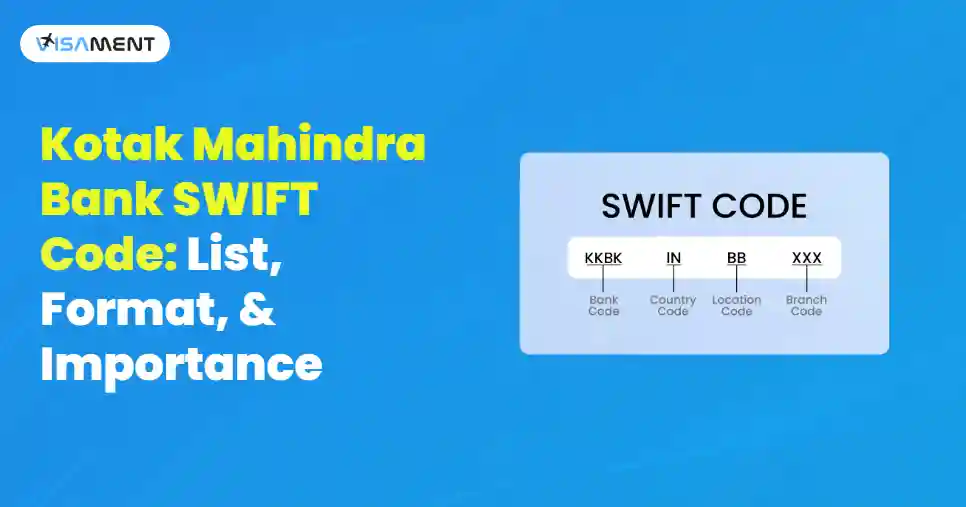
A standard BIC has eight characters. An additional three-character branch identifier can be added, making an 11-character BIC. SWIFT describes the first eight characters as identifying the business party, while the optional final three characters can identify an organisational unit such as a branch, department, or service.
For example, a BIC can be understood conceptually as:
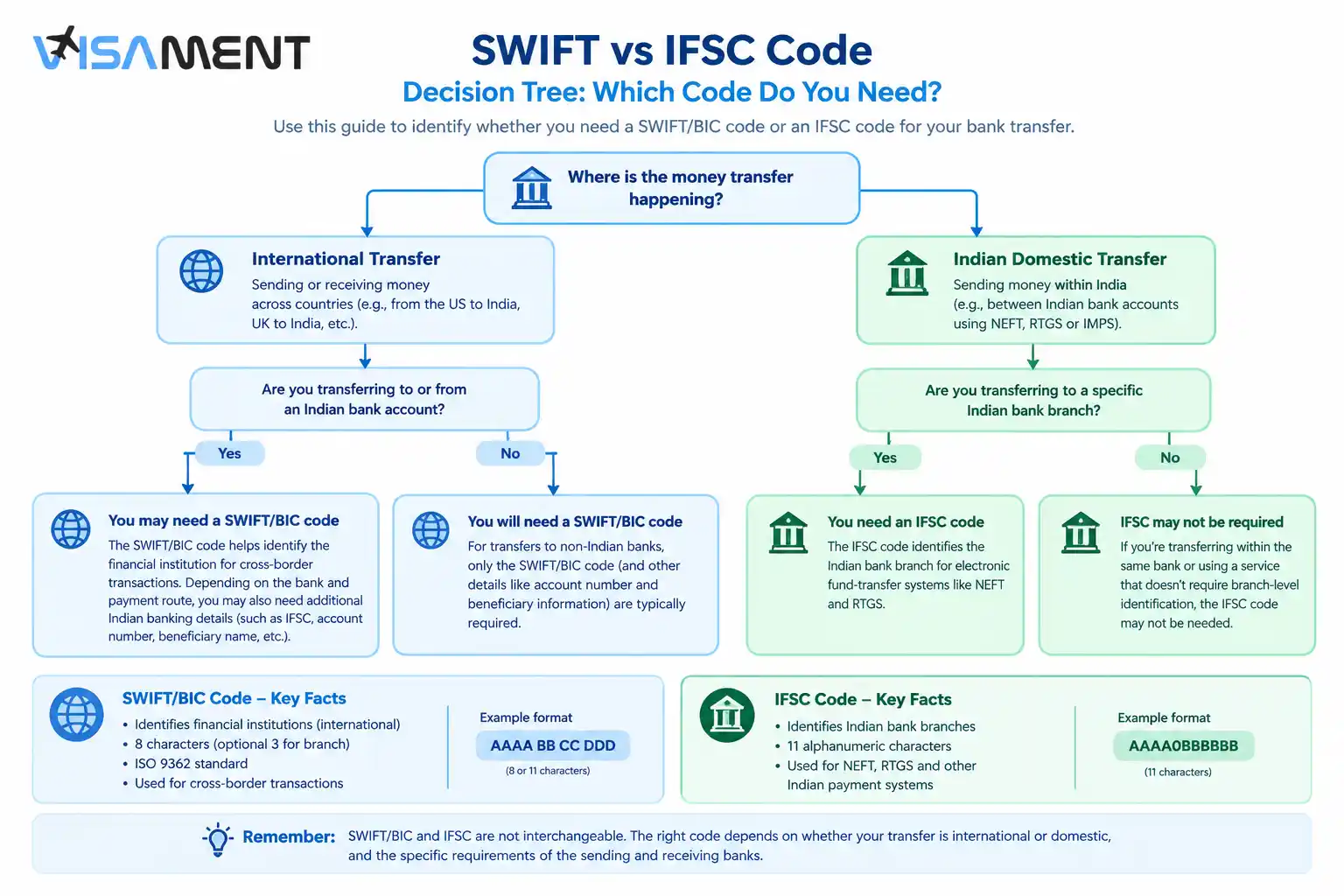
AAAA BB CC DDD
where the components identify the business party, country and optional branch or organisational unit.
The important point is that a SWIFT/BIC is not an Indian branch code equivalent to IFSC. It is part of an international identification standard.
IFSC stands for Indian Financial System Code. It is an 11-character alphanumeric code that uniquely identifies a bank branch participating in India's NEFT system.
According to the Reserve Bank of India, the first four characters represent the bank, the fifth character is 0, and the final six characters represent the branch. The IFSC helps the payment system identify the originating or destination bank branch and route the transaction appropriately.
For example, an IFSC follows this general pattern:
AAAA0BBBBBB
The exact code depends on the bank and branch.
IFSC is therefore closely associated with India's banking infrastructure. RBI guidance also states that beneficiary details for NEFT include the beneficiary bank branch's IFSC along with other account information.
The biggest difference is what each identifier is designed to identify and where it is used.
A SWIFT/BIC identifies a financial institution or business party within an international identification standard, while an IFSC identifies a participating Indian bank branch within India's payment infrastructure.
SWIFT/BIC is an international identifier used in financial messaging and transaction processing. SWIFT describes BIC as a standard used for addressing messages, routing business transactions and identifying business parties.
IFSC is specific to India's banking system and identifies individual participating bank branches for systems such as NEFT.
A BIC contains either 8 or 11 characters. The additional three characters are optional and can identify a particular organisational unit.
An IFSC contains 11 alphanumeric characters, with a defined structure used to identify the bank and branch.
The two codes also identify different levels of banking entities.
A BIC identifies a business party or institution, with an optional branch identifier. An IFSC identifies an Indian bank branch participating in the relevant payment system.
IFSC is commonly encountered when making an electronic transfer between Indian bank accounts through systems such as NEFT.
SWIFT/BIC is commonly encountered when a financial institution needs to identify another institution in a cross-border transaction or financial message.
That does not mean every international transfer follows exactly the same requirements. The sending bank, receiving bank and payment route can determine which additional information is required.
For an international transfer involving an Indian bank account, SWIFT/BIC may be required to identify the relevant financial institution. However, the exact information requested can vary according to the sending bank, receiving bank, country and transfer route.
An international payment may require more than one banking identifier or additional beneficiary information. Therefore, you should follow the instructions provided by the bank receiving the funds rather than assuming that an IFSC or SWIFT code alone is sufficient.
For example, someone sending money from another country to an Indian bank account may be asked for the beneficiary's:
The exact requirements should always be confirmed with the relevant bank before the transfer is initiated.
Yes. A bank can have both a SWIFT/BIC and IFSC because the two identifiers serve different purposes.
An Indian bank may use IFSCs to identify its participating branches within Indian payment systems while having a BIC for international identification and financial messaging.
Having an IFSC therefore does not mean that the bank's IFSC can simply be substituted for its SWIFT/BIC. Likewise, a SWIFT/BIC should not automatically be treated as a replacement for the IFSC requested for an Indian domestic transfer.
Before submitting a transfer, verify the code rather than relying on an old document or an online listing of uncertain origin.
SWIFT provides BIC information and a BIC Directory for identifying registered BICs. RBI also provides information about IFSCs for participating bank branches.
A few simple mistakes can create confusion when completing bank-transfer information:
The safest approach is to use the exact details requested by the bank handling the transaction.
SWIFT/BIC and IFSC are not interchangeable. SWIFT/BIC provides international identification of financial institutions or business parties, while IFSC identifies participating Indian bank branches within India's payment infrastructure.
If you are making an international transfer to India, check the exact requirements of the banks involved rather than assuming that one code replaces the other. For an Indian domestic transfer, use the banking details requested by the relevant payment system and verify the IFSC with the bank when necessary.
No. SWIFT/BIC and IFSC are different identifiers. SWIFT/BIC is an international identifier for business or financial institutions, while IFSC identifies participating Indian bank branches for systems such as NEFT.
Generally, you should not treat IFSC as a substitute for SWIFT/BIC. They have different purposes and identify banking entities within different systems. Follow the specific requirements provided by the bank handling the transaction.
Not necessarily. The required information depends on the transfer route and the participating banks. A sender should confirm the exact requirements with the sending and receiving banks before initiating the transfer.
You should not assume that every individual Indian bank branch has its own separate SWIFT/BIC. BICs identify business parties and may optionally include an organisational-unit identifier. Verify the appropriate BIC with the relevant bank.
A BIC consists of 8 or 11 characters. The final three characters are an optional branch identifier.
An IFSC is an 11-character alphanumeric code used to identify a participating Indian bank branch.
Vipul Jain is the Co-Founder of Visament, a trusted platform dedicated to simplifying Indian immigration, consular, and NRI services for applicants across the globe. With extensive expertise in OCI cards, Indian passport services, visa assistance, apostille and document legalization,... See Full Bio

Talk to our documentation experts for free guidance on your application.

When you visit a website, it may store data about you using cookies and similar technologies. Cookies can be important for the basic operations of the website and for other purposes. You get the option of deactivating certain types of cookies, even so, doing that may affect your experience on the website.
It is required to permit the basic functionality of the website. You may not disable necessary cookies.
Used to provide advertising that matches you and your interests. May also be used to restrict the number of times you see an advertisement and estimate the effectiveness of an advertising campaign. The advertising networks place them after obtaining the operator's permission.
Permits the website to recognize the choices you make (like your username, language, or the region you are in). Also provides more personalized and enhanced features.
Aid the website operator to determine how the website performs, how visitors interact with the site, and whether there are any technical issues.