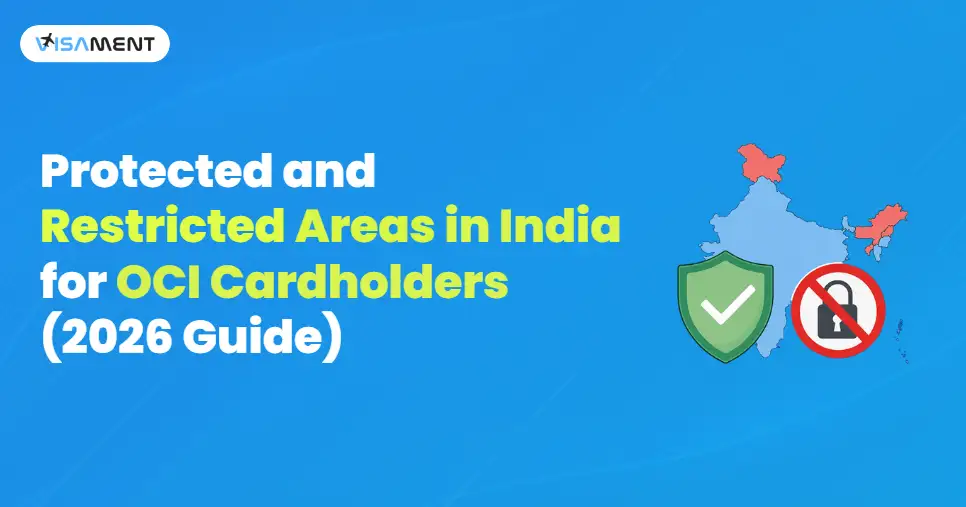
An OCI card allows a foreign national of Indian origin to live, work, or stay in India. However, it does not guarantee you access to all the parts of the country.
There are some of the regions that are protected or restricted for OCI cardholders. To go to such areas, OCI cardholders need to take special permission from the Indian government.
In this blog, we will discuss the protected and restricted areas for OCI cardholders in India, along with the latest rules, permit requirements, and travel tips.
Key Takeaways
- An OCI cardholder can visit the protected and restricted areas in India by getting a permit.
- You can apply for a Protected Area Permit (PAP) and a Restricted Area Permit (RAP).
- Delhi, Jaipur, Rajasthan, Goa, and Kerala are some of the places where an OCI cardholder can visit in India freely.
- The permits are only valid for a limited period and are issued for specific routes and locations.
What are the Protected and Restricted Areas in India for OCI Cardholders?
The government of India has taken some of the measures and restricted some areas in India for OCI cardholders.
The step is taken due to the following:
- High-rising security concerns in India.
- As they are close to the International border.
- These areas also protect the tribal groups and communities.
For the OCI cardholders, there are two types of permits used, which are:
- Protected Area Permit (PAP): This is a permit that is used by the OCI cardholder for going to the border-sensitive areas.
- Restricted Area Permit (RAP): This permit is used for the OCI cardholder to get into the tribal or high security areas.
OCI cardholders require permits, as they are considered foreign nationals of Indian origin.
What is the List of OCI Card Restricted Areas in India?
Here is the list of the Protected and restricted areas for the OCI cardholders.
- Arunachal Pradesh
- This entire state is considered a protected region.
- A protected area permit is required for the OCI card for the border-sensitive areas.
- Nagaland
- Most areas in this region fall under the protected area regulation.
- Permits in this region can be relaxed, but they can also change over time.
- Mizoram
- This state is fully classified as a protected area for OCI cardholders.
- An OCI cardholder needs to get a valid protected area permit.
- Manipur
- In this state, you will see that most of the areas are restricted in this region.
- The Restricted Area Permit (RAP) is required, which depends on the location.
- Sikkim
- In this, most of the tourist areas are open for OCI cardholders.
- However, you need to get special permission from the Indian government, such as for Tsomgo Lake and Nathula Pass.
- Andaman and Nicobar Islands
- In this area, OCI cardholders can access areas like Port Blair.
- Tribal Islands and the remote regions are strictly prohibited for OCI cardholders.
- Ladakh
- Normal travel for the OCI cardholders is allowed in this region.
- However, you need to have a border area permit to go to places such as Pangong Lake and the Nubra Valley.
- Jammu and Kashmir
- This state is mostly open for the OCI cardholder.
- However, OCI cardholders cannot go to some military areas and defence regions.

Also Want to Know About
fast track immigration Check Now!
Do OCI Cardholders Need a Permit in India?
Yes, an OCI cardholder needs a valid permit. They should apply for a PAP (Protected Area Permit) or RAP (Restricted Area Permit) to enter the restricted region in India.
Here are some of the key points that an OCI cardholder should consider:
- The permits are issued by the Indian mission abroad, FRRO/FRO offices in India, and State authorities.
- The Ministry of Home Affairs is also responsible for managing the OCI card scheme, such as application processing, regulation, and formulation.
- An OCI cardholder can also apply for online permit applications for some areas.
- If an OCI cardholder enters an India-restricted area without the permit of the Indian government, then it can lead to the denial of legal action.
Say Goodbye to Visa Hassles – Get Your OCI Card!
Travel to India as often as you like- No Visa needed! Enjoy unlimited and seamless trips.
Apply Now What are the Documents Required for the PAP or RAP?
Given below are some of the documents that you need to submit for the PAP or RAP for the OCI cardholders in India.
- A valid passport.
- Your OCI card.
- You need to provide a travel itinerary.
- Two coloured passport-size photos with a plain white background.
- Filled out the application form.
Before the submission of documents, you must check the documents, as they may vary depending on the state where you are applying.
Important Rules for the OCI Cardholders for the Protected Region in India
Given below are some of the important points for the OCI cardholder for protected and restricted regions in India.
- OCI cardholders are not allowed to enter the restricted areas in India without the permission of the Indian government.
- The Permits for the OCI cardholders are usually valid for a limited time period.
- Permits are issued for specific locations or routes in India.
- For going to some regions in India, OCI cardholders require group travel or registration from the tour or travel operators.
What are the Areas where OCI Cardholders Can Travel Freely in India?
The OCI cardholder can travel under the following reasons in India, which are:
- Delhi
- Mumbai
- Rajasthan
- Goa
- Kerala
However, you need to apply for a permit, such as PAP or RAP, to go to some of the regions given below.
- Arunachal Pradesh
- Himachal Pradesh
- Mizoram
- Manipur
- Jammu and Kashmir
- Nagaland
- Sikkim
- Uttarakhand
- Andaman and Nicobar Islands
Common Mistakes to Avoid While Going to India as an OCI Cardholder
Check out the common mistakes that an OCI cardholder made when going to India.
- Most of the OCI cardholders forgot to apply for a permit before entering India.
- OCI cardholders are not allowed access to all the regions in India.
- Most of the OCI cardholders travel in the cross-border regions without permission or the rules.
- Do not carry all the essential documents by the OCI cardholder.
You must verify all the details and check the guidelines by the Indian authorities before planning the trip.
Conclusion
The OCI card helps all foreign nationals of Indian origin to travel smoothly and easily in India without reporting the duration of stay in India. However, having an OCI card does not allow you to visit some restricted areas and protected areas in India.
For going into the protected and restricted areas, you need to follow all the rules and regulations, and you will need a permit for OCI cardholders. Through proper planning and getting all the required documents, you can visit all the restricted areas and protected regions.
In this, Visament can also help you to provide all the hassle-free documentation and all the details for the permit. For more information, you can contact the Visament website support team, who are active 24/7 and provide real-time solutions.