Related Blogs

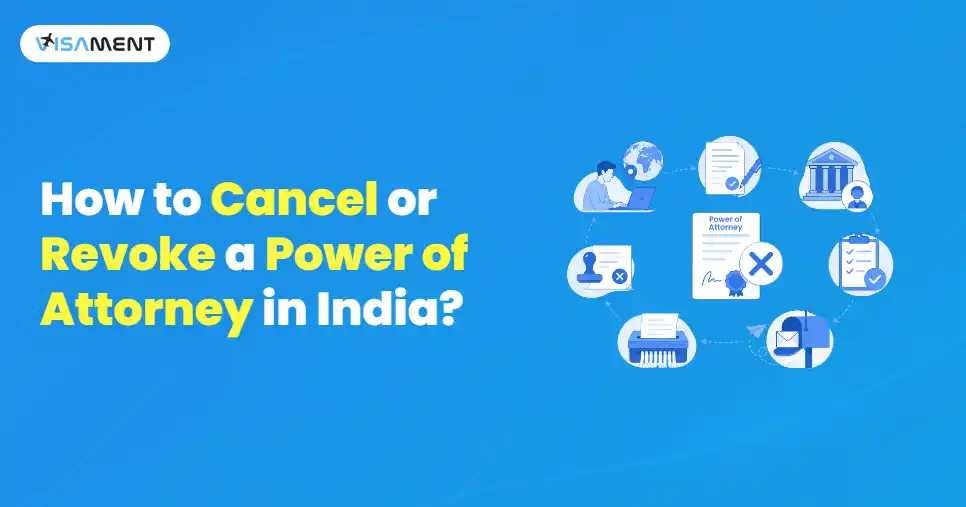
An NRI can use a Power of Attorney (POA) to allow a trusted individual to manage legal, financial, and property-related matters in India. The individual will act on behalf of the NRI if the NRI is unable to represent themselves. Although it is an effective way to handle responsibilities without having to visit India, there are times when you must withdraw this authority. There can be many reasons for cancelling or revoking a POA, such as appointing a new representative, the purpose has been fulfilled, or you do not want the attorney to act on your behalf anymore. Hence, it is necessary to cancel or revoke a Power of Attorney in India through proper means. Keep in mind that verbally informing the attorney does not cancel or revoke the authority.
Read the blog below to learn how to cancel or revoke a Power of Attorney, the POA cancellation process in India, the documents required, and the steps NRIs must take to complete the process legally.
To revoke a Power of Attorney in India means to legally withdraw the authority you granted to an individual for acting on your behalf.
Note: If the attorney was in charge of handling property, banking, or legal matters, you must notify the relevant authorities after revoking the POA to update their records.
A Power of Attorney is created for specific purposes and managing ongoing responsibilities in India. However, a POA can be revoked if the purpose has been fulfilled or the circumstances have changed. Revoking or canceling a Power of Attorney is mostly done to safeguard your legal and financial interests.
You can revoke a POA at any time. However, there are a few situations where cancelling a Power of Attorney in India is necessary to safeguard your interests.
The Assigned Work is Complete
You plan to appoint someone else
There has been a change in trust
Your circumstances have changed
Property matters have been completed
 Also Want to Know About How to Execute Urgent POA From USA? Check Now!
Yes, in many cases, an NRI can initiate and complete the overseas execution and authentication of a Power of Attorney revocation without travelling to India. However, registration or other local formalities in India may still be required, depending on the type of POA and applicable requirements.
The exact process depends on factors like:
In most cases:
If you originally executed a Power of Attorney in India from USA or a Power of Attorney in India from UK, the revocation process is broadly similar. However, the authentication requirements may differ depending on the country where the documents are signed.
The table below outlines all the necessary documents needed by NRIs to cancel a Power of Attorney.
| Document | Purpose |
|---|---|
| Original or copy of the Power of Attorney | Reference to the existing POA |
| Revocation Deed | Officially revokes the authority |
| Copy of Passport | For identity verification |
| Proof of Address | Residential proof |
| Passport-sized photographs | Registration formalities |
| Registration details of the original POA | Needed for registered POAs |
| Notarisation by a Notary Public | Authentication of documents |
| Embassy attestation or Apostille | Overseas document validation |
Note: Before you submit your application, make sure to check the requirements of the relevant Sub-Registrar or consult a legal professional since procedures differ across states.
Also Want to Know About Pros and Cons of Power of Attorney? Check Now!If you are planning to cancel a Power of Attorney in India, you must follow the correct legal process. The exact process might vary based on the type of POA and local registration requirements.
However, the steps listed below apply to most cases.
Also Want to Know About Does Power of Attorney Expire? Check Now!Yes, the procedure steps vary if the original Power of Attorney was registered.
The table below outlines how the process varies for registered and unregistered POAs.
| Registered POA | Unregistered POA |
|---|---|
| Mostly used for property transactions | Usually issued for limited or specific reasons |
| Revocation might also be registered | Registration of the revocation is not always needed |
| Creates an official public record | Usually involves fewer formalities |
| Additional local registration requirements might apply | Written revocation and notice to the attorney must be done |
Also Want to Know About Does Power of Attorney Expire? Check Now!Since revoking a Power of Attorney is a legal process, missing even a single step can lead to unwanted delays or disputes.
Here is a list of mistakes that NRIs must avoid while cancelling a Power of Attorney in India.
Assuming the POA ends automatically
Not Informing the Attorney-in-Fact
Ignoring Registration Requirements
Forgetting to Notify Third Parties
Submitting Incomplete Documents
Stop worrying about delays. Apply now and get Indian Counsellor Services.
Chat NowA Power of Attorney allows NRIs living abroad to manage their important matters in India through a trusted individual. Once the purpose is over or circumstances change, it is necessary to cancel or revoke a Power of Attorney in India through the correct legal process. The proper process consists of preparing a Revocation Deed, completing notarisation, informing the attorney holder, and notifying the relevant institutions. Each step is necessary to make the revocation legally acceptable and effective. Being aware and taking timely action can safeguard your property, finances, and legal interests while reducing the risk of future disputes.
If you are unsure about the documentation or state-specific procedures, you can contact experts at Visament. They can help you understand the revocation process and ensure all legal requirements are accurately fulfilled.
Yes, they can. In many cases, an NRI can cancel a Power of Attorney in India from overseas by executing a Revocation Deed, completing the required notarisation and authentication formalities, and sending the documents to India for further processing.
Yes, you can revoke a registered Power of Attorney in India by executing a Revocation Deed. If the original POA was registered, the revocation will also be registered with the appropriate Sub-Registrar's office, depending on the applicable legal requirements.
The required documents usually include an original or copy of the POA, a revocation deed, passport, address proof, registration details, and authentication through a Notary Public, embassy attestation, or Apostille.
Yes, you can revoke a Power of Attorney for property in India if you no longer want the attorney to manage or transact on your behalf. If the Power of Attorney relates to immovable property, registration of the Revocation Deed and publication of a public notice is advisable.
In common usage, cancel and revoke are often used interchangeably, but legally, revocation refers to withdrawing the authority granted under a POA.
No, a newspaper publication is not mandatory. However, it is recommended when the POA relates to property transactions, since it helps notify the public and reduce the risk of unauthorized dealings.
The timeline depends on various factors such as document preparation, overseas authentication, registration requirements, and processing by the relevant authorities.
Vipul Jain is the Co-Founder of Visament, a trusted platform dedicated to simplifying Indian immigration, consular, and NRI services for applicants across the globe. With extensive expertise in OCI cards, Indian passport services, visa assistance, apostille and document legalization,... See Full Bio

Talk to our documentation experts for free guidance on your application.

When you visit a website, it may store data about you using cookies and similar technologies. Cookies can be important for the basic operations of the website and for other purposes. You get the option of deactivating certain types of cookies, even so, doing that may affect your experience on the website.
It is required to permit the basic functionality of the website. You may not disable necessary cookies.
Used to provide advertising that matches you and your interests. May also be used to restrict the number of times you see an advertisement and estimate the effectiveness of an advertising campaign. The advertising networks place them after obtaining the operator's permission.
Permits the website to recognize the choices you make (like your username, language, or the region you are in). Also provides more personalized and enhanced features.
Aid the website operator to determine how the website performs, how visitors interact with the site, and whether there are any technical issues.