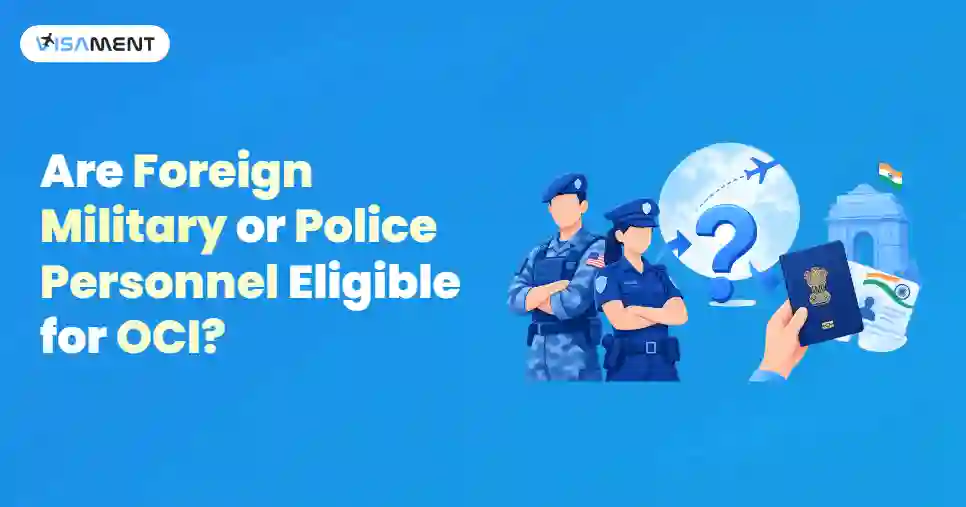
An Overseas Citizen of India (OCI) card is a document that is used for travel and identification by eligible foreign nationals. Under Section 7A of the Indian Citizenship Act of 1955, you can apply for an OCI card. However, OCI eligibility for foreign military personnel is restricted.
According to the general OCI registration rules, a person who has served in the military or police service is not eligible for the OCI card. However, there has been a common misunderstanding that all military personnel or police can apply for an OCI card, which is not true. There are some limitations regarding whether compulsory military conscription or police conscription can be used to obtain an OCI card.
In this blog, we cover all the details of OCI eligibility for foreign military personnel and provide the eligibility criteria.
Quick Overview
The table below provides a quick overview of OCI eligibility for police and foreign military personnel.
| Situation |
OCI Position |
| For military personnel serving in foreign |
Not eligible for OCI card |
| Retired military personnel |
Not eligible |
| Serving foreign police personnel |
Do not meet the eligibility criteria |
| Compulsory military conscription or compulsory military conscription |
Depends on the subject's condition |
| Compulsory service of more than 2 years |
It will not fall under the stated exceptions |
| Compulsory conscription undergoing |
Not eligible at the time of conscription |
| Police service or voluntary military service beyond compulsory service |
Not eligible under the exception |
| Spouse or child of foreign military or police service |
You can consider it if independently eligible |
| Civilian employee from a related organization |
It can be considered if not directly employed in the police service or in any military service, and if other eligible criteria are met. |
Are Foreign Military or Police Service Personnel Eligible for an OCI Card?
According to the official OCI guidelines, foreign military or police personnel, whether serving or retired, are not eligible for OCI registration.
The general restriction applies to people who have completed their compulsory military or police conscription in their country.
Therefore, having Indian ancestry does not provide OCI card eligibility for military personnel or OCI for foreign military personnel.
What are the Exemptions for Compulsory Military Conscription or Police Conscription?
Through the official OCI card guidelines, there are some differences between the following:
- Voluntary service in a foreign military or police force
- Compulsory military or police conscription required by the applicant country.
Many foreign nationals of Indian origin who have completed their compulsory police or military conscription period of up to 2 years are eligible for OCI registration. However, you must also meet all OCI eligibility criteria and have all supporting documents to apply for an OCI card.
Most foreign nationals of Indian origin believe that completing the compulsory requirements makes them eligible for an OCI card, which is not true. You also need to meet the eligibility criteria, such as nationality and individual circumstances, and wait for final approval from the authorities.
Get Expert Help for OCI Card Application Services!
Have questions? Our experts guide you through every step of the OCI Card Application Services – no confusion, no delays.
Consult an Expert Today OCI Eligibility Criteria for Israeli Citizens?
If any Israeli citizen is eligible to apply for an OCI card under section 7A of the Citizenship Act, 1955, then foreign military and police personnel may also be eligible if they have completed the compulsory period of conscription required in Israel.
If any person has served in the foreign police service, foreign military service, or for a long period beyond the compulsory conscription period, they are not eligible for OCI registration, even for a short period beyond the compulsory conscription period.
It really helps to see the difference between compulsory and voluntary military service in Israel.
What if the OCI Applicant has Completed Compulsory Service in Another Country?
There are additional rules under the OCI guidelines if any applicants have completed their Compulsory service in another country or have undergone the OCI eligibility process for foreign military personnel.
Here are some of the persons considered eligible to apply for OCI for foreign military personnel or police personnel.
- These applicants have not extended their compulsory service beyond 2 years.
- They have not continued their military or police service, or have not joined voluntarily beyond the compulsory period.
- If they meet all the eligibility requirements and satisfy the OCI eligibility criteria under section 7A of the Citizenship Act, 1955.
- If the Indian Mission, post office, or FRRO has approved or is satisfied with their OCI application.
- When the OCI applicant undergoes a personal video interview, either in person or via video call.
This helps you understand that completing country services does not guarantee an easy OCI card approval. For this, you must meet all the eligibility requirements.
What if an Individual Is Still Undergoing Compulsory Services?
No, if an idnviiau.is still under compulsory service, then you will not be considered eligible for OCI for foreign military personnel and cannot apply for OCI registration.
To apply for the OCI card, applicants need to review all OCI eligibility criteria and guidelines thoroughly and apply after completing compulsory service.
What if an OCI cardholder joins Military Service or Police Service?
If an OCI cardholder joins the military or the police after the applicable period of compulsory service, he or she must surrender their OCI card immediately to the relevant authority, such as the FRRO, an Indian mission, or a Post Office.
It is also listed in the official OCI guidelines, which were recently updated to include the military and police services.
Additionally, the instructions state that a person with an OCI card must surrender to the relevant authority responsible for military or police service after compulsory conscription.
If anyone forgets to submit their valid OCI card to the authorities, they may face legal action, or their OCI card may be canceled or blacklisted. To avoid such issues, you must surrender your valid OCI card to the authorities upon joining the compulsory services.
OCI Application Based on Marriage?
According to the OCI guidelines and under section 7A(1)(d), OCI card eligibility for military personnel and police does not allow them to apply for an OCI card based on marriage, which is additional and restricted for foreign nationals.
Under the official OCI rules, applicants for OCI for foreign military personnel, foreign military service OCI, and foreign police service OCI cannot apply for an OCI based on marriage due to the compulsory conscription services they have undergone or are undergoing at the time of application.
It also means that the above compulsory service exception we have discussed cannot be used to obtain an OCI card solely based on OCI eligibility. You need to review all the major factors and OCI guidelines.
OCI Card Eligibility for Spouses and Children of Foreign Military Personnel?
The OCI card eligibility criteria for the children and spouse of foreign military personnel are separate. If OCI for foreign military personnel is denied, then it does not mean that their family members are also ineligible under the eligibility criteria.
According to the official OCI card guidelines, the OCI eligibility of police or military personnel does not affect their children. They will be considered separately under Section 7A of the Citizenship Act, 1955, and can apply for the OCI card if they meet all eligibility criteria and have all supporting documents.
There are also separate eligibility criteria for private security or for employees of foreign nationals, and, according to the official OCI card guidelines, this is differentiated from police or military services, which are among many citizens' occupations and work.
As there are many foreign nationals working in different countries in various roles, such as in security agencies, home offices, prisons, National Probation Services, companies, or organizations related to military institutions or home offices. However, they are not directly related to the military services or police services, which makes them eligible to apply for the OCI card under section 7A if they meet all the basic requirements.
It is important to make the distinction because OCI for foreign police personnel and foreign nationals working in a military organization are different. It also does not mean that services in a military institution or some offices automatically qualify for police or military services.
OCI Eligibility Criteria are Beyond the Military Services
OCI card eligibility is the first step for foreign military and foreign police service OCI. There are more conditions you need to meet, which are more than those for military service.
Apart from the foreign military personnel OCI eligibility, you also need to satisfy the eligibility condition under Section 7A of the Citizenship Act, 1955.
Through the official OCI portal of the Indian government, you can see all the details for the Indian-origin foreign national OCI card application process, required documents, eligibility criteria, and fees, which can help you in a smooth and hassle-free application process without getting errors or mistakes.
If an individual with completed compulsory conscription falls under the category, first check the applicable eligibility criteria and verify that you have all required documents before applying for an OCI card or submitting an application.
Final Thoughts
OCI eligibility for foreign military personnel or police individuals should be checked properly before applying, and all details should be verified in accordance with the official OCI rules. The simple rule for an OCI card for retired military personnel, an OCI card for retired police personnel, or OCI eligibility for police personnel not eligible for OCI registration is that they must have completed their compulsory conscription within 2 years and must not have joined or served in any other military, police, or voluntary service. If they continued their compulsory police or military conscription after 2 years, or joined later, they will not be eligible for an OCI card application or OCI registration.
This also includes separate OCI rules for Israeli citizens and for applicants applying for the OCI card based on marriage, as a family member of military or police personnel, or for work-related employment with any company.
All applicants should review the OCI card eligibility criteria before submitting an application. You need to check the information on the official OCI services portal provided by the Indian government, which will help you get all the rules for your OCI application, process, required documents, fees, and eligibility criteria. As OCI eligibility can vary based on factors such as nationality, application type, and time of service in the military or police, this will help ensure a smooth application process without errors.