Related Blogs

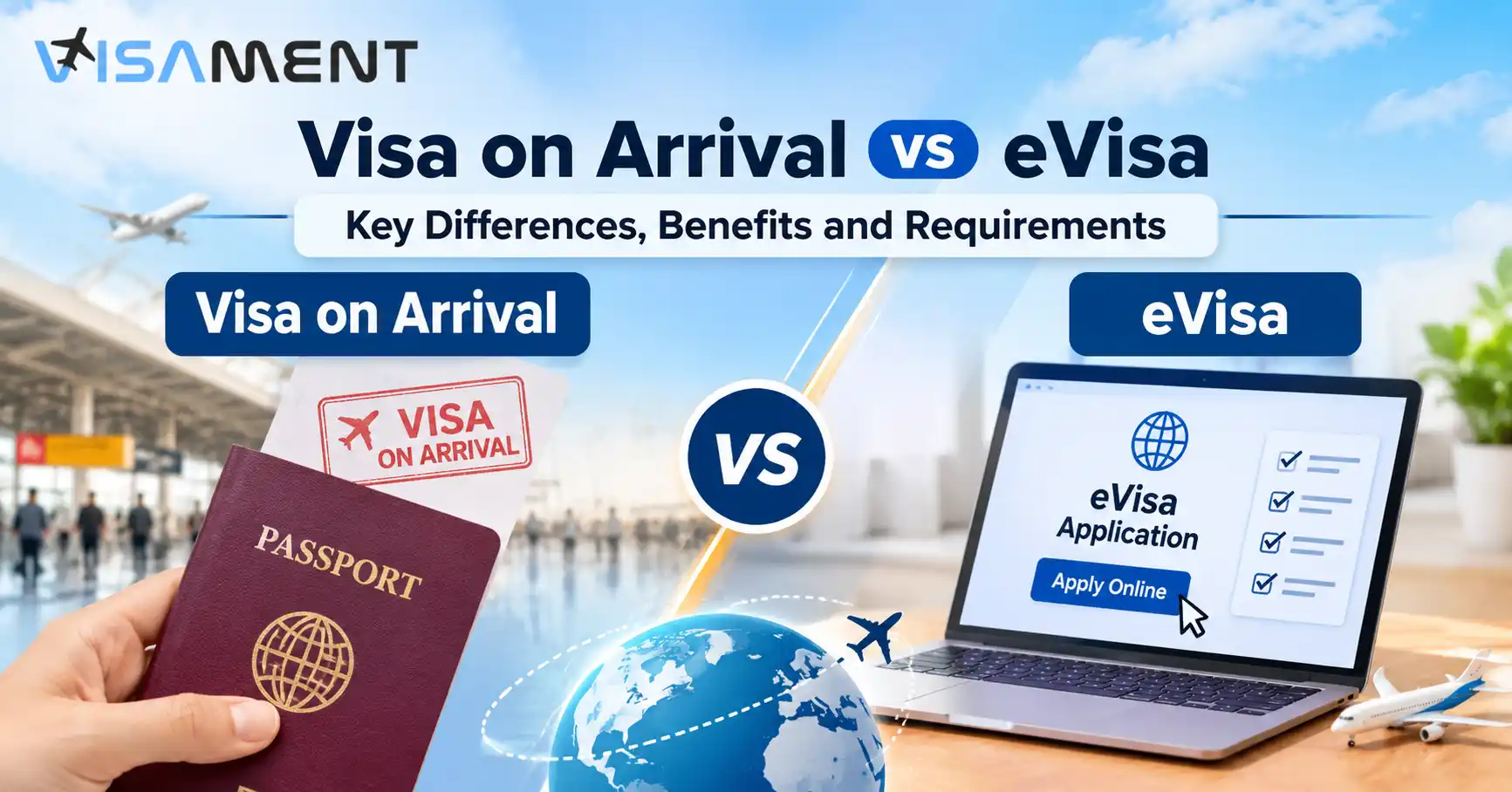
Planning an international trip often involves choosing the right visa option. Depending on your destination and passport nationality, you may be eligible for a Visa on Arrival (VoA) or an Electronic Visa (eVisa). Although both options can simplify international travel, they differ in application timing, approval procedures, documentation and entry requirements.
Understanding the difference between Visa on Arrival and eVisa can help you avoid unnecessary delays, application mistakes and last-minute travel problems. This guide compares both options and explains how to determine which one is suitable for your journey.
A Visa on Arrival (VoA) is a visa that eligible foreign travellers can apply for after reaching an authorised entry point in their destination country. Instead of completing the entire visa application process before departure, travellers submit their documents and pay the applicable fee at an airport, seaport or designated land border.
The general process involves:
However, Visa on Arrival is not available to every nationality. Some countries also require advance registration or preliminary authorisation before departure.
An Electronic Visa (eVisa) is a visa that travellers apply for online through an official government immigration portal before travelling. Applicants generally complete an e-visa application form, upload supporting documents, pay the applicable fee and wait for approval.
The typical eVisa application process includes:
Once approved, the eVisa is usually delivered electronically. Travellers may need to carry a printed or digital copy, depending on the destination's requirements.
Important: An application submission receipt is not the same as an approved eVisa. Travellers should obtain the required approval before departure.
The primary difference between Visa on Arrival and eVisa is the timing and location of the application process. A Visa on Arrival is obtained at an authorised entry point, whereas an eVisa is applied for online before departure.
|
Comparison factor |
Visa on Arrival |
eVisa |
|---|---|---|
|
Application timing |
After reaching the destination |
Before travelling |
|
Application method |
At an authorised immigration counter |
Online |
|
Advance approval |
Generally not required |
Generally required before departure |
|
Processing |
At the entry point |
Before departure |
|
Waiting time |
May involve airport queues |
Depends on online processing |
|
Documents |
Destination-specific |
Destination-specific |
|
Payment |
At arrival or as instructed |
Usually online |
|
Eligibility |
Depends on nationality and destination |
Depends on nationality and destination |
|
Rejection possibility |
Yes |
Yes |
|
Entry restrictions |
May apply at designated entry points |
May apply at designated entry points |
Neither option is always faster. Visa on Arrival may involve waiting at immigration counters, while eVisa applications can experience processing delays or additional document requests.
An approved eVisa can make arrival procedures more predictable, but travellers should always consider the official processing time before applying.
Both visa options offer convenience, but each has limitations that travellers should consider before choosing.
The better option depends on your passport nationality, destination, travel purpose and visa eligibility.
An eVisa may be suitable for travellers who prefer advance approval and want to prepare their travel documents before departure. Visa on Arrival may be convenient for eligible travellers who can complete the application at an authorised entry point.
|
Travel situation |
Suitable option |
|---|---|
|
You prefer visa approval before departure |
eVisa |
|
You qualify for an authorised arrival visa |
Visa on Arrival |
|
You want to reduce uncertainty before travelling |
Approved eVisa |
|
You have limited time before departure |
Depends on official eligibility and processing |
|
Your destination requires advance authorisation |
Required advance authorisation |
Before choosing either option, confirm that your passport nationality qualifies for the facility. Never assume that a destination offering eVisa automatically offers Visa on Arrival to the same nationalities.
The exact document requirements vary by country and visa category. However, travellers may commonly need:
For eVisa applications, digital copies of the passport and photograph may also be required. For Visa on Arrival, keep the necessary supporting documents accessible during immigration checks.
Always follow the official document checklist because requirements are not identical across destinations.
 Also Want to Know About Visa Requirements For NRIs Travelling To India Check Now!
Even travellers who qualify for an eVisa or Visa on Arrival can encounter problems when they misunderstand the entry conditions.
Avoid these common mistakes:
Before booking your flight or submitting an application, verify the visa rules for your specific travel circumstances.
Follow these steps:
Indian passport holders can also consult the Ministry of External Affairs' visa facilities information for an overview of visa arrangements available to Indian ordinary passport holders. Destination-country immigration authorities should still be consulted for final requirements.
Stop worrying about delays. Apply now and get Indian Counsellor Services.
Chat NowThe difference between Visa on Arrival and eVisa mainly concerns when and where the application is processed. An eVisa allows eligible travellers to apply online before departure, while Visa on Arrival is obtained at an authorised entry point. Before choosing either option, confirm nationality-based eligibility, documentation, fees and entry conditions through official government sources. Staying informed can help prevent avoidable visa-related travel complications.
Visa on Arrival may be convenient because eligible travellers can apply after reaching their destination. However, eVisa offers the advantage of receiving an approval decision before departure. The easier option depends on the destination's requirements.
Do not assume that an application receipt allows you to travel. When advance approval is mandatory, obtain the approved eVisa before departure. Also check your airline's travel-document requirements.
Not always. Some countries allow eligible travellers to apply directly at immigration counters, while others require advance registration or preliminary authorisation.
No. An eVisa is an electronic visa, whereas an ETA is generally a separate electronic travel authorisation. Their legal status and entry conditions depend on the issuing country.
No. An approved eVisa does not automatically guarantee admission. Immigration authorities can conduct additional checks and make the final entry decision.
Vipul Jain is the Co-Founder of Visament, a trusted platform dedicated to simplifying Indian immigration, consular, and NRI services for applicants across the globe. With extensive expertise in OCI cards, Indian passport services, visa assistance, apostille and document legalization,... See Full Bio

Talk to our documentation experts for free guidance on your application.


When you visit a website, it may store data about you using cookies and similar technologies. Cookies can be important for the basic operations of the website and for other purposes. You get the option of deactivating certain types of cookies, even so, doing that may affect your experience on the website.
It is required to permit the basic functionality of the website. You may not disable necessary cookies.
Used to provide advertising that matches you and your interests. May also be used to restrict the number of times you see an advertisement and estimate the effectiveness of an advertising campaign. The advertising networks place them after obtaining the operator's permission.
Permits the website to recognize the choices you make (like your username, language, or the region you are in). Also provides more personalized and enhanced features.
Aid the website operator to determine how the website performs, how visitors interact with the site, and whether there are any technical issues.