Related Blogs

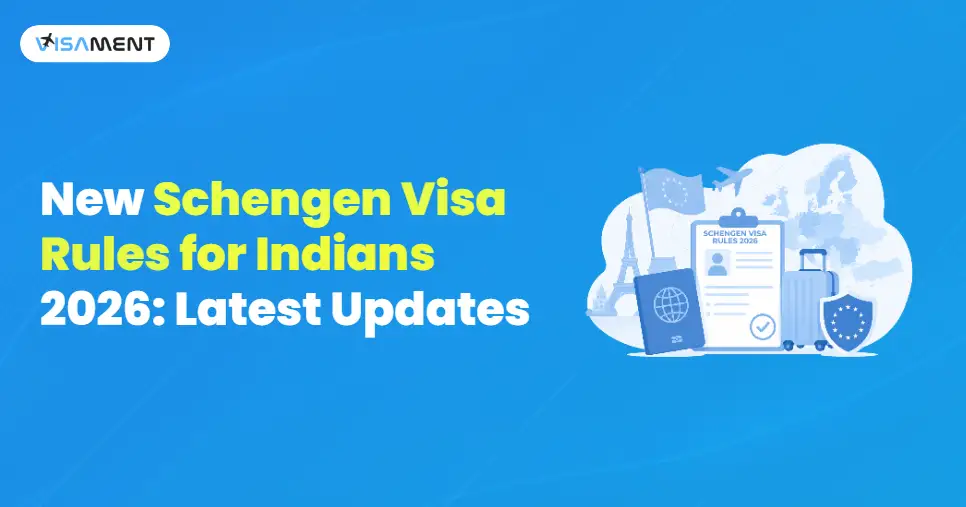
Are you planning to apply for a Schengen Visa? If so, you must know that the process for applying for a Schengen visa has been revamped. The old process was filling out a form, submitting it at the visa application center, then waiting for a sticker on your passport. The new process has fundamentally restructured the overall application process.
Read the blog below to learn more about the New Schengen Visa rules and how this change will affect your Schengen visa applications.
A Schengen Visa allows non-EU/EEA/Swiss citizens, including Indian passport holders, to travel freely across 29 European countries in the Schengen region for up to 90 days within 180 days. This can be for tourism, business or visiting your family members. This allows access to 29 European countries with just one permit. Having a Schengen visa can be a key factor in exploring the European continent, where there are no border restrictions between member countries.
Since India is not part of the Schengen region, Indian travellers need permission to enter and travel freely within the Schengen region for short stays. A Schengen Visa allows them entry into the region for travel, tourism, business or family visits.
Between January and April 2026, major developments and policy changes have been implemented for Schengen visa applications. These include:
India and the European Union signed the "Comprehensive Framework for Cooperation on Mobility" in January 2026 at the Delhi summit. This pact promises:
Keep in mind that none of the above frameworks has been established yet. This means the current rules to apply for a Schengen visa remain valid. The unified digital portal is targeted for September 2026 with full implementation by December 2026.
This is among the most immediate changes for Indian travellers in 2026. This is a European Union digital border system that replaces manual passports with automated biometric registration.
Its features include:
How will this affect Indian travellers:
The major impact is for overstay tracking. The old methods utilised border officers manually stamping your passports and calculating days. This was an inconsistent and error-prone process.
This will fully change the Schengen visa application experience. The European Union has decided to opt for digital barcode-based visas linked to your passport's electronic chip. The old method of physical stickers pasted into your passport has been discontinued.
How will this affect Indian travellers:
Since the digital visa is not operational, you must apply through the visa application centre, submit physical documents and receive your visa sticker.
After the digital system activates, you will have to:
Note: Even with digital applications, the biometric enrollment still requires an in-person visit.
Know about How Indians Can Get 2-Year and 5-Year Schengen Visas? This is a key change that concerns Indian travellers and which is already in effect.
The European Union adopted the fully operational visa "cascade" regime for Indian nationals in April 2024.
The process works as follows:
| Stage | What You Get | Requirement |
|---|---|---|
| First Application | Single or short-validity visa | Standard application with strong documentation |
| After 2 lawful uses | Two-year multiple-entry visa | Must have obtained and used 2 visas within the 3 previous years |
| After using the 2-year visa | 5-year multiple-entry visa |
Must have used the 2-year visa lawfully Passport must have sufficient remaining validity |
What this means for Indian travellers:
If you have already used your Schengen visa 2 times in the past 3 years, you may become eligible for a long-validity multiple-entry visa, and include your prior visa copies and travel history in the file. With a 5-year multiple-entry visa, you can easily travel to Europe for up to 90 days in every 180 days without reapplying. This somewhat gives you visa-free equivalent access for half a decade.
The most notable change is that the evaluation has shifted from document-checking to holistic risk assessment.
These changes include:
What this means for Indian travellers:
Applicants will not be allowed the process of "document dumping" or "submitting extra papers hoping something sticks" anymore.
Have questions? Our experts guide you through every step of the Indian Visa Application– no confusion, no delays.
Consult an Expert TodayAlthough major changes are being implemented, the basic elements of the Schengen visa process remain the same, such as:
You still need a Visa
90/180 day rule still stands
Apply to your main destination
Biometrics required
Travel insurance mandatory
Processing time
You must understand the major aspects of a Schengen visa if you are planning a trip to European countries. Given below is a quick overview of everything you need to know about a Schengen Visa.
| Key Aspects | Details |
|---|---|
| Purpose | It allows travel for reasons such as tourism, business, attending cultural events or visiting family or friends. |
| Application Process |
You can apply for the visa application form online Submit all the necessary documents, pay the applicable fees and attend an interview Appointments are made through embassies or official visa offices |
| Documents Required | You require your valid Indian passport, filled application form, recent passport-sized photographs, proof of accommodation, travel insurance and evidence of sufficient financial means |
| Visa Fees | The visa fee is Rs. 8500 for adults and Rs. 4250 for children aged 6-12 years. |
| Processing time | The processing time is usually 15-30 days. To avoid delays, it is advised to apply 45 to 60 days before your intended travel date |
| Choosing the right country | You must apply at the embassy or consulate of the country you intend to travel to. |
Before applying for a Schengen visa, many travellers research the easiest countries to get a Schengen visa. However, it is equally important to understand the different types of Schengen visas available and apply through the correct destination country
| Type of Visa | Purpose | Validity | Used For |
|---|---|---|---|
| Type A- Airport Transit Visa | For travellers transiting through the international zone of a Schengen airport without entering the country | Only for airport layovers | Passengers catching connecting international flights |
| Type B- Short-stay Transit Visa |
For extending the transit permission of Type A Allows up to 5 days of travel through Schengen countries |
Up to 5 days | Road or air travellers passing through multiple states |
| Type C- Short-stay Visa | Allows stays for tourism, business or family visits | 90 days within 180 days | Tourists, business, visiting family members |
| Type D- Long-stay multiple-entry visa | Allows a longer stay than 90 days along with multiple entries into Schengen countries | Over 90 days (varies by country) | Students, employees or long-term residents |
If you are an Indian traveller planning to visit the countries in the Schengen area, you must know the eligibility criteria for applying for a Schengen Visa from India.
Indian Citizens
Foreign Nationals residing in India
Foreign Nationals visiting India
The table below outlines the fee structure for a Schengen visa application.
| Category | Fee |
|---|---|
| Adults | Rs. 8500 |
| Children aged between 6-12 years | Rs. 4250 |
| Children below 6 years | Free |
The new Schengen visa rules for 2026 mark a significant shift towards a more digital, streamlined and traveller-friendly system for Indians. From biometric border checks and enhanced scrutiny to the possibility of securing long-term multiple-entry visas, these changes aim to make travel across Europe more efficient. As the rollout continues, Indian travellers can look forward to a more modern and convenient Schengen visa experience.
The 5-year Schengen visa is a multiple-entry visa that allows frequent travellers unlimited entry into the Schengen area.
Indians now benefit from a favourable visa "cascade" regime. Frequent travellers can easily get long-term visas.
Yes, you must visit a VFS Global or equivalent Visa Application centre to submit your biometrics and application for a Schengen visa.
A Schengen visa allows you to travel freely across 29 European countries without undergoing internal border checks.
A Schengen visa's validity can range from just a few days up to 5 years. However, you are limited to staying a maximum of 90 days within 180 days.
Yes, Indians can get a 2-year Schengen visa. Under the EU visa cascade regime, travellers who have lawfully obtained and used two Schengen visas within the previous 3 years can apply for a multi-entry visa for 2 years.
Vipul Jain is the Co-Founder of Visament, a trusted platform dedicated to simplifying Indian immigration, consular, and NRI services for applicants across the globe. With extensive expertise in OCI cards, Indian passport services, visa assistance, apostille and document legalization,... See Full Bio

Talk to our documentation experts for free guidance on your application.
When you visit a website, it may store data about you using cookies and similar technologies. Cookies can be important for the basic operations of the website and for other purposes. You get the option of deactivating certain types of cookies, even so, doing that may affect your experience on the website.
It is required to permit the basic functionality of the website. You may not disable necessary cookies.
Used to provide advertising that matches you and your interests. May also be used to restrict the number of times you see an advertisement and estimate the effectiveness of an advertising campaign. The advertising networks place them after obtaining the operator's permission.
Permits the website to recognize the choices you make (like your username, language, or the region you are in). Also provides more personalized and enhanced features.
Aid the website operator to determine how the website performs, how visitors interact with the site, and whether there are any technical issues.