Related Blogs

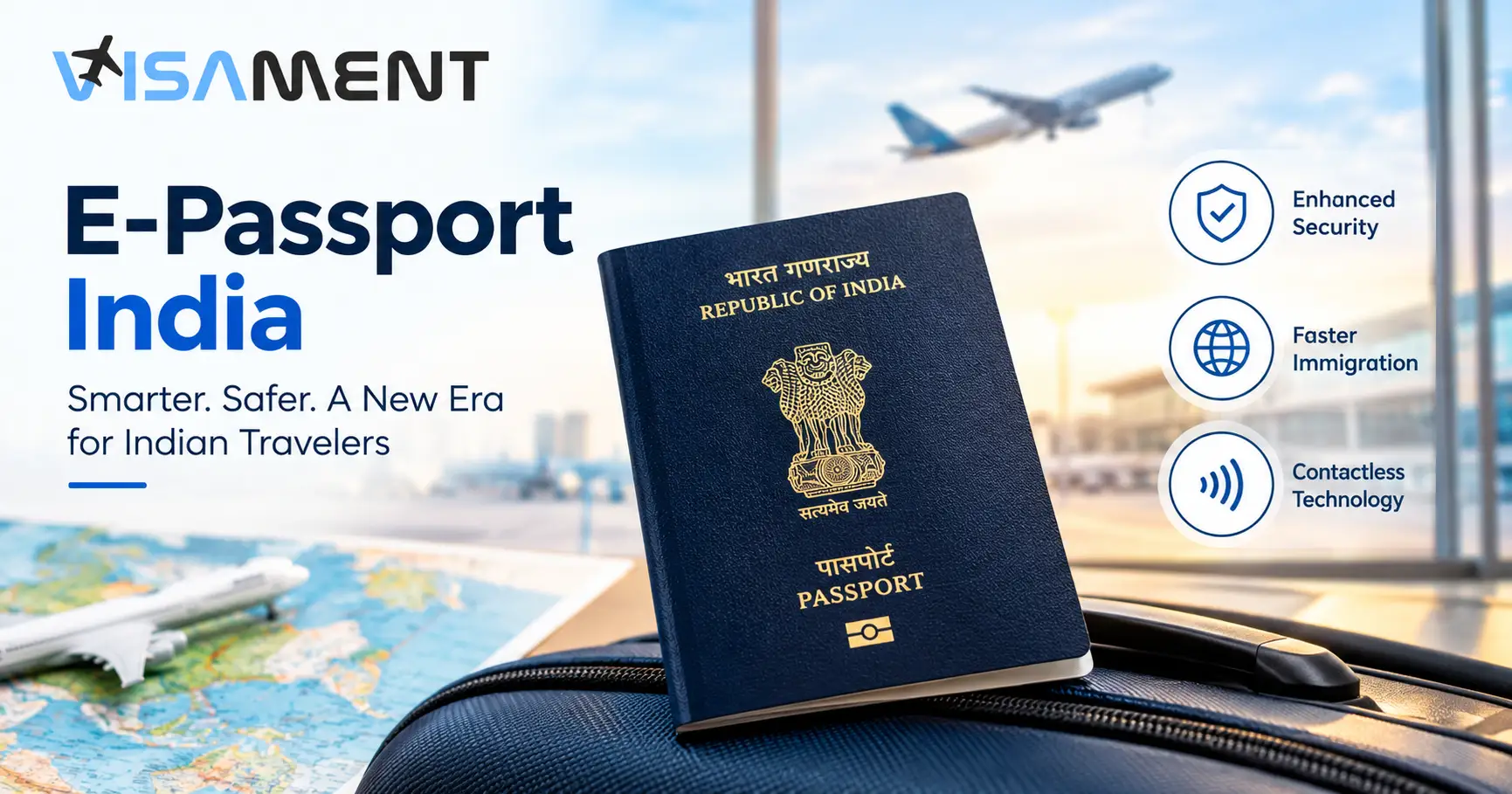
India's e-passport is a physical passport booklet equipped with an embedded electronic chip that helps verify the passport holder's identity and protect passport data. If you already have a valid Indian passport, you do not need to replace it solely because e-passports have been introduced.
This guide explains the key features, benefits, application process and important rules to know before applying for an Indian e-Passport.
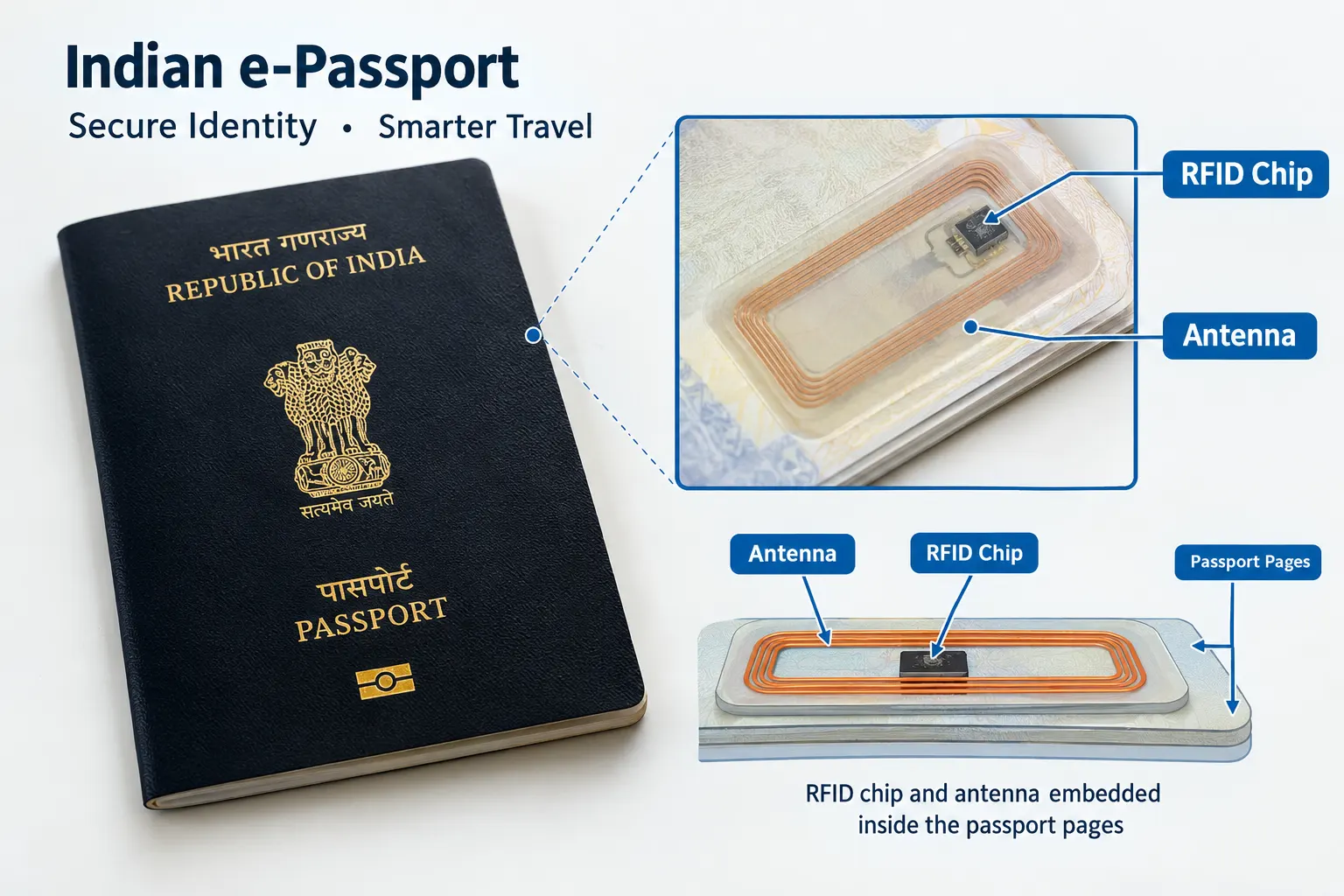
An Indian e-passport is an electronic passport containing a Radio Frequency Identification (RFID) chip and antenna embedded within the passport booklet. The chip stores specified personal particulars and biometric information, while the passport also displays information in printed form.
The electronic information can be securely authenticated by authorised systems, helping immigration officials verify the passport's authenticity. Unlike a digital passport stored on a smartphone, an e-passport remains a physical travel document.
According to the Official Passport Seva Portal, the passport can be identified by a small gold-coloured electronic passport symbol printed below the front cover.
India has introduced e-passports through a phased rollout. The transition is being implemented through the government passport system, with issuance depending on the relevant Passport Office's technical readiness and current arrangements.
The official Passport Seva portal explains that citizens applying through a Passport Office enabled to issue e-passports receive the electronic version. Applicants should check the latest official guidance rather than assume that every office or overseas mission follows an identical process.
The main difference between an e-passport and a conventional passport is the addition of electronic data storage and authentication.
The RFID chip is embedded in the passport booklet, with an antenna enabling compatible readers to communicate with it. This technology allows passport information to be read electronically by authorised systems.
Passport details appear in printed form in the booklet and are also stored electronically in digitally signed form. The electronic authentication helps authorities check the integrity and origin of the stored information.
The chip contains specified biometric information alongside personal particulars. This supports identity verification, although the exact checks performed depend on the relevant systems and procedures.
Public Key Infrastructure (PKI) supports the security of the electronic passport data. It helps authorised systems verify digital signatures and detect unauthorised changes to protected information.
An e-passport strengthens the security and authentication of a passport while retaining the familiar physical booklet format.
Its main benefits include:
However, an e-passport does not eliminate every risk of fraud. Nor does it guarantee shorter immigration queues, automatic entry through e-gates or visa-free access to additional countries. Those outcomes depend on the relevant country's rules and infrastructure.
 Also Want to Know About All types of Passport Processing Timeline in India? Check Now!
An e-passport retains the physical format of a conventional passport but adds an embedded electronic chip.
|
Feature |
Indian e-passport |
Conventional Indian passport |
|---|---|---|
|
Physical booklet |
Yes |
Yes |
|
Embedded RFID chip |
Yes |
No |
|
Electronic passport data |
Stored on the chip |
No embedded passport chip |
|
Printed passport information |
Yes |
Yes |
|
Electronic data authentication |
Supported by the chip's digital security features |
Does not have the same chip-based capability |
|
Existing validity |
According to the passport's validity and applicable rules |
Remains valid until expiry, subject to applicable rules |
The important practical distinction is that the e-passport adds electronic authentication. Both types are physical Indian passports, and an existing conventional passport does not become invalid merely because the electronic version has been introduced.
Applicants should use the applicable fresh-passport or reissue process through the official Passport Seva system. The e-passport is issued through the government passport process; applicants should not assume that a separate e-passport application form or additional fee applies.
Step 1: Register or sign in. Visit the official Passport Seva portal and create an account or sign in.
Step 2: Select the appropriate service. Choose fresh passport if you are applying for your first passport, or reissue if your circumstances require another passport.
Step 3: Complete the application. Enter your personal, family, address and other required details. Review the information carefully before submitting the form.
Step 4: Pay the applicable fee. Check the current fee and payment instructions through the official portal.
Step 5: Schedule an appointment. Follow the portal's instructions to select an available Passport Seva Kendra (PSK) or Post Office Passport Seva Kendra (POPSK), where an appointment is required.
Step 6: Submit the required documents. Attend the appointment with the documents specified for your application category. Follow any police-verification requirements applicable to your case.
Step 7: Track the application. Use the official tracking facility to check your application's progress and follow any further instructions.
Have questions? Our experts guide you through every step of the Indian Passport Application– no confusion, no delays.
Consult an Expert Today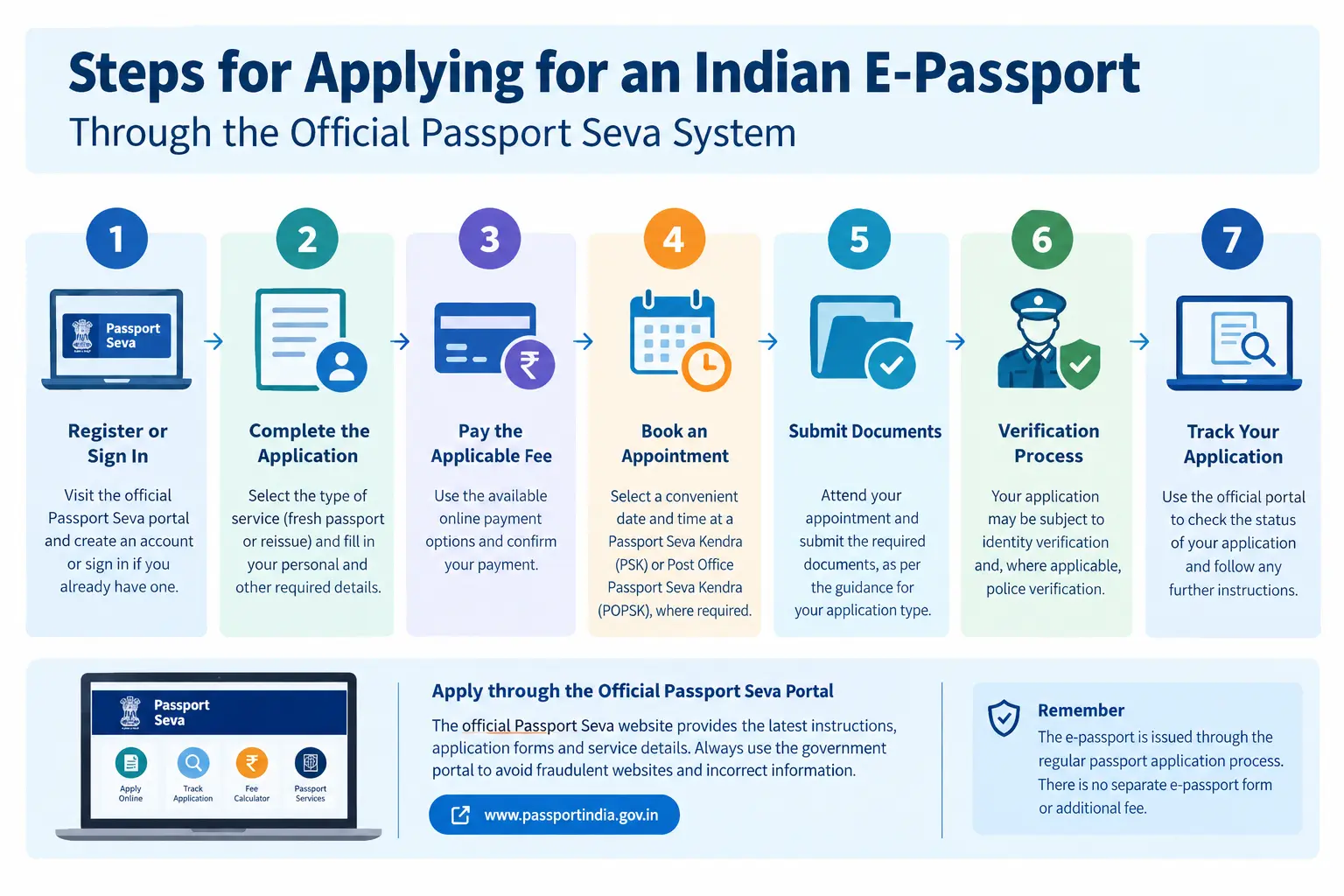
The required documents depend on whether you are applying for a new passport or a Passport reissue, and on your individual circumstances. Applicants may need proof of identity, address, date of birth or details of a previously issued passport, depending on the applicable requirements.
Do not rely on a generic checklist without checking your category. Use the official Passport Seva document guidance and official passport services portal to verify the relevant requirements.
Passport fees can change. Check the current fee calculator before paying, and do not assume that e-passport issuance automatically involves a separate charge.
No. You do not need to replace a valid conventional Indian passport solely because e-passports have been introduced.
Passport Seva's official e-passport portal confirms that passports issued by the Government of India remain valid until their stated expiry date. Normal passport rules and destination-country entry requirements still apply.
If your passport is expiring, damaged, lost or requires changes to its particulars, check whether you need to apply for reissue under the applicable rules. Do not apply for an unnecessary replacement just to obtain the electronic version.
An Indian e-passport combines the familiar passport booklet with electronic security and authentication features. If you already hold a valid Indian passport, there is no need to replace it solely because of the rollout.
If you are applying for a new passport or need an Indian Passport reissue, use the official Passport Seva system to confirm the current procedure, documents and fees. Relying on official guidance will help you avoid unnecessary applications, outdated information and fraudulent passport-service websites.
Need help understanding your Indian passport application requirements? Explore the relevant passport application assistance options before proceeding.
A chip-reading problem does not, by itself, establish that a passport is invalid. Follow the instructions of the relevant passport authority or border officials if a technical issue arises. Do not attempt to open, alter or repair the passport booklet yourself.
Indian citizens living abroad should follow the current passport application instructions of the relevant Indian embassy, high commission or consulate. Availability and procedures should be verified with the appropriate mission. The Passport Seva portal for Indian missions abroad provides official overseas passport-service information.
No. An e-passport does not independently grant visa-free travel. Visa requirements and entry permissions are determined by the destination country and the traveller's circumstances.
No. An Indian e-passport is a physical booklet containing an electronic chip. A digital copy or photograph of a passport stored on a phone is not a substitute for the required physical travel document.
There is a symbol for the e-passports by which you can recognise them. Look for a small, golden chip symbol on the front cover of your passport. If it is present, then your passport is an e-passport.
Vipul Jain is the Co-Founder of Visament, a trusted platform dedicated to simplifying Indian immigration, consular, and NRI services for applicants across the globe. With extensive expertise in OCI cards, Indian passport services, visa assistance, apostille and document legalization,... See Full Bio

Talk to our documentation experts for free guidance on your application.

When you visit a website, it may store data about you using cookies and similar technologies. Cookies can be important for the basic operations of the website and for other purposes. You get the option of deactivating certain types of cookies, even so, doing that may affect your experience on the website.
It is required to permit the basic functionality of the website. You may not disable necessary cookies.
Used to provide advertising that matches you and your interests. May also be used to restrict the number of times you see an advertisement and estimate the effectiveness of an advertising campaign. The advertising networks place them after obtaining the operator's permission.
Permits the website to recognize the choices you make (like your username, language, or the region you are in). Also provides more personalized and enhanced features.
Aid the website operator to determine how the website performs, how visitors interact with the site, and whether there are any technical issues.