Related Blogs

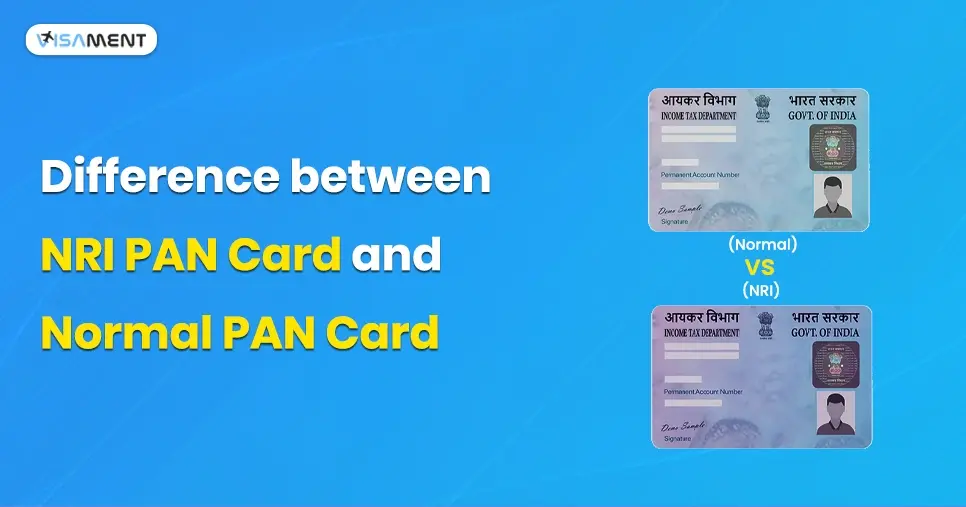
If you are an NRI and already have a PAN, you may wonder whether you need a separate NRI PAN card after moving abroad. The short answer is no. India does not issue a fundamentally different PAN card simply because a person becomes an NRI. PAN remains the taxpayer's identification number, while NRI or resident status is determined separately under applicable income-tax rules. The important differences generally relate to tax treatment, residential status, Aadhaar-PAN requirements and certain compliance matters, not to having a different type of PAN.
No. An NRI does not receive a separate type of PAN merely because the person lives outside India or qualifies as a non-resident for tax purposes.
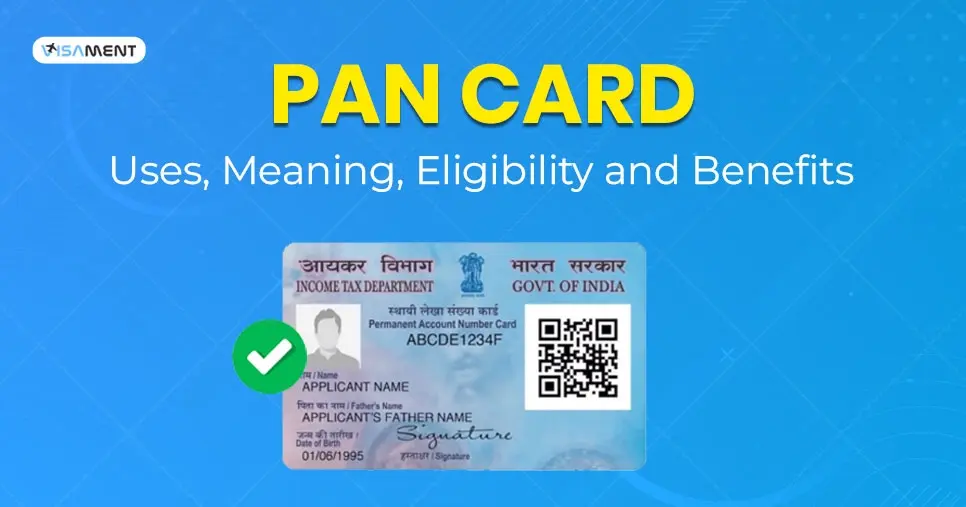
PAN stands for Permanent Account Number. It is used to link a person's tax and specified financial information with the Income Tax Department. The Income Tax Department describes PAN as a unique identification number used for activities such as tax payments, TDS/TCS credits, income-tax returns, and certain financial transactions.
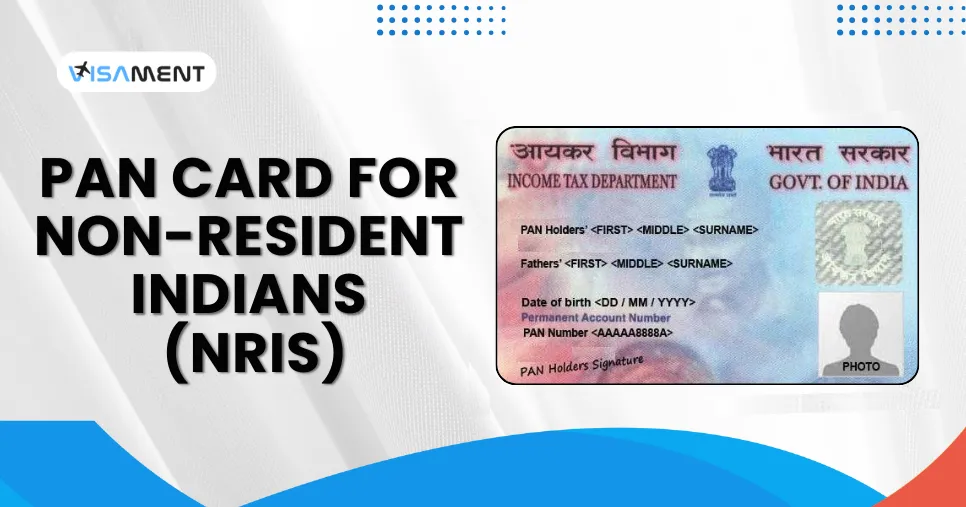
The expression “NRI PAN card” is therefore commonly used to describe a PAN held by an NRI. It does not mean that the PAN number belongs to a separate NRI-only category.
Likewise, the term “normal PAN card” is a convenient phrase used in comparisons, not an official PAN classification for Indian residents.
The distinction is easier to understand this way:
PAN = taxpayer identification
Residential status = tax classification
These are related but different concepts.
The main difference is not the PAN itself. It is the person's residential status under income-tax law.
For example, an Indian citizen may move from India to the United States for employment. The person may become non-resident for Indian income-tax purposes depending on the applicable statutory conditions. However, the change in residential status does not mean that the person has to abandon an existing PAN and obtain an “NRI PAN.”
Residential status can affect how income is treated for Indian tax purposes. The tax consequences can depend on the nature and source of income, the applicable tax year and other circumstances.
This is why an NRI with Indian rental income, capital gains, investment income or other taxable Indian income may have different tax obligations from a resident with similar income.
The PAN identifies the taxpayer; residential status helps determine how Indian tax rules apply to that taxpayer.
[Insert image: Concept diagram showing “PAN → Taxpayer Identification” and “Residential Status → Tax Treatment” | Alt text: "Difference between PAN and tax residential status for NRIs"]
| Factor | NRI taxpayer | Resident taxpayer |
|---|---|---|
| PAN | Uses the same PAN framework | Uses the same PAN framework |
| PAN number | No separate NRI PAN number simply because of NRI status | No separate “resident PAN” category |
| Residential status | May be non-resident under applicable tax rules | May be resident under applicable tax rules |
| Tax treatment | Depends on residential status, income and applicable rules | Depends on residential status, income and applicable rules |
| Address | May have a foreign residential or communication address | May have an Indian address |
| Aadhaar-PAN linking | Non-residents are included in the current exempt category, subject to applicable rules and notifications | Applicable requirements depend on the person's circumstances |
| E-filing | Valid and active PAN holders can register; foreign mobile numbers are supported for non-residents | Valid and active PAN holders can register |
The table shows why calling one card an “NRI PAN” and the other a “normal PAN” can be misleading. The PAN remains the taxpayer's identifier; the person's circumstances determine the applicable tax and compliance requirements.
Aadhaar-PAN linking is one area where an NRI's position can differ from that of an eligible resident.
The Income Tax Department currently states that Aadhaar-PAN linkage is not compulsory for an individual who is a non-resident under the Income-tax Act, 1961, among other specified exempt categories. The Department also notes that exemptions can be modified by subsequent government notifications.
Therefore, an overseas Indian should not simply assume that Aadhaar linking is mandatory or unnecessary based only on where they live. The relevant tax status and current official rules should be checked.
Have questions? Our experts guide you through every step of the PAN Card Services– no confusion, no delays.
Consult an Expert TodayMoving abroad does not, by itself, require you to obtain a new PAN.
Consider an Indian resident who already has a PAN and later moves to Canada for employment. If that person's Indian tax residential status changes, the person does not normally need a second PAN merely because they have become non-resident.
Applying for another PAN can create a separate problem because PAN is intended to identify the taxpayer consistently. The Income Tax Department has specifically addressed situations involving multiple PANs and PAN database de-duplication.
If your name, address, or other PAN particulars need to be corrected or updated, the appropriate PAN update or correction process should be considered instead of applying for another PAN.
The important distinction is:
Change in residential status ≠ change in PAN.
[Insert image: Scenario flow showing “Resident in India → Moves Abroad → Residential status may change → Existing PAN continues” | Alt text: "How PAN works when an Indian resident becomes an NRI"]
An NRI may need PAN for various Indian tax and financial transactions. The exact requirement depends on the transaction and applicable rules.
PAN can be relevant when an NRI:
For example, an NRI receiving rental income from property in India may need PAN for relevant tax compliance. Similarly, PAN may be relevant to certain investment and property transactions.
However, having PAN does not automatically mean that every NRI must file an income-tax return or pay tax in India. Filing and tax liability depend on the person's income, residential status, and the applicable provisions.
One of the most common sources of confusion is treating NRI, OCI holder and foreign citizen as interchangeable terms.
| Term | Meaning |
|---|---|
| NRI | A person who qualifies as a non-resident under the applicable Indian tax/residential-status rules |
| OCI holder | A foreign citizen registered as an Overseas Citizen of India under the applicable OCI framework |
| Foreign citizen | A person who is not an Indian citizen |
An OCI holder is a foreign citizen. An OCI card and Indian tax residential status are separate concepts. Therefore, having an OCI card does not by itself establish a person's Indian tax residential status.
Similarly, living outside India does not automatically answer every tax-residency question. Residential status must be determined under the applicable rules for the relevant tax year.
This distinction matters when discussing PAN because citizenship, immigration/OCI status, and tax residential status are different legal concepts.
Yes. A person with a valid and active PAN can register on the Income Tax e-Filing Portal.
The Income Tax Department specifically states that registration is available to taxpayers with a valid and active PAN. It also provides a process for non-resident users who do not have an Indian mobile number: a foreign mobile number can be provided, while communications and OTPs are sent to the registered email address.
This means living outside India does not prevent a valid PAN holder from accessing the e-Filing system.
An NRI may use the portal for applicable tax-related services, including activities connected with income-tax returns and other forms. The precise services available can depend on the taxpayer's circumstances and current portal requirements.
Returning to India does not mean that an NRI needs a new PAN either.
For example, suppose an Indian citizen living in the UAE qualifies as non-resident for a particular tax year and already has a PAN. If the person later returns to India and becomes resident under the applicable rules, the residential status may change while the PAN remains the same.
The key principle remains consistent:
PAN follows the taxpayer; residential status can change according to the applicable tax rules.
The tax treatment for a particular year should therefore be determined based on the applicable residential-status rules and the taxpayer's income, rather than by assuming that the PAN itself has changed.
The PAN application framework changed from 1 April 2026.
The Income Tax Department states that applications for allotment of a new PAN filed on or after 1 April 2026 must use the new forms prescribed under the Income Tax Rules, 2026. It also confirms that existing PAN/TAN numbers remain valid and that pending PAN applications as of 31 March 2026 do not automatically become invalid.
This is important for NRIs searching for older PAN application instructions online. Guidance referring to old Forms 49A or 49AA should not automatically be treated as current instructions for fresh applications after 1 April 2026.
The change in application forms also does not mean that NRIs received a new type of PAN number. The change concerns the application framework, not the creation of a separate “NRI PAN” category.
Becoming an NRI does not by itself mean that a new PAN is required. Check whether your existing PAN remains applicable before starting a fresh application.
NRI status is connected with tax residential status. It should not be used interchangeably with Indian citizenship, foreign citizenship, or OCI status.
Moving overseas does not automatically cancel an existing PAN.
The current Income Tax Department guidance contains an exemption for non-residents, subject to the applicable rules and notifications.
Fresh PAN applications from 1 April 2026 are governed by the new forms under the Income Tax Rules, 2026.
If you need assistance with an NRI PAN application, PAN correction, reprint, or updating PAN-related details while living overseas, Visament can provide documentation and application assistance. The educational information above should be considered separately from any service assistance, and current government requirements should always be verified before submission.
The difference between an NRI PAN card and a normal PAN card is mainly a terminology issue. An NRI does not receive a fundamentally different PAN simply because the person lives outside India. PAN remains the taxpayer's identifier, while residential status determines which Indian tax and compliance rules may apply.
For NRIs, the more useful questions are therefore whether their residential status has changed, whether their PAN details need updating, whether Aadhaar-PAN rules apply to them, and what Indian tax obligations arise from their income or transactions. Keeping these concepts separate can help avoid unnecessary PAN applications and outdated compliance assumptions.
You can convert your PAN card to an NRI PAN Card just by changing its residential status to NRI in the records of the Income Tax Department. The NRI status will ensure tax compliance and an operative PAN Card.
If you cannot see any differences in the NRI PAN Card and the Normal PAN Card visually, as they are both the same. The main difference is how the card is being used by you and whether you are a resident of India or residing in a foreign country.
The PAN Card is divided into two primary categories depending on the status of the person applying for it. One is an Individual PAN Card, and the other is a Non-Individual PAN card, which is for Business/Entity.
The fees for the NRI PAN Card are dependent on its delivery address. If you want to get it delivered to an Indian address, then the charge is Rs 107, and if you want to get it delivered to a foreign address, then it is approximately Rs 1011 to Rs 1020, including the dispatch charges and the application fees.
There are 10 types of PAN Cards based on the entity or taxpayer. The categories are identified by a unique letter assigned to each category. Here are the categories: P-Individual, C-Company, H-Hindu Undivided Family (HUF), A-Association of Persons (AOP), B-Body of Individuals (BOI), F-Firms, T-Trusts, G-Government Agency, L-Local Authority, and J-Artificial Juridical Person.
The category of the PAN Card totally depends on the legal status of the applicant, whether they are an individual, firm, company, trust, or any other entity.
Vipul Jain is the Co-Founder of Visament, a trusted platform dedicated to simplifying Indian immigration, consular, and NRI services for applicants across the globe. With extensive expertise in OCI cards, Indian passport services, visa assistance, apostille and document legalization,... See Full Bio

Talk to our documentation experts for free guidance on your application.

When you visit a website, it may store data about you using cookies and similar technologies. Cookies can be important for the basic operations of the website and for other purposes. You get the option of deactivating certain types of cookies, even so, doing that may affect your experience on the website.
It is required to permit the basic functionality of the website. You may not disable necessary cookies.
Used to provide advertising that matches you and your interests. May also be used to restrict the number of times you see an advertisement and estimate the effectiveness of an advertising campaign. The advertising networks place them after obtaining the operator's permission.
Permits the website to recognize the choices you make (like your username, language, or the region you are in). Also provides more personalized and enhanced features.
Aid the website operator to determine how the website performs, how visitors interact with the site, and whether there are any technical issues.