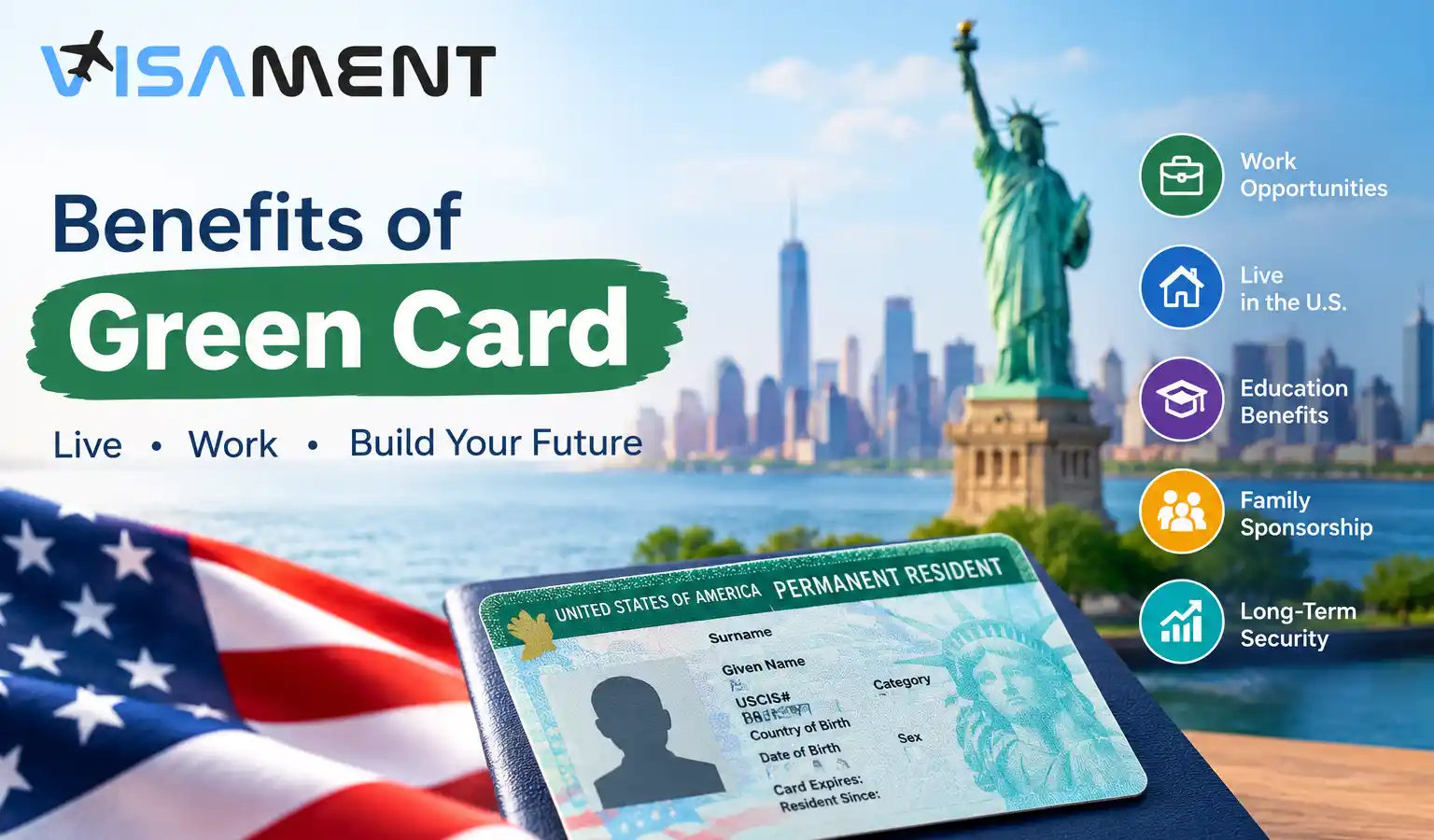
A U.S. Green Card provides lawful permanent resident status, giving eligible immigrants the ability to live and generally work permanently in the United States. It can also create opportunities to sponsor certain family members, study in the U.S., travel internationally, qualify for certain government programs, and eventually pursue U.S. citizenship if the applicable requirements are met.
However, a Green Card is not the same as U.S. citizenship. Permanent residents have important rights and responsibilities, and some benefits depend on the specific program, immigration circumstances, and applicable federal or state rules.
Key Takeaways
- A Green Card provides lawful permanent resident status in the United States.
- Permanent residents can generally live and work in the U.S. while maintaining their status.
- Green Card holders can petition for certain qualifying family members.
- Permanent residents can generally travel outside the U.S., but lengthy absences can create immigration problems.
- Some government programs may be available to eligible Green Card holders, but benefits are not automatic.
- Permanent residence can provide a pathway to naturalization for people who meet the applicable requirements.
- A Green Card does not provide all the rights of U.S. citizenship.
What Is a Green Card?
A Green Card, formally called a Permanent Resident Card, is evidence of lawful permanent resident status in the United States. Permanent residents are permitted to make the United States their permanent home, subject to maintaining their immigration status and complying with applicable laws.
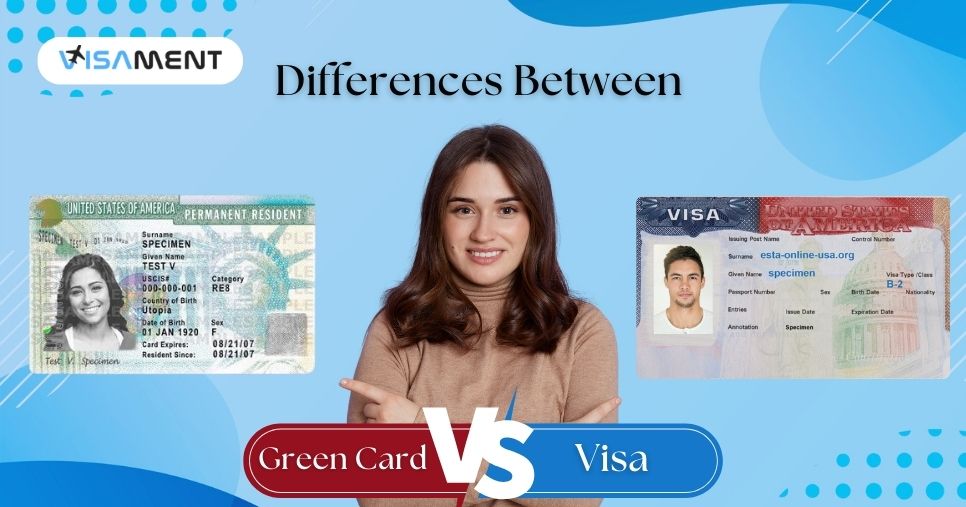
Permanent residence is different from a temporary visa. A temporary visa generally permits a person to remain in the U.S. for a particular purpose and period, while permanent resident status is intended to continue indefinitely unless the status is abandoned, terminated, or otherwise lost under applicable law. USCIS describes permanent residence as carrying both rights and responsibilities and notes that the government can take away permanent resident status under certain conditions.
What Are the Main Green Card Benefits?
1. Live Permanently in the United States
The most fundamental benefit is the ability to live permanently in the United States as a lawful permanent resident.
Unlike a temporary nonimmigrant status that is tied to a particular purpose or authorized period of stay, permanent residence is designed for people who intend to make the United States their home.
That status still has to be maintained. For example, spending extended periods outside the United States or taking actions that show the U.S. is no longer your permanent home can create problems with maintaining permanent residence.
2. Work in the United States
Green Card holders generally have broad authorization to work in the United States. This is an important advantage for people who previously held temporary employment-based status that was connected to a particular employer or immigration category.
Permanent residents generally do not need an employer-sponsored temporary work visa simply to remain authorized to work because their employment authorization comes from their permanent resident status.
However, a Green Card does not make every job available to every person. Some positions may have separate citizenship, security, licensing, or other legal requirements.
For that reason, it is more accurate to say that permanent residents have broad employment rights rather than claiming that a Green Card automatically qualifies someone for every U.S. job.
3. Sponsor Certain Family Members
Another important advantage is the ability to petition for certain qualifying relatives.
A lawful permanent resident can generally file Form I-130 for a spouse, an unmarried child under 21, or an unmarried son or daughter who is 21 or older. Family-based immigration categories have their own requirements and visa availability rules.
This benefit is more limited than the family sponsorship options available to U.S. citizens. For example, permanent residents cannot use their status to petition for parents or married children in the same way U.S. citizens can.
If you are specifically researching family sponsorship, the detailed eligibility and application rules should be reviewed separately rather than assuming that every family relationship qualifies.
4. Travel Outside the United States
Green Card holders can generally travel internationally and return to the United States, but a Green Card should not be treated as an unrestricted travel document.
Short or temporary trips generally do not affect permanent resident status. However, lengthy absences can raise questions about whether the person continues to maintain the United States as their permanent home. USCIS specifically warns that simply returning to the U.S. once a year is not necessarily enough to preserve permanent resident status.
Travel can also affect future naturalization eligibility because residence and physical-presence requirements matter for citizenship.
If you expect to spend an extended period outside the United States, review the applicable travel and reentry rules before leaving.
5. Study in the United States
Permanent residents can pursue educational opportunities in the United States.
A Green Card can make studying in the U.S. more straightforward from an immigration-status perspective because the student is already a permanent resident rather than relying on a temporary student status.
However, tuition rates, scholarships, grants, financial aid, and eligibility requirements vary by institution, program, state, and individual circumstances. Holding a Green Card should not be presented as an automatic guarantee of in-state tuition or every form of financial assistance.
Students should check the requirements of the particular college, university, state program, or financial-aid program they are considering.
6. Potential Eligibility for Certain Government Benefits
Government benefits are one area where Green Card holders should be particularly careful about broad claims.
A Green Card does not automatically qualify someone for every government benefit. Each program has its own eligibility requirements, which may include immigration status, income, resources, age, disability, work history, residency, or other conditions.
For example, the Social Security Administration states that lawfully present noncitizens who meet the applicable requirements can qualify for Social Security benefits. SSI has additional restrictions and eligibility requirements for noncitizens, including specific rules for lawful permanent residents.
Similarly, USA.gov explains that government programs covering areas such as food assistance, health care, housing, retirement, and financial assistance have their own eligibility rules.
Therefore, the better way to evaluate a potential benefit is to ask:
- What specific program am I applying for?
- Does my immigration status qualify?
- Are there income, work-history, residency, age, or other requirements?
- Are there federal, state, or local restrictions?
This approach is more reliable than assuming that Green Card status alone makes someone eligible.
7. Potential Path to U.S. Citizenship
Permanent residence can also be an important step toward U.S. citizenship through naturalization.
A Green Card does not automatically turn a person into a citizen. Instead, a permanent resident who wants to naturalize must satisfy the applicable eligibility requirements and complete the naturalization process.
USCIS describes naturalization as the process through which a person becomes a U.S. citizen. The process can involve submitting the application, attending required appointments, completing an interview and applicable tests, and taking the Oath of Allegiance after approval.
The exact requirements depend on the person's circumstances, so Green Card holders should review the current USCIS naturalization requirements rather than assuming that simply holding a Green Card guarantees citizenship.
Green Card Benefits vs. U.S. Citizenship
A Green Card provides many significant benefits, but permanent residence is not the same as citizenship.
|
Area
|
Green Card Holder
|
U.S. Citizen
|
|
Live in the U.S.
|
Generally yes, while maintaining permanent residence
|
Yes
|
|
Work in the U.S.
|
Generally authorized
|
Yes
|
|
Sponsor qualifying family members
|
Yes, but in more limited categories
|
Yes, with broader family-petition options
|
|
Vote in federal elections
|
Generally no
|
Yes, subject to applicable voting requirements
|
|
U.S. passport
|
No
|
Yes
|
|
Naturalization
|
May be possible if eligible
|
Already a citizen
|
|
Permanent resident status
|
Must be maintained
|
Not applicable
|
USCIS identifies voting in federal elections, eligibility for a U.S. passport, and access to certain citizenship-specific opportunities among the rights associated with U.S. citizenship.
The distinction matters: a Green Card gives permanent residence, while citizenship provides a broader set of citizenship-specific rights and protections.
Important Limitations Green Card Holders Should Know
The benefits of permanent residence come with continuing responsibilities.
Maintain permanent resident status
A Green Card is not permission to permanently relocate outside the United States. Extended absences or other evidence that you have abandoned the U.S. as your permanent home can create serious immigration problems.
Follow U.S. laws
Permanent residents are expected to obey federal, state, and local laws. Certain violations can have immigration consequences, including potential loss of permanent resident status.
Understand tax responsibilities
Permanent residents may have U.S. federal and applicable state or local tax filing responsibilities. Immigration status and tax residency are important areas where individual circumstances matter, so tax questions should be addressed using current IRS guidance or qualified tax advice. USCIS specifically advises permanent residents who are required to file tax returns to meet those obligations.
Do not assume every benefit is automatic
Public benefits, education assistance, health programs, Social Security, and other programs have separate rules. Verify eligibility with the agency responsible for the specific program.
Remember that citizenship rights are different
Permanent residents generally cannot vote in federal elections, do not hold a U.S. passport simply because they have a Green Card, and do not have every family-sponsorship option available to citizens.
Chat to Support on Whatsapp
Stop worrying about delays. Apply now and get Indian Counsellor Services.
Chat Now Conclusion
The most important Green Card benefit is the ability to maintain lawful permanent residence in the United States. That status generally allows eligible residents to live and work in the country, petition for certain family members, pursue education, travel internationally subject to immigration rules, and potentially qualify for specific government programs.
A Green Card can also provide a route toward U.S. citizenship for people who later meet the naturalization requirements. At the same time, permanent residents must maintain their status and should not assume that Green Card holders have all the rights or benefits of U.S. citizens.
Because immigration and government-benefit rules can change, always verify current requirements with the appropriate U.S. government agency before making an immigration or benefits decision.