Related Blogs

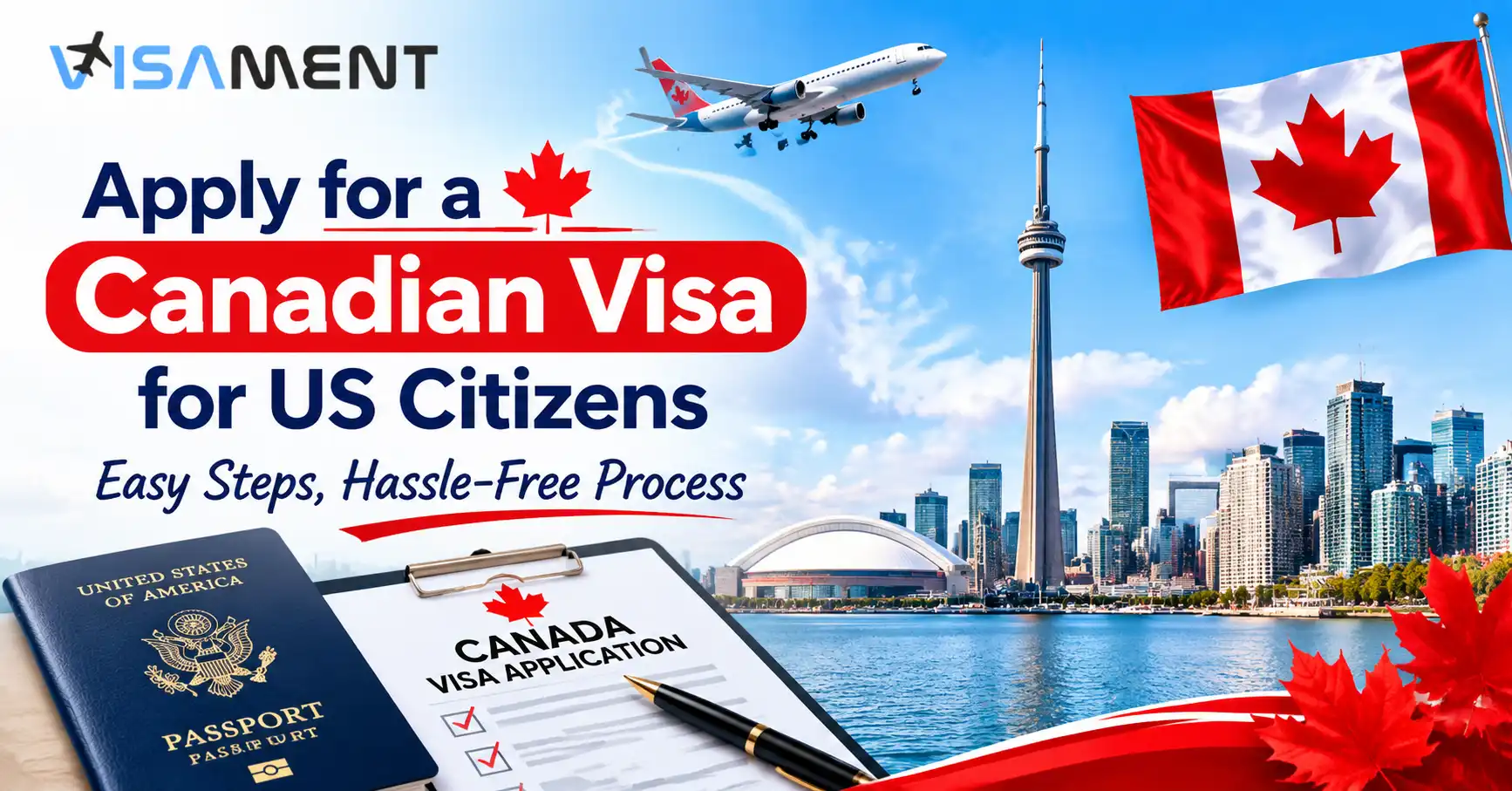
U.S. citizens generally do not need a Canadian visitor visa or an Electronic Travel Authorization (eTA) to visit Canada when travelling with a valid U.S. passport. However, they must carry appropriate identification and meet Canada's entry requirements. Whether you travel by air, road or water can affect which documents you need. U.S. Green Card holders have different documentation requirements from American citizens.
No. U.S. citizens generally do not need a Canadian visitor visa or an eTA to enter Canada. American citizens travelling with a valid U.S. passport are exempt from both requirements, including when flying to Canada.
A visitor visa and an eTA are different travel authorizations used by other categories of international travellers. A visitor visa is generally required for nationals of visa-required countries, while an eTA applies to eligible visa-exempt foreign nationals travelling to Canada by air.
The exemption for Americans is based on U.S. citizenship, not simply living in the United States.
For example, an American citizen flying from New York to Toronto for a holiday does not need to submit a Canadian visa application or obtain an eTA. The traveller should carry a valid U.S. passport and be prepared to answer questions about the visit at the Canadian border.
Important: Being exempt from a visa does not guarantee admission. Canadian border officers assess whether travellers meet the applicable entry and admissibility requirements.
For the latest information, consult the official IRCC guidance for American citizens.
A valid U.S. passport is the recommended travel document for American citizens visiting Canada. However, certain alternatives may be accepted when entering by land or water.
The documentation requirements depend on the method of travel.
If you are flying from the United States to Canada, carry:
A U.S. passport is the most reliable and universally accepted identification document for international travel. American citizens do not need an additional Canadian visitor visa or eTA.
If you are travelling by car, bus, train or boat, a valid U.S. passport is still recommended. However, American citizens who are not travelling by air may present other acceptable identity documents.
The documents must establish:
If one document does not contain all three details, you may present a combination of documents.
The Canadian government recommends carrying a valid passport because it is the most universally accepted travel identification document.
For the latest requirements, check the Government of Canada's entry-document guidance.
Most visitors, including U.S. citizens, can stay in Canada for up to six months. However, six months is not an unconditional entitlement.
A Canada Border Services Agency (CBSA) officer determines the authorized length of stay when you arrive. Depending on your circumstances, the officer may authorize a shorter or longer period.
If an officer specifies a departure date, you must leave by that date. You may receive a passport notation or a document called a visitor record showing your authorized stay.
If you want to remain in Canada beyond your authorized period, you should apply for an extension at least 30 days before your current status expires.
Read the official IRCC guidance on visitor stay duration.
Yes. U.S. lawful permanent residents are generally exempt from Canada's visitor visa and eTA requirements. However, a Green Card holder is not automatically a U.S. citizen, and their required travel documents are different.
The documentation depends on how the permanent resident enters Canada.
|
Travel method |
Documents required |
|---|---|
|
By air |
Valid passport from the country of nationality (or an acceptable equivalent travel document) and valid U.S. Green Card or equivalent proof of permanent residence |
|
By land or water directly from the U.S. or Saint-Pierre-et-Miquelon |
Valid U.S. Green Card or equivalent proof of U.S. permanent resident status |
For example, an Indian passport holder living permanently in the United States with a valid Green Card can travel to Canada without a Canadian visitor visa or eTA. When flying, the traveller must carry their Indian passport and Green Card.
This distinction is important because Canadian entry requirements are based on citizenship, nationality, residency status and method of travel, not simply the country where someone lives.
Check the official Canadian entry requirements for U.S. permanent residents before departure.
Visa-free entry allows eligible Americans to visit Canada, but it does not automatically provide permission to work or undertake longer-term studies.
The authorization depends on the purpose and duration of the activity.
|
Purpose of travel |
Authorization considerations |
|---|---|
|
Tourism and family visits |
Generally covered by visitor entry |
|
Business meetings and conferences |
Qualifying business visitors may not need a work permit |
|
Employment in Canada |
A work permit is generally required unless an exemption applies |
|
Short-term studies |
A study permit is generally unnecessary for eligible programs lasting six months or less |
|
Longer-term studies |
A study permit is generally required, subject to applicable exceptions |
Eligible business visitors can attend meetings, conferences and certain commercial activities without necessarily obtaining a Canadian work permit.
However, they must meet the business visitor conditions and must not enter the Canadian labour market.
Americans planning to take up employment in Canada generally need a work permit unless they qualify for a specific exemption. Visitor status alone does not authorize ordinary employment.
Some study programs lasting six months or less can be completed without a study permit, provided the student meets the applicable conditions. Longer programs generally require study authorization.
Before accepting employment or enrolling in a longer educational program, check the relevant Canadian immigration requirements.
Yes. Even though Americans generally do not need a visitor visa or eTA, Canadian border officers can refuse entry if a traveller does not meet Canada's admissibility requirements.
Officers may consider several reasons for visa refusal, including:
A DUI conviction deserves particular attention. Canadian immigration law treats impaired driving seriously, and some offences can result in criminal inadmissibility. However, the outcome depends on the offence, its circumstances and the applicable legal provisions.
Travellers with previous convictions or unresolved immigration issues should obtain advice from a qualified Canadian immigration professional before travelling.
See the official Canadian government guidance on inadmissibility.
Before leaving the United States for Canada, make sure you have prepared the following:
Preparing these documents in advance can help make the border inspection process more straightforward.
Stop worrying about delays. Apply now and get Indian Counsellor Services.
Chat NowU.S. citizens generally do not need a Canadian visitor visa or eTA for ordinary visits. A valid U.S. passport is the recommended travel document, although alternative identification may be accepted for eligible land and water crossings. Before travelling, confirm your documentation, authorized stay and admissibility requirements through official Canadian government sources.
No. U.S. citizens are exempt from Canada's eTA requirement. They should carry a valid U.S. passport when travelling by air.
Yes, in certain circumstances. U.S. citizens entering Canada by land or water may present alternative identification documents that establish their full name, date of birth and citizenship. A valid passport remains the recommended option.
Yes, subject to authorization. Visitors who need additional time should apply to extend their stay before their authorized period expires. IRCC recommends applying at least 30 days before the end of the authorized stay.
A DUI conviction can make a U.S. citizen criminally inadmissible to Canada. The outcome depends on the offence and individual circumstances. Travellers with DUI convictions should seek professional immigration advice before attempting to enter Canada.
Vipul Jain is the Co-Founder of Visament, a trusted platform dedicated to simplifying Indian immigration, consular, and NRI services for applicants across the globe. With extensive expertise in OCI cards, Indian passport services, visa assistance, apostille and document legalization,... See Full Bio

Talk to our documentation experts for free guidance on your application.
How to Apply for a US Visitor Visa (B1/B2 Visa): Step-by-Step Guide
US Visa Interview Questions for Parents: Common Questions and Sample Answers
Visa Guide 2026: Types, Requirements & Application Process
Understanding US Visa Benefits: Types, Eligibility & Key Advantages
How to Get a Fast US Visa Appointment in India: Get an Earlier Slot


When you visit a website, it may store data about you using cookies and similar technologies. Cookies can be important for the basic operations of the website and for other purposes. You get the option of deactivating certain types of cookies, even so, doing that may affect your experience on the website.
It is required to permit the basic functionality of the website. You may not disable necessary cookies.
Used to provide advertising that matches you and your interests. May also be used to restrict the number of times you see an advertisement and estimate the effectiveness of an advertising campaign. The advertising networks place them after obtaining the operator's permission.
Permits the website to recognize the choices you make (like your username, language, or the region you are in). Also provides more personalized and enhanced features.
Aid the website operator to determine how the website performs, how visitors interact with the site, and whether there are any technical issues.