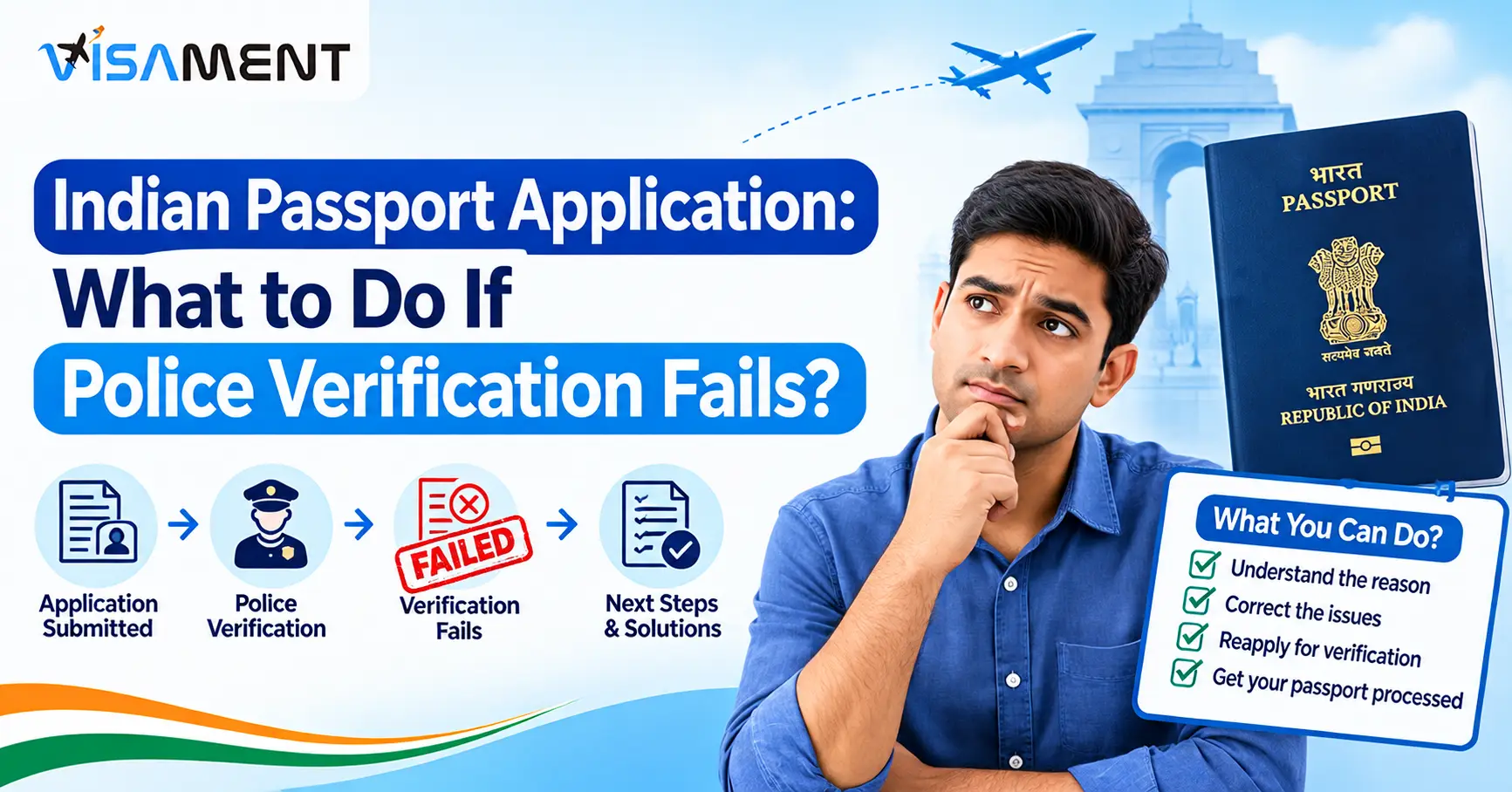
Police verification is an important part of the Indian passport application process. It helps the authorities verify an applicant's identity, residential address, and other relevant details before or after issuing a passport, depending on the verification mode assigned to the application.
However, sometimes police verification does not result in a clear or recommendatory report. This may happen because the applicant is unavailable during the police visit, the residential address does not match the application, supporting documents are incomplete, or the police report contains an adverse observation.
If your passport application shows an unsuccessful or adverse police verification status, it does not automatically mean that you can never receive a passport. The next step depends on the reason recorded in the Police Verification Report (PVR) and the instructions issued by the concerned Regional Passport Office (RPO).
In this guide, we explain why passport police verification may fail, what an adverse report means, how to request re-verification, and what steps you should take to resolve the issue.
What Is Police Verification in the Indian Passport Application Process?
Police verification is a process conducted by the local police authority to verify information provided in an Indian passport application.
During verification, police officials may check:
- Confirming that the applicant lives at the address provided in the passport application.
- Verifying the applicant's identity using the submitted documents.
- Checking whether the residential details are correct and complete.
- Identifying any relevant police records or legal issues that may need to be reported to the Passport Office.
- Ensuring that the applicant is available and can present the necessary documents during verification.
After completing the enquiry, the police department submits a Police Verification Report (PVR) to the Passport Office.
The Passport Office uses this report, along with other application records, to decide whether the passport can be issued or whether further clarification or verification is necessary.
What Happens If Police Verification Fails?
If police verification is unsuccessful, the next action depends on the type of report submitted by the police.
An unsuccessful visit, an incomplete verification, and an adverse PVR should not be treated as identical situations.
The Passport Office may ask the applicant to provide clarification, submit additional documents, or complete another verification.
1. Police Verification Could Not Be Completed
Sometimes, the police cannot complete verification because the applicant is unavailable, the address cannot be located, or the applicant has moved to another residence.
In such cases, the report may indicate that verification could not be completed or that the applicant was not found at the given address.
What to do: Contact the concerned police station to understand the reason and approach your Regional Passport Office for instructions on whether another verification can be initiated.
2. Adverse Police Verification Report
An adverse PVR means that the police have reported an issue or concern during the verification process.
Possible reasons include an address discrepancy, an identity mismatch, an unresolved verification concern or relevant information about pending criminal proceedings.
An adverse report requires attention from the Passport Office. The applicant should not assume that the passport will automatically be rejected, but the application may be held for clarification or further examination.
What to do: Contact the RPO, request the reason for the adverse report and submit the relevant clarification and supporting documents.
3. Police Verification Is Still Pending
If the application status indicates that police verification is pending, it does not necessarily mean that verification has failed.
The police enquiry may still be in progress, or the report may not yet have been transmitted to the Passport Office.
What to do: Track your application status and contact the concerned police station or RPO if the verification remains pending for an unusually long period.
Common Reasons Why Passport Police Verification Fails
Understanding the reason for an unsuccessful verification can help you take the appropriate corrective action.
1. Applicant Was Not Available During the Police Visit
If the applicant is not present when police officials visit the residential address, they may be unable to complete the enquiry.
How to resolve it: Contact the police station, explain your availability, and ask about the next verification opportunity. Keep your application file number ready.
2. Incorrect or Incomplete Residential Address
An incorrect house number, missing flat number, incorrect PIN code, or incomplete address can make it difficult for police officials to locate the applicant.
How to resolve it: Compare the address in your passport application with your actual residential address. If the application contains an error, contact the RPO for instructions rather than assuming it can be changed directly during police verification.
3. Applicant Has Changed Residence
If you move to another location after submitting your passport application, the police may be unable to verify you at the original address.
How to resolve it: Inform the Passport Office about the change and follow its instructions regarding address correction or fresh verification. Do not provide an incorrect address merely to complete the verification.
4. Address Proof Is Insufficient or Inconsistent
If the applicant cannot provide satisfactory residential proof or the submitted documents contain conflicting details, verification may be delayed or reported as unsuccessful.
How to resolve it: Keep valid address documents and other relevant identity records ready. Submit additional evidence if requested by the Passport Office or police authorities.
5. Previous Residential Addresses Were Not Properly Disclosed
An applicant may have lived at multiple locations but failed to provide complete residential history in the application.
Incomplete or inconsistent address information can create verification concerns.
How to resolve it: Review the address history provided in your application and explain any discrepancies honestly. Submit supporting documents for the relevant periods if requested.
6. Identity or Personal Details Do Not Match
Differences in the applicant's name, date of birth, parent's details, or other personal information across documents may require further verification.
How to resolve it: Identify the exact discrepancy and provide the appropriate supporting documents or correction request to the Passport Office.
7. Police Report Mentions a Criminal Case or Other Adverse Record
A police report may refer to an FIR, investigation or criminal proceedings involving the applicant.
The legal significance of the information depends on the circumstances and the applicable provisions of the Passports Act, 1967. An FIR or investigation should not automatically be treated as equivalent to a criminal proceeding pending before a court.
How to resolve it: Obtain details of the reported matter and provide accurate information and relevant court documents to the RPO. Do not conceal or misrepresent any material information in the application.
What to Do If Your Passport Police Verification Fails?
If your police verification is unsuccessful or your application receives an adverse PVR, follow these steps.
- Check Application Status: Visit Passport Seva and track your application using your file number and date of birth.
- Find the Reason for Failure: Contact the police station or RPO to identify the issue, such as an incorrect address, unavailable applicant or document mismatch.
- Contact the RPO: Ask for clarification and follow the instructions provided by the Passport Office.
- Arrange Required Documents: Keep your application acknowledgement, identity proof, address proof and any other requested documents ready.
- Request Re-Verification: Submit a written request if the RPO advises or permits another police verification.
- Cooperate During Verification: Be available at your residential address and provide accurate information and original documents when requested.
- Track the Updated Status: Check the Passport Seva portal for updates after the police report is submitted to the RPO.
Can You Request Re-Verification After an Adverse Police Report?
Yes, a request for further police verification may be considered after an adverse PVR. However, it is not an automatic right to receive another verification.
The applicant should first contact the concerned RPO to understand the reason for the adverse report.
Depending on the circumstances, the Passport Office may:
- Ask the applicant to submit additional documents.
- Seek a written explanation.
- Call the applicant for an in-person enquiry.
- Request clarification from the police department.
- Initiate secondary or fresh police verification, where appropriate.
- Take a decision based on the available records and applicable rules.
The applicant should follow the instructions communicated by the Passport Office rather than independently assuming that another police visit will be arranged.
What If Your Passport Has Already Been Issued but Police Verification Fails?
In some cases, a passport may be issued before police verification is completed.
This is known as post-police verification. Under this arrangement, the passport may be dispatched without waiting for the police report.
However, the applicant is still required to cooperate with the subsequent verification.
If the post-issuance police report is adverse, the Passport Office may contact the applicant for clarification and examine the matter under the applicable passport rules.
Depending on the circumstances and the findings, the authority may initiate appropriate proceedings, including action under Section 10 of the Passports Act, 1967, where legally justified and after following the prescribed procedure.
Therefore, receiving a passport does not mean that an adverse post-police verification report can be ignored.
What If the Regional Passport Office Rejects Your Application?
If the Passport Office takes an adverse decision, such as rejecting or refusing your passport application, you may have the option to file an appeal through the official Passport Seva portal.
The general appeal procedure is:
- Visit the official Passport Seva website.
- Log in to your account.
- Select the Log Appeal option on the portal.
- Choose the passport application against which the adverse decision was taken.
- Enter the required personal and application details.
- Explain the grounds of appeal and submit the form.
- Pay the prescribed appeal fee and upload the required documents.
According to the Passport Seva appeal guidance, the online appeal fee is ₹25.
You may need to submit the official rejection or refusal communication, speaking order, or other relevant supporting documents.
Important: An adverse police report by itself and a formal adverse decision by the Passport Office are not the same thing. The portal's appeal process applies when the Passport Office has taken an appealable adverse action, such as rejection or refusal. Applicants should first obtain and understand the official decision.
If your application is delayed or police verification has failed, you can use the following official channels.
| Contact method |
Details |
| Official Passport Portal |
https://www.passportindia.gov.in/ |
| National Passport Call Centre |
1800-258-1800 |
| RPO contact details |
Available through the Passport Seva Contact Us section |
| Online grievance |
Available through the Passport Seva portal |
| CPGRAMS |
https://pgportal.gov.in/ |
When contacting the Passport Office, keep the following information ready:
- Applicant's full name.
- Passport application file number.
- Date of birth.
- Registered mobile number and email address.
- Details of the police verification issue.
- Copies of relevant documents or communications.
For an unresolved grievance, you can also use the official grievance mechanism provided by the Ministry of External Affairs.
How to Avoid Police Verification Problems in Future Passport Applications
You can reduce the likelihood of verification-related issues by taking a few precautions before submitting your application.
- Provide an accurate residential address: Enter your complete current address, including house number, street, locality, and PIN code.
- Disclose previous addresses correctly: Provide the residential history requested in the application.
- Keep documents consistent: Check that your identity and address records do not contain unexplained discrepancies.
- Remain available: Make sure you or an appropriate family member can respond to the police enquiry, as permitted by the verification procedure.
- Keep original documents ready: Carry the relevant original records when requested by police officials.
- Check your application regularly: Track the status and respond promptly to requests from the Passport Office.
- Provide truthful information: Never hide material facts or submit incorrect documents to obtain a passport.
Conclusion
An unsuccessful police verification does not always mean that your Indian passport application will be rejected. The outcome depends on the reason for the failed verification, the police report, and the decision of the concerned Passport Office.
If your police verification is unsuccessful, first identify the exact issue, contact your Regional Passport Office, and submit the necessary clarification or supporting documents. If the authority permits re-verification, cooperate with the police enquiry and monitor your application status until the matter is resolved.
Providing accurate information, maintaining consistent documents, and responding promptly to official requests can help prevent unnecessary delays in the Indian passport application process.
Official References
- Passport Seva – Police Verification Mode Details
- Passport Seva – Application Form Instruction Booklet
- Passport Seva – Appeal Procedure
- Passport Seva – Contact Us
- Ministry of External Affairs – Passport Grievance Redressal Mechanism