A transit visa is a type of travel authorization that may be required when you pass through one country while traveling to another destination. A connecting flight does not automatically mean you can transit without a visa, even if you plan to remain at the airport. Requirements can depend on your nationality, transit country, airport, itinerary, and whether you need to pass through immigration.
This guide explains what a transit visa means, how it works, when you may need one, and what to check before traveling.
Key Takeaways
- A transit visa may be required when you pass through a country on the way to your final destination.
- Transit visa requirements vary according to your passport, transit country, airport, route, and travel circumstances.
- Staying inside an airport does not always mean that you are exempt from transit visa requirements.
- Airside transit and landside transit can have different visa implications.
- A transit visa is generally different from a tourist or visitor visa.
- Changing airports, collecting baggage, using separate tickets, or passing through immigration can affect your transit requirements.
- Always verify the rules for your exact passport and itinerary before traveling.
What Is a Transit Visa?
A transit visa is a travel authorization that may allow a traveler to pass through a country while continuing to another destination. It is generally intended for travelers who are passing through rather than visiting the transit country as their main destination.
For example, suppose you are traveling from India to Canada, and your flight connects through another country. Depending on your passport and the rules of the country where you are connecting, you may need transit authorization before you can continue your journey.
Transit rules are not the same everywhere. Some countries allow eligible passengers to remain in an international transit area without obtaining a visa, while others require certain nationalities to obtain an airport transit visa even when they do not intend to leave the airport.
The important point is that a transit visa is not automatically required for every international connection, and it is not automatically unnecessary either. The applicable rule must be determined from the traveler's nationality and exact itinerary.
How Does a Transit Visa Work?
A typical international journey can look like this:
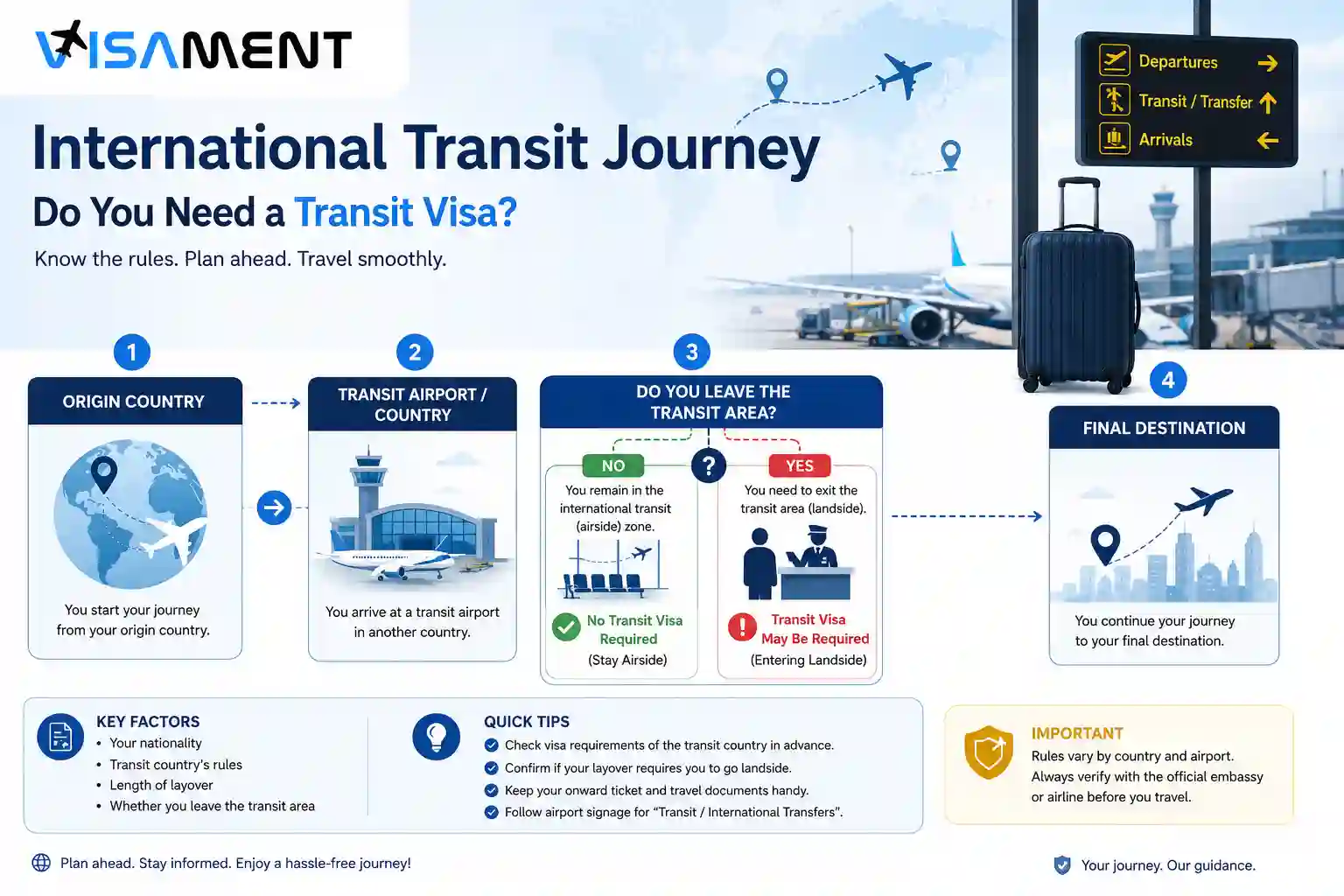
Origin country → Transit country → Final destination
The transit country is the place where you stop between your departure point and your final destination. Your connection might last only a few hours, but you may still need to comply with that country's transit rules.
The process can become more complicated if you need to:
- Change terminals in a way that requires immigration clearance
- Collect and recheck your baggage
- Change airports
- Use separate tickets for different parts of the journey
- Leave the international transit area
- Check in again for your connecting flight
- Stay overnight under circumstances that require entry into the country
For example, a passenger traveling on one through-ticket may be able to transfer directly between international flights. Another passenger traveling on separate tickets may need to collect baggage and check in again. These two itineraries can have different immigration and visa implications even if both passengers spend the same amount of time at the airport.
When Do You Need a Transit Visa?
You may need a transit visa when your itinerary requires you to pass through another country's airport or territory and that country requires transit authorization for your nationality or travel circumstances.
The exact requirement can depend on several factors:
1. Your Passport Nationality
Visa rules are often nationality-specific. Two passengers traveling on the same flight can therefore face different transit requirements because they hold different passports.
2. The Transit Country
Every country establishes its own immigration and transit rules. A connection that is visa-free for one route may require authorization on another route.
3. The Airport and Terminal
The airport where you connect can matter, particularly when an airport does not offer an appropriate international transfer route or when changing terminals requires border control.
4. Whether You Pass Through Immigration
If your connection requires you to enter the country formally, you may need a visa or other permission to enter, rather than simply relying on an airport transit arrangement.
5. Your Flight Arrangement
A single booking and separate tickets can create different practical requirements. If separate tickets mean you must collect baggage and check in again, you may have to pass through immigration.
6. Your Final Destination
You may need proof that you are permitted to enter your final destination, such as a valid visa or another form of entry authorization. However, having a visa for your final destination does not automatically eliminate the transit country's visa requirements.
7. Applicable Exemptions
Some travelers may qualify for a transit-visa exemption because of their nationality, residence status, existing visa, travel document, or other circumstances. Exemptions are country-specific and should be verified before travel.
Airside Transit vs Landside Transit
The distinction between airside and landside transit is important when determining whether a visa may be required.
| Transit type |
What it generally means |
Possible visa implication |
| Airside transit |
You remain within the international transit area and do not pass through the country's border control |
Some travelers may transit without a visa, but certain nationalities may still require an airport transit visa |
| Landside transit |
You pass through immigration or otherwise enter the country during the connection |
You may need a visa or other permission to enter the country |
Airside transit does not universally mean visa-free transit. Some countries impose airport transit visa requirements on particular nationalities even when passengers remain in the international transit area.
Landside transit can occur when you need to collect baggage, change airports, check in again, or otherwise pass through border control.
What Are the Main Types of Transit Visas?
Transit terminology differs between countries, but travelers may encounter several types of transit authorization.
Airport Transit Visa
An airport transit visa generally relates to passing through the international transit area of an airport without entering the country in the normal sense. Certain countries require this authorization for nationals of specified countries or in particular circumstances.
Transit Visa for Passing Through a Country
Some countries use a broader transit visa category for travelers who need to pass through their territory while traveling elsewhere.
The precise name, conditions, validity, and permitted activities depend on the country issuing the visa. Therefore, travelers should not assume that a transit visa issued by one country works in another country or provides the same rights.
What Factors Determine Whether You Need a Transit Visa?
Before traveling, check these details together rather than looking only at the length of your layover:
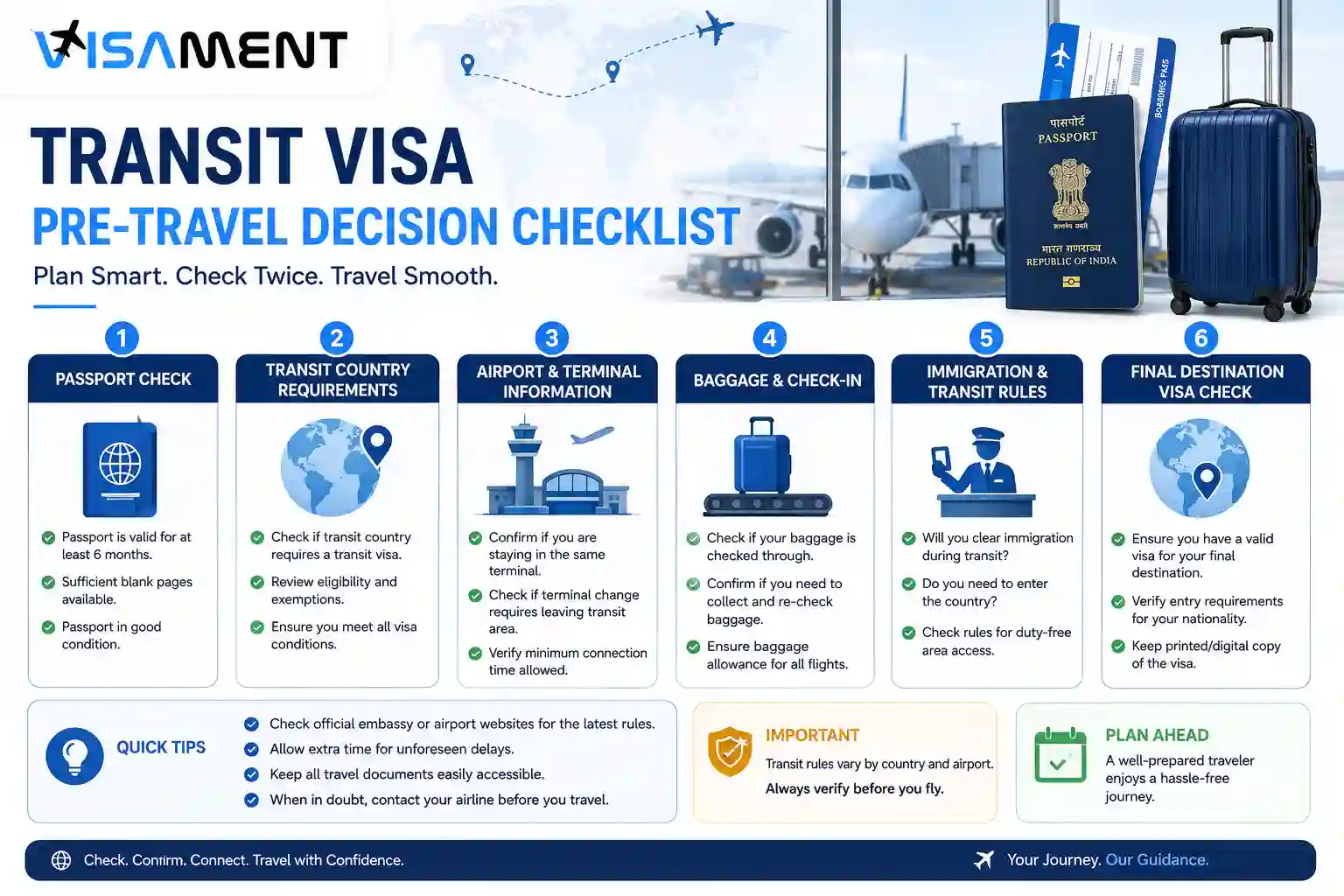
- Passport: What nationality and travel document do you hold?
- Transit country: Which country will you pass through?
- Airport: Are you staying at the same airport?
- Flight itinerary: Are your flights on one booking or separate tickets?
- Baggage: Will your luggage be transferred automatically or do you need to collect it?
- Immigration: Will you need to pass through border control?
- Terminal: Can you transfer without leaving the international transit area?
- Destination: Do you have the required permission to enter your final destination?
- Residence status: Do you hold a residence permit or visa that may affect transit eligibility?
- Exemptions: Does your nationality or travel status qualify for a transit exemption?
- Duration: Does the length or timing of your connection trigger additional requirements?
These factors should be considered together. A short layover can still require a visa, while a longer connection may be possible without one for an eligible traveler.
How Can You Check If You Need a Transit Visa?
The safest approach is to verify the requirement for your exact passport and itinerary before booking or traveling.
Use this checklist:
- Identify every country where you will transit.
- Check whether you will remain airside at each airport.
- Confirm whether baggage must be collected and rechecked.
- Check whether you need to change airports.
- Verify whether you must pass through immigration.
- Confirm that you have the required documents for your final destination.
- Check the current transit rules of each transit country.
- Review applicable visa exemptions for your nationality or residence status.
- Confirm the information with the relevant official immigration authority, embassy, or consulate.
- Check the airline's travel-document requirements as an additional practical safeguard.
Airline information can help identify how your itinerary operates, but immigration authorities are the appropriate source for the country's visa rules.
Common Transit Visa Mistakes to Avoid
Transit problems often happen because travelers make assumptions about their connection. Common mistakes include:
- Assuming that every international connection is visa-free.
- Assuming that staying inside the airport always removes the visa requirement.
- Ignoring the difference between airside and landside transit.
- Booking separate tickets without checking whether baggage collection requires immigration clearance.
- Failing to check whether an airport change is involved.
- Assuming a visa for the final destination automatically satisfies transit requirements.
- Checking only the airline's information instead of verifying the applicable immigration rules.
- Relying on old visa information found online.
- Checking only the first transit country when the itinerary includes multiple stops.
- Waiting until the day of travel to determine whether a transit visa is required.
A few minutes of document and itinerary verification before booking can help identify potential visa issues much earlier.
Conclusion
A transit visa is travel authorization that may be required when you pass through another country on the way to your final destination. Whether you need one depends on your passport, transit country, airport, itinerary, immigration requirements, and applicable exemptions.
Before traveling, check every transit point and confirm the current rules with the relevant official authority. If your itinerary involves multiple countries, separate tickets, baggage collection, or an airport change, pay particular attention to whether you will need to pass through immigration.